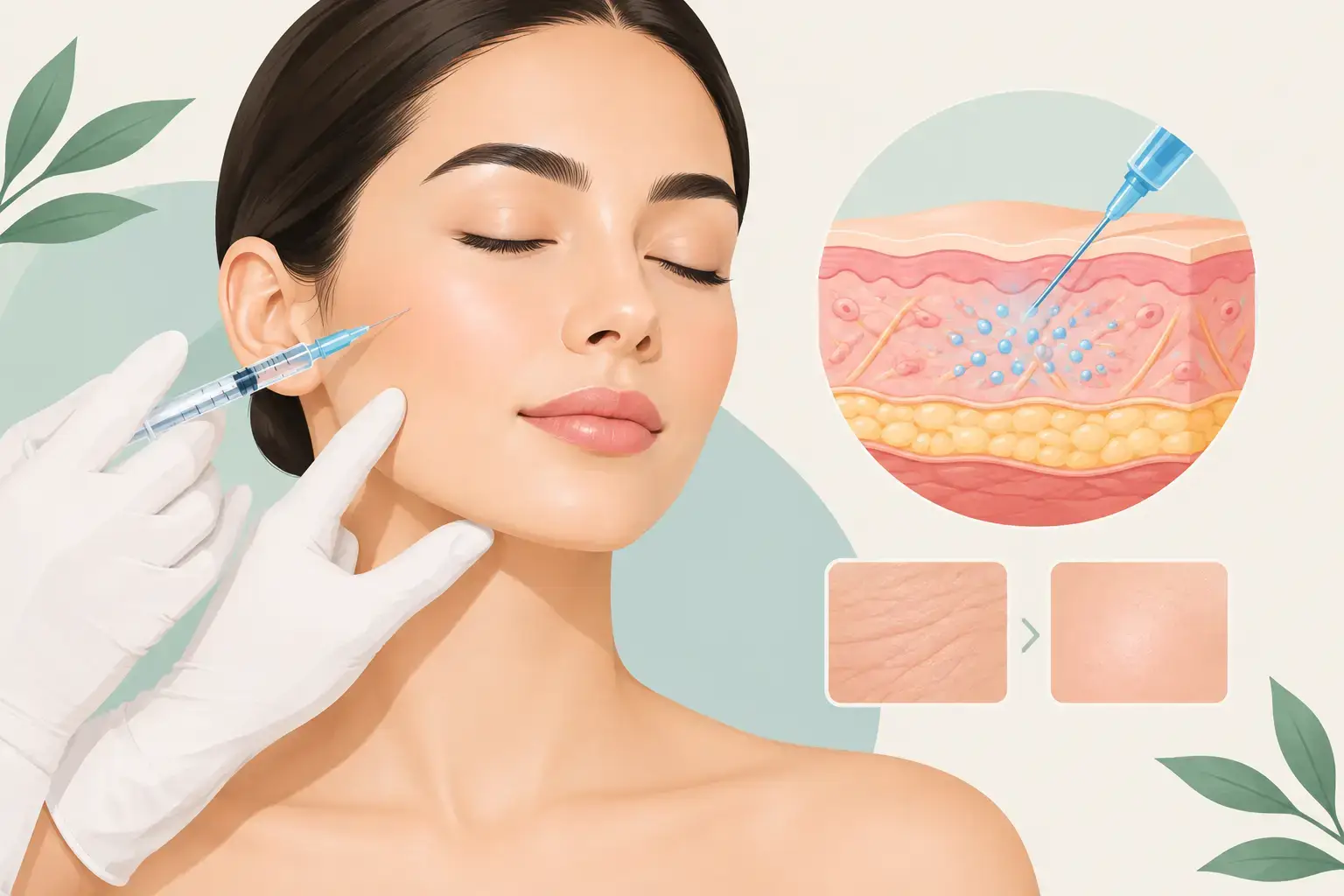
When skin feels persistently dull, tight, or less elastic despite a consistent home routine, the issue is not always a lack of moisturizer. Sometimes the skin needs support at a deeper level. This skin booster injection guide explains what these treatments are designed to do, who may benefit, and how to approach them with realistic expectations.
A skin booster is not intended to change your face or create obvious volume. The goal is usually more subtle: skin that appears better hydrated, smoother in texture, and more rested over time. The right plan depends on your skin condition, your concerns, and the degree of change you want to see.
What Is a Skin Booster Injection?
Skin boosters are injectable treatments placed in the skin to improve hydration and overall skin quality. Many are formulated with hyaluronic acid, a substance naturally present in the body that helps attract and retain moisture. Depending on the product and treatment approach, skin boosters may also include ingredients intended to support the skin’s hydration environment and improve a dry, crepey, or tired-looking appearance.
Unlike dermal fillers, which are typically used to restore or add structure in areas such as the cheeks, lips, or chin, skin boosters are generally distributed more broadly and superficially. They are not selected to sculpt a feature. They are selected to help the skin look more supple and refined.
That distinction matters. If your concern is loss of facial contour, a skin booster alone may not be the best answer. If your main concern is fine dehydration lines, rough texture, makeup that no longer sits smoothly, or a generally fatigued complexion, it may be a more appropriate option.
What Skin Boosters Can and Cannot Improve
A well-chosen skin booster can support skin that looks dehydrated, dull, or uneven in texture. It may be considered for the face, neck, décolletage, and hands, where skin quality often becomes a concern before dramatic volume loss occurs. Many patients also choose it as part of ongoing maintenance rather than waiting for a single large change.
Results are usually gradual. Some people notice a healthier glow and improved softness first, while changes in texture and fine lines can take longer to appreciate. The visible outcome depends on baseline skin condition, the formula used, injection technique, lifestyle factors, and whether other concerns such as pigment, acne, or laxity are also present.
Skin boosters do have limits. They do not replace treatment for deep wrinkles, pronounced sagging, significant sun damage, active inflammatory acne, or scar-related texture changes. They also cannot substitute for daily sun protection, sleep, nutrition, and a skincare routine that supports your skin barrier. A thoughtful plan may combine skin booster treatment with pigment care, acne management, lifting treatment, or a medical skincare program when those needs are identified during consultation.
Skin hydration and skin volume are different concerns
It is common to describe every injectable as a “filler,” but the treatment goals are different. Structural fillers are often selected for contour and support. Skin boosters are generally selected for hydration and diffuse improvement in skin quality.
A person with hollow cheeks may need a conversation about volume restoration, while a person whose cheeks feel dry and look finely lined may benefit more from a skin-quality approach. Some patients have both concerns, but treating both at once is not always necessary. The most appropriate order and combination should follow a careful assessment, not a pre-set package.
A Skin Booster Injection Guide to Treatment Planning
The most useful question is not, “Which skin booster is best?” It is, “What is my skin asking for right now?” A detailed consultation should begin with your priorities: hydration, radiance, pores, fine lines, acne marks, pigment, early laxity, or a combination of concerns.
Your clinician should also look at skin thickness, sensitivity, active inflammation, prior injectable history, and the areas that bother you most. For example, dry and delicate skin around the eyes may need a different approach from oilier skin with acne congestion. A treatment that works beautifully for a friend may not match your skin’s needs or your preferred level of maintenance.
A personalized plan should include the product category, injection areas, expected number of sessions, treatment interval, and what improvement is realistically possible. Ask how the treatment fits with any filler, neuromodulator, laser, lifting, or acne treatment you have received or are considering. Timing can matter, particularly when the skin is irritated or healing.
Questions worth asking before treatment
Before proceeding, ask what the treatment is intended to improve in your specific case and what it is not expected to change. It is also reasonable to ask about the planned injection depth, anticipated downtime, common side effects, and the clinician’s approach if bruising, swelling, or an unexpected reaction occurs.
You should share your medical history, current medications and supplements, allergies, history of cold sores, bleeding concerns, autoimmune conditions, pregnancy or breastfeeding status, and any recent procedures. Do not stop prescribed medication without consulting the clinician who prescribed it. Honest information helps the medical team determine whether treatment should proceed, be adjusted, or be postponed.
What Happens During the Appointment
After cleansing the skin and reviewing the treatment plan, a topical numbing cream may be used when appropriate. The product may be placed with very small injections or, in some cases, with a cannula technique. The method depends on the treatment area, the formula, and the clinician’s judgment.
Appointments are often relatively brief, but rushing should never be the goal. Careful placement, attention to facial anatomy, and clear communication throughout treatment matter more than speed. You may feel small pinches, pressure, or brief stinging even with numbing.
Immediately afterward, small raised bumps at injection points, mild redness, tenderness, or swelling can occur. These reactions are often temporary, but they vary by treatment area and individual sensitivity. Plan your appointment with some flexibility rather than scheduling it immediately before an important event.
Recovery and Aftercare
Most people return to regular activities quickly, but the skin benefits from a calm recovery period. Follow the instructions provided by your clinician, as recommendations can vary by treatment and your skin condition.
For the first day, it is commonly wise to avoid rubbing or massaging the treated area unless you have been specifically instructed otherwise. Intense exercise, alcohol, saunas, hot baths, and high heat may increase redness or swelling for some people, so temporary avoidance is often recommended. Keep your skincare routine gentle, use sun protection, and avoid introducing strong exfoliants or irritating active ingredients until your clinician says it is appropriate.
Bruising is possible with any injectable treatment. If it occurs, allow time for it to resolve rather than trying to cover or treat it aggressively. Contact your clinic promptly if you develop severe or worsening pain, unusual color changes in the skin, significant swelling, signs of infection, or any symptom that concerns you. Injectable treatments should always include clear guidance on how to reach the medical team after your appointment.
How Many Sessions Will You Need?
There is no universal schedule. Some skin booster protocols begin with a series of treatments spaced several weeks apart, followed by maintenance appointments. Others are planned differently according to the product, area treated, skin condition, and desired outcome.
Maintenance is part of the decision. If you want one treatment to permanently correct multiple concerns, a skin booster may feel disappointing. If you see skin quality as an ongoing part of personal care, gradual treatment can be a thoughtful and natural-looking choice. The right frequency is the least treatment needed to support your goals, not the most treatment that can be scheduled.
Choosing Care That Feels Right for You
The quality of a skin booster treatment is not measured only by the product name or the number of injections. It is measured by whether the treatment was appropriate for your skin, performed carefully, and planned with your long-term comfort in mind.
At Somsei Clinic, the focus is on careful diagnosis and recommending only the care that serves your current skin needs. Natural improvement often comes from restraint: addressing hydration when hydration is the concern, and recognizing when a different treatment or a pause is the better choice.
Your skin does not need to look transformed to look well cared for. A considered plan, time to observe how your skin responds, and a clinician who listens closely can help you choose treatment with confidence.







When skin feels persistently dull, tight, or less elastic despite a consistent home routine, the issue is not always a lack of moisturizer. Sometimes the skin needs support at a deeper level. This skin booster injection guide explains what these treatments are designed to do, who may benefit, and how to approach them with realistic expectations.
A skin booster is not intended to change your face or create obvious volume. The goal is usually more subtle: skin that appears better hydrated, smoother in texture, and more rested over time. The right plan depends on your skin condition, your concerns, and the degree of change you want to see.
What Is a Skin Booster Injection?
Skin boosters are injectable treatments placed in the skin to improve hydration and overall skin quality. Many are formulated with hyaluronic acid, a substance naturally present in the body that helps attract and retain moisture. Depending on the product and treatment approach, skin boosters may also include ingredients intended to support the skin’s hydration environment and improve a dry, crepey, or tired-looking appearance.
Unlike dermal fillers, which are typically used to restore or add structure in areas such as the cheeks, lips, or chin, skin boosters are generally distributed more broadly and superficially. They are not selected to sculpt a feature. They are selected to help the skin look more supple and refined.
That distinction matters. If your concern is loss of facial contour, a skin booster alone may not be the best answer. If your main concern is fine dehydration lines, rough texture, makeup that no longer sits smoothly, or a generally fatigued complexion, it may be a more appropriate option.
What Skin Boosters Can and Cannot Improve
A well-chosen skin booster can support skin that looks dehydrated, dull, or uneven in texture. It may be considered for the face, neck, décolletage, and hands, where skin quality often becomes a concern before dramatic volume loss occurs. Many patients also choose it as part of ongoing maintenance rather than waiting for a single large change.
Results are usually gradual. Some people notice a healthier glow and improved softness first, while changes in texture and fine lines can take longer to appreciate. The visible outcome depends on baseline skin condition, the formula used, injection technique, lifestyle factors, and whether other concerns such as pigment, acne, or laxity are also present.
Skin boosters do have limits. They do not replace treatment for deep wrinkles, pronounced sagging, significant sun damage, active inflammatory acne, or scar-related texture changes. They also cannot substitute for daily sun protection, sleep, nutrition, and a skincare routine that supports your skin barrier. A thoughtful plan may combine skin booster treatment with pigment care, acne management, lifting treatment, or a medical skincare program when those needs are identified during consultation.
Skin hydration and skin volume are different concerns
It is common to describe every injectable as a “filler,” but the treatment goals are different. Structural fillers are often selected for contour and support. Skin boosters are generally selected for hydration and diffuse improvement in skin quality.
A person with hollow cheeks may need a conversation about volume restoration, while a person whose cheeks feel dry and look finely lined may benefit more from a skin-quality approach. Some patients have both concerns, but treating both at once is not always necessary. The most appropriate order and combination should follow a careful assessment, not a pre-set package.
A Skin Booster Injection Guide to Treatment Planning
The most useful question is not, “Which skin booster is best?” It is, “What is my skin asking for right now?” A detailed consultation should begin with your priorities: hydration, radiance, pores, fine lines, acne marks, pigment, early laxity, or a combination of concerns.
Your clinician should also look at skin thickness, sensitivity, active inflammation, prior injectable history, and the areas that bother you most. For example, dry and delicate skin around the eyes may need a different approach from oilier skin with acne congestion. A treatment that works beautifully for a friend may not match your skin’s needs or your preferred level of maintenance.
A personalized plan should include the product category, injection areas, expected number of sessions, treatment interval, and what improvement is realistically possible. Ask how the treatment fits with any filler, neuromodulator, laser, lifting, or acne treatment you have received or are considering. Timing can matter, particularly when the skin is irritated or healing.
Questions worth asking before treatment
Before proceeding, ask what the treatment is intended to improve in your specific case and what it is not expected to change. It is also reasonable to ask about the planned injection depth, anticipated downtime, common side effects, and the clinician’s approach if bruising, swelling, or an unexpected reaction occurs.
You should share your medical history, current medications and supplements, allergies, history of cold sores, bleeding concerns, autoimmune conditions, pregnancy or breastfeeding status, and any recent procedures. Do not stop prescribed medication without consulting the clinician who prescribed it. Honest information helps the medical team determine whether treatment should proceed, be adjusted, or be postponed.
What Happens During the Appointment
After cleansing the skin and reviewing the treatment plan, a topical numbing cream may be used when appropriate. The product may be placed with very small injections or, in some cases, with a cannula technique. The method depends on the treatment area, the formula, and the clinician’s judgment.
Appointments are often relatively brief, but rushing should never be the goal. Careful placement, attention to facial anatomy, and clear communication throughout treatment matter more than speed. You may feel small pinches, pressure, or brief stinging even with numbing.
Immediately afterward, small raised bumps at injection points, mild redness, tenderness, or swelling can occur. These reactions are often temporary, but they vary by treatment area and individual sensitivity. Plan your appointment with some flexibility rather than scheduling it immediately before an important event.
Recovery and Aftercare
Most people return to regular activities quickly, but the skin benefits from a calm recovery period. Follow the instructions provided by your clinician, as recommendations can vary by treatment and your skin condition.
For the first day, it is commonly wise to avoid rubbing or massaging the treated area unless you have been specifically instructed otherwise. Intense exercise, alcohol, saunas, hot baths, and high heat may increase redness or swelling for some people, so temporary avoidance is often recommended. Keep your skincare routine gentle, use sun protection, and avoid introducing strong exfoliants or irritating active ingredients until your clinician says it is appropriate.
Bruising is possible with any injectable treatment. If it occurs, allow time for it to resolve rather than trying to cover or treat it aggressively. Contact your clinic promptly if you develop severe or worsening pain, unusual color changes in the skin, significant swelling, signs of infection, or any symptom that concerns you. Injectable treatments should always include clear guidance on how to reach the medical team after your appointment.
How Many Sessions Will You Need?
There is no universal schedule. Some skin booster protocols begin with a series of treatments spaced several weeks apart, followed by maintenance appointments. Others are planned differently according to the product, area treated, skin condition, and desired outcome.
Maintenance is part of the decision. If you want one treatment to permanently correct multiple concerns, a skin booster may feel disappointing. If you see skin quality as an ongoing part of personal care, gradual treatment can be a thoughtful and natural-looking choice. The right frequency is the least treatment needed to support your goals, not the most treatment that can be scheduled.
Choosing Care That Feels Right for You
The quality of a skin booster treatment is not measured only by the product name or the number of injections. It is measured by whether the treatment was appropriate for your skin, performed carefully, and planned with your long-term comfort in mind.
At Somsei Clinic, the focus is on careful diagnosis and recommending only the care that serves your current skin needs. Natural improvement often comes from restraint: addressing hydration when hydration is the concern, and recognizing when a different treatment or a pause is the better choice.
Your skin does not need to look transformed to look well cared for. A considered plan, time to observe how your skin responds, and a clinician who listens closely can help you choose treatment with confidence.