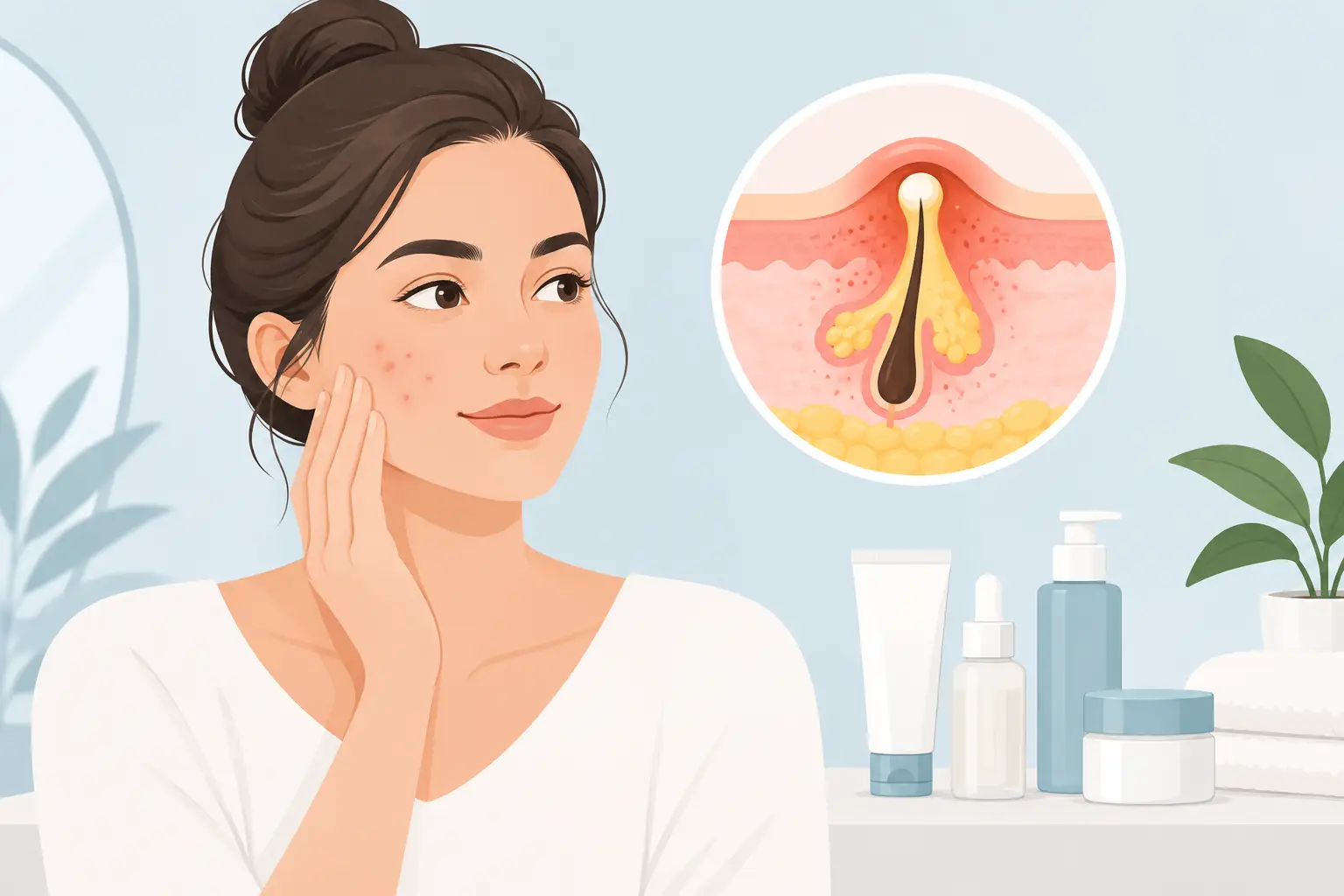
A breakout at 32, 41, or 55 can feel more frustrating than one in high school. Adult acne often appears alongside work stress, changing hormones, dry or sensitive skin, and a carefully built skincare routine that suddenly no longer seems to work. This adult acne treatment guide starts with a reassuring truth: persistent acne is common, treatable, and worth approaching with a plan rather than a stream of new products.
The most effective care is rarely about treating every blemish aggressively. It is about identifying the type of acne present, protecting the skin barrier, and choosing treatment at a pace your skin can tolerate. For some people, that means simplifying a routine. For others, it means combining home care with prescription treatment or in-office procedures under careful medical guidance.
Why adult acne needs a different approach
Adult acne is not always the same as teenage acne. It may show up as deep, tender bumps along the chin and jawline, small persistent clogged pores around the mouth, or inflamed breakouts that leave dark marks long after they heal. Hormonal shifts can play a role, especially around menstrual cycles, pregnancy transitions, perimenopause, or changes in birth control. Stress, sleep disruption, friction from masks or helmets, hair products, and certain medications can also contribute.
At the same time, adult skin may be more prone to dryness, sensitivity, redness, and early signs of aging. A routine that relies on frequent scrubs, strong astringents, or several active ingredients at once can create a cycle of irritation. When the barrier is compromised, skin may sting, peel, feel tight, and become more reactive. That does not necessarily mean acne is becoming worse, but it does mean the treatment plan needs adjustment.
This is why a thoughtful diagnosis matters. Acne can resemble rosacea, folliculitis, perioral dermatitis, or irritation from skincare products. Treating the wrong condition with harsh acne products can delay improvement.
Begin with the pattern, not the product
Before adding a new serum or spot treatment, look at how and where breakouts occur. Keep a simple note for four to six weeks: the location of lesions, whether they are painful, the timing of flares, new medications or supplements, and any products that touch the area. This does not need to become another demanding task. A few observations can make a medical consultation much more productive.
There are useful distinctions to make. Blackheads and whiteheads usually point to clogged pores. Red pimples and pustules indicate inflammation. Deep, sore nodules or cyst-like lesions deserve timely professional evaluation because they have a higher risk of scarring. A sudden acne-like eruption, especially when itchy or widespread, may have a different cause altogether.
Also consider what comes into repeated contact with the skin. Heavy hair oils can trigger forehead or temple breakouts. Makeup brushes, phone screens, pillowcases, shaving tools, and tight athletic gear are not the sole cause of acne, but they can aggravate an existing tendency. Small practical changes are helpful when they support treatment, not when they become a source of blame.
Build a routine your skin can maintain
A good acne routine should feel realistic on an ordinary Tuesday night. Consistency usually matters more than using the highest-strength product available.
Start with a mild cleanser used once or twice a day, depending on your skin’s dryness and activity level. Cleansing more often or using a rough washcloth does not clear pores faster. Follow with a non-comedogenic moisturizer. Many adults skip moisturizer because their skin feels oily, yet dehydration and irritation can make treatment harder to tolerate.
During the day, use a broad-spectrum sunscreen that feels comfortable enough to wear consistently. This is especially helpful if acne leaves dark spots, since sun exposure can make discoloration more noticeable and longer-lasting. It also protects skin that may be more sensitive while using acne treatments.
Introduce only one acne-focused active at a time. Common options include salicylic acid for clogged pores, benzoyl peroxide for inflammatory acne, and retinoids to help normalize pore turnover. Each can be useful, but they are not interchangeable, and more is not always better. Benzoyl peroxide may bleach fabrics. Retinoids can cause dryness during the adjustment period and should be discussed with a clinician if you are pregnant, trying to conceive, or breastfeeding.
If your skin becomes persistently sore, raw, or intensely peeling, pause the newest active product and return to gentle cleansing, moisturizing, and sunscreen until it settles. Pushing through significant irritation often makes adherence harder and can leave more visible redness or discoloration.
When over-the-counter care is not enough
An over-the-counter routine may be appropriate for mild acne, but it should not become a months-long experiment if breakouts are painful, spreading, or leaving marks. Consider a dermatology consultation when acne has not improved after about eight to 12 weeks of consistent care, when it affects your confidence or daily comfort, or when you are seeing scars develop.
A clinician can assess whether prescription topical treatment, oral medication, hormone-focused treatment, or a procedural approach is appropriate. The right option depends on the acne type, skin sensitivity, medical history, pregnancy plans, other medications, and how quickly improvement is needed.
For example, topical prescriptions may be a good fit for persistent comedonal or inflammatory acne, while oral medication may be considered for more widespread or deeper inflammation. Hormonal acne may respond well to therapies that are not the right choice for everyone. There is no single “best” treatment. A careful plan weighs expected benefit against side effects, lifestyle, and the long-term goal of protecting skin from scars.
Professional acne care should be tailored, not rushed
In-office care can complement medical treatment, particularly when congestion, inflammation, post-acne marks, or uneven texture remain concerns. Depending on the skin, a clinician may recommend carefully selected extractions, chemical peels, light- or energy-based treatment, or procedures focused on acne scarring after active breakouts are under control.
Timing matters. Aggressive resurfacing is generally not the first priority when active, inflamed acne is still present. Likewise, frequent facials or exfoliating procedures can be counterproductive if the skin barrier is already stressed. The goal is not to perform every available treatment. It is to choose the few interventions that match the current condition of the skin.
A personalized acne program should include follow-up. Skin changes gradually, and a plan that felt right at the first visit may need adjustment after several weeks. Reviewing tolerance, adherence, flare patterns, and pigmentation risk allows treatment to stay precise rather than becoming unnecessarily intense.
Treat marks and scars as separate concerns
A flat brown, red, or purple mark after a pimple is not always a scar. Post-inflammatory discoloration can fade, although it often requires patience and daily sun protection. The rate of fading varies with skin tone, acne severity, and ongoing inflammation. Treating new breakouts remains the first step, because each new lesion can create another mark.
True acne scars involve a change in texture, such as indentations or raised areas. These typically need a different strategy than active acne or discoloration. Treatment may involve a series of carefully selected procedures, and results are usually gradual. Honest expectations matter here: improvement is often possible, but no responsible plan promises perfectly poreless skin.
Resist the urge to pick, squeeze, or repeatedly touch lesions. It is understandable to want immediate relief, especially before an event, but manipulation increases inflammation and raises the chance of lingering marks or scars. If a painful lesion needs attention, professional care is safer than at-home extraction.
A calm, consistent plan is often the most effective one
Adult acne can carry an emotional weight that others do not always see. It may affect how comfortable you feel bare-faced, at work, in photographs, or in close conversations. You do not need to minimize that impact, and you do not need to accept a routine that leaves your skin constantly irritated.
Give a well-chosen plan enough time to work, while paying attention to signs that you need professional guidance. Clearer skin usually comes from steady, individualized care: a gentle foundation at home, appropriate medical treatment when needed, and thoughtful adjustments as your skin changes. Your skin deserves careful attention, not punishment.







A breakout at 32, 41, or 55 can feel more frustrating than one in high school. Adult acne often appears alongside work stress, changing hormones, dry or sensitive skin, and a carefully built skincare routine that suddenly no longer seems to work. This adult acne treatment guide starts with a reassuring truth: persistent acne is common, treatable, and worth approaching with a plan rather than a stream of new products.
The most effective care is rarely about treating every blemish aggressively. It is about identifying the type of acne present, protecting the skin barrier, and choosing treatment at a pace your skin can tolerate. For some people, that means simplifying a routine. For others, it means combining home care with prescription treatment or in-office procedures under careful medical guidance.
Why adult acne needs a different approach
Adult acne is not always the same as teenage acne. It may show up as deep, tender bumps along the chin and jawline, small persistent clogged pores around the mouth, or inflamed breakouts that leave dark marks long after they heal. Hormonal shifts can play a role, especially around menstrual cycles, pregnancy transitions, perimenopause, or changes in birth control. Stress, sleep disruption, friction from masks or helmets, hair products, and certain medications can also contribute.
At the same time, adult skin may be more prone to dryness, sensitivity, redness, and early signs of aging. A routine that relies on frequent scrubs, strong astringents, or several active ingredients at once can create a cycle of irritation. When the barrier is compromised, skin may sting, peel, feel tight, and become more reactive. That does not necessarily mean acne is becoming worse, but it does mean the treatment plan needs adjustment.
This is why a thoughtful diagnosis matters. Acne can resemble rosacea, folliculitis, perioral dermatitis, or irritation from skincare products. Treating the wrong condition with harsh acne products can delay improvement.
Begin with the pattern, not the product
Before adding a new serum or spot treatment, look at how and where breakouts occur. Keep a simple note for four to six weeks: the location of lesions, whether they are painful, the timing of flares, new medications or supplements, and any products that touch the area. This does not need to become another demanding task. A few observations can make a medical consultation much more productive.
There are useful distinctions to make. Blackheads and whiteheads usually point to clogged pores. Red pimples and pustules indicate inflammation. Deep, sore nodules or cyst-like lesions deserve timely professional evaluation because they have a higher risk of scarring. A sudden acne-like eruption, especially when itchy or widespread, may have a different cause altogether.
Also consider what comes into repeated contact with the skin. Heavy hair oils can trigger forehead or temple breakouts. Makeup brushes, phone screens, pillowcases, shaving tools, and tight athletic gear are not the sole cause of acne, but they can aggravate an existing tendency. Small practical changes are helpful when they support treatment, not when they become a source of blame.
Build a routine your skin can maintain
A good acne routine should feel realistic on an ordinary Tuesday night. Consistency usually matters more than using the highest-strength product available.
Start with a mild cleanser used once or twice a day, depending on your skin’s dryness and activity level. Cleansing more often or using a rough washcloth does not clear pores faster. Follow with a non-comedogenic moisturizer. Many adults skip moisturizer because their skin feels oily, yet dehydration and irritation can make treatment harder to tolerate.
During the day, use a broad-spectrum sunscreen that feels comfortable enough to wear consistently. This is especially helpful if acne leaves dark spots, since sun exposure can make discoloration more noticeable and longer-lasting. It also protects skin that may be more sensitive while using acne treatments.
Introduce only one acne-focused active at a time. Common options include salicylic acid for clogged pores, benzoyl peroxide for inflammatory acne, and retinoids to help normalize pore turnover. Each can be useful, but they are not interchangeable, and more is not always better. Benzoyl peroxide may bleach fabrics. Retinoids can cause dryness during the adjustment period and should be discussed with a clinician if you are pregnant, trying to conceive, or breastfeeding.
If your skin becomes persistently sore, raw, or intensely peeling, pause the newest active product and return to gentle cleansing, moisturizing, and sunscreen until it settles. Pushing through significant irritation often makes adherence harder and can leave more visible redness or discoloration.
When over-the-counter care is not enough
An over-the-counter routine may be appropriate for mild acne, but it should not become a months-long experiment if breakouts are painful, spreading, or leaving marks. Consider a dermatology consultation when acne has not improved after about eight to 12 weeks of consistent care, when it affects your confidence or daily comfort, or when you are seeing scars develop.
A clinician can assess whether prescription topical treatment, oral medication, hormone-focused treatment, or a procedural approach is appropriate. The right option depends on the acne type, skin sensitivity, medical history, pregnancy plans, other medications, and how quickly improvement is needed.
For example, topical prescriptions may be a good fit for persistent comedonal or inflammatory acne, while oral medication may be considered for more widespread or deeper inflammation. Hormonal acne may respond well to therapies that are not the right choice for everyone. There is no single “best” treatment. A careful plan weighs expected benefit against side effects, lifestyle, and the long-term goal of protecting skin from scars.
Professional acne care should be tailored, not rushed
In-office care can complement medical treatment, particularly when congestion, inflammation, post-acne marks, or uneven texture remain concerns. Depending on the skin, a clinician may recommend carefully selected extractions, chemical peels, light- or energy-based treatment, or procedures focused on acne scarring after active breakouts are under control.
Timing matters. Aggressive resurfacing is generally not the first priority when active, inflamed acne is still present. Likewise, frequent facials or exfoliating procedures can be counterproductive if the skin barrier is already stressed. The goal is not to perform every available treatment. It is to choose the few interventions that match the current condition of the skin.
A personalized acne program should include follow-up. Skin changes gradually, and a plan that felt right at the first visit may need adjustment after several weeks. Reviewing tolerance, adherence, flare patterns, and pigmentation risk allows treatment to stay precise rather than becoming unnecessarily intense.
Treat marks and scars as separate concerns
A flat brown, red, or purple mark after a pimple is not always a scar. Post-inflammatory discoloration can fade, although it often requires patience and daily sun protection. The rate of fading varies with skin tone, acne severity, and ongoing inflammation. Treating new breakouts remains the first step, because each new lesion can create another mark.
True acne scars involve a change in texture, such as indentations or raised areas. These typically need a different strategy than active acne or discoloration. Treatment may involve a series of carefully selected procedures, and results are usually gradual. Honest expectations matter here: improvement is often possible, but no responsible plan promises perfectly poreless skin.
Resist the urge to pick, squeeze, or repeatedly touch lesions. It is understandable to want immediate relief, especially before an event, but manipulation increases inflammation and raises the chance of lingering marks or scars. If a painful lesion needs attention, professional care is safer than at-home extraction.
A calm, consistent plan is often the most effective one
Adult acne can carry an emotional weight that others do not always see. It may affect how comfortable you feel bare-faced, at work, in photographs, or in close conversations. You do not need to minimize that impact, and you do not need to accept a routine that leaves your skin constantly irritated.
Give a well-chosen plan enough time to work, while paying attention to signs that you need professional guidance. Clearer skin usually comes from steady, individualized care: a gentle foundation at home, appropriate medical treatment when needed, and thoughtful adjustments as your skin changes. Your skin deserves careful attention, not punishment.