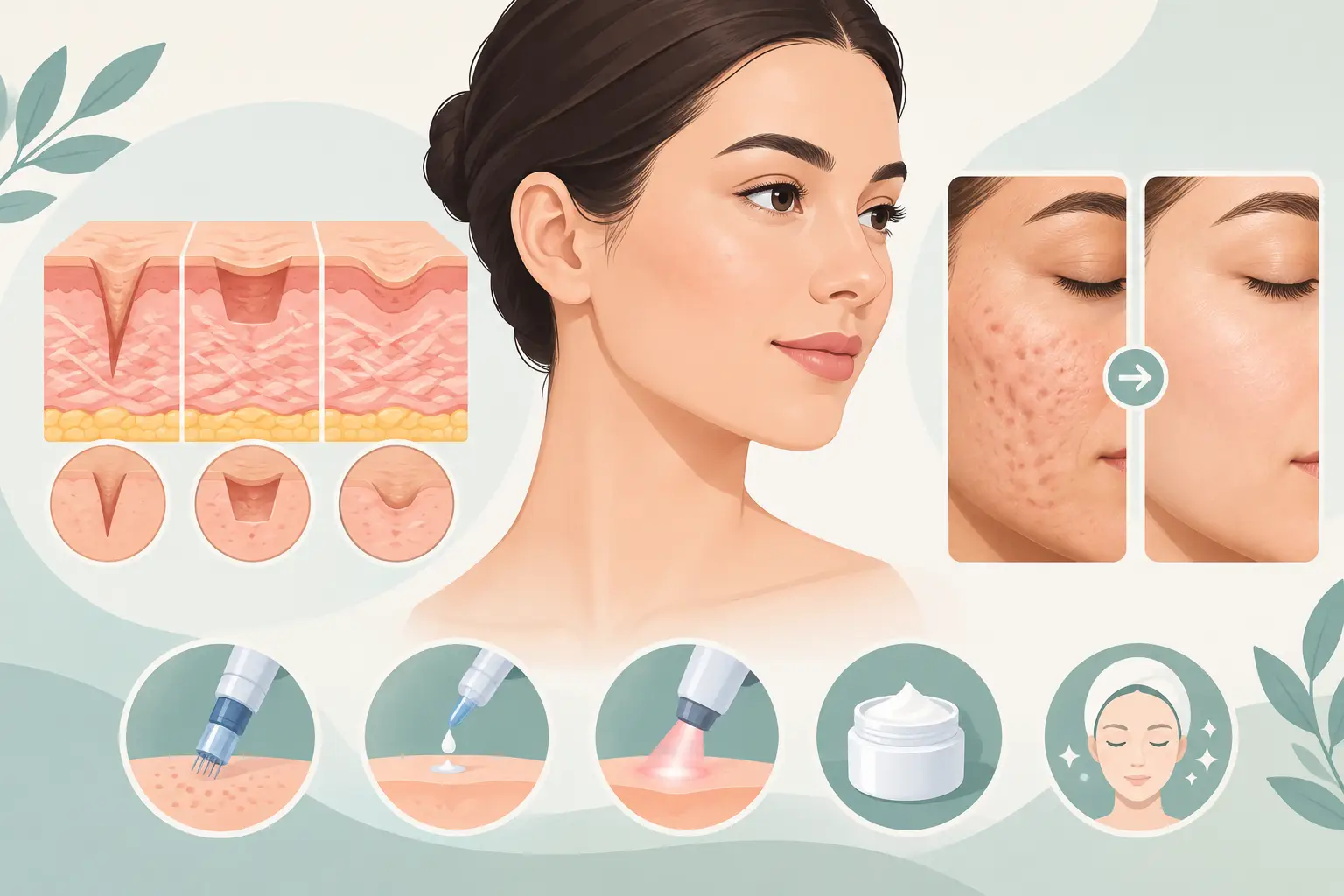
A scar may look like one small mark in the mirror, yet it can change the way makeup sits, how light reflects across the cheeks, and how comfortable someone feels in close conversation. The most useful acne scar treatment examples begin with a simple truth: acne scars are not all the same, so they should not all be treated the same way.
Some marks are indented and textured. Others are flat but leave behind red, pink, brown, or gray discoloration. Many people have a combination of both, along with occasional breakouts that still need attention. A thoughtful plan starts by identifying what is actually present, then selecting only the treatments that support that skin's needs.
Why the Type of Acne Scar Changes the Plan
Acne can affect the skin at different depths. When inflammation damages collagen, the healing process may leave an indentation. These are commonly described as ice-pick, boxcar, or rolling scars. Ice-pick scars are narrow and deep, boxcar scars have more defined edges, and rolling scars create a wave-like texture that can be more visible from the side.
Discoloration after acne is different from a true textural scar. Post-inflammatory redness or hyperpigmentation may fade with time, sun protection, and carefully selected skin care or procedures. A treatment that helps uneven tone may not substantially lift a deep indentation, just as a procedure designed for texture may not be the first choice for lingering pigment.
This distinction matters because treatment is not about choosing the most intensive option. It is about matching the approach to scar shape, skin tone, sensitivity, current acne activity, and the amount of downtime that feels realistic in everyday life.
Acne Scar Treatment Examples by Concern
Example 1: Rolling scars with uneven cheek texture
Rolling scars often respond well when the tethering beneath the skin is addressed. In some cases, a clinician may recommend a procedure that gently releases those fibrous bands, allowing the depressed area to sit more naturally. Depending on the scar pattern, this may be paired with a collagen-stimulating treatment to support gradual improvement in surface texture.
For a person whose main concern is cheeks that look uneven in side lighting, the plan may be spaced over several visits rather than compressed into one aggressive session. This allows the skin to recover, lets the clinician reassess the response, and may reduce the temptation to treat beyond what is needed.
Example 2: Broad boxcar scars after long-term acne
Boxcar scars can have sharper borders and a more defined depression. A personalized approach may combine resurfacing-based treatment with collagen-supporting care, depending on scar depth and skin characteristics. Some scars improve noticeably with a series, while deeper areas may need a more targeted method.
The trade-off is downtime. Procedures that create more visible skin renewal can require several days of redness, dryness, or flaking. For someone with a demanding schedule, a gentler series may be preferable even if results emerge more gradually. The right pace is the one that can be followed consistently and safely.
Example 3: Narrow, deep ice-pick scars
Ice-pick scars are small in width but can be deep enough that broad resurfacing alone may not fully address them. These scars often benefit from a focused technique selected for their individual shape and depth. The surrounding skin may then be treated separately if there is also generalized texture or enlarged pores.
This is a useful reminder that one face may need more than one method, but not every available method. Treating the deepest scars precisely while taking a conservative approach elsewhere can create a more natural overall result.
Example 4: Flat dark marks after acne
A person may describe every lingering mark as a scar, but if the surface feels smooth and the concern is mainly brown or gray discoloration, the goal shifts toward tone. Daily broad-spectrum sunscreen, acne control, and skin-calming topical care are often foundational. Depending on the skin, carefully planned pigment-focused procedures may also be considered.
Darker skin tones deserve particular care because irritation itself can trigger more pigment. A slower approach with attention to barrier health may be more valuable than pursuing rapid exfoliation or repeated high-intensity treatments.
Example 5: Red marks with occasional active breakouts
When acne is still active, scar treatment should be considered alongside breakout management. Treating texture while new inflammatory lesions continue to form can be frustrating, since each flare has the potential to leave another mark.
In this situation, a clinician may first prioritize an acne program designed around oiliness, inflammation, comedones, sensitivity, and lifestyle factors. Once the skin is calmer, scar-focused care can be introduced with a clearer baseline. This does not always mean waiting until every blemish disappears, but it does mean making active acne part of the treatment conversation.
What a Personalized Treatment Course Can Look Like
An effective scar plan rarely begins with a procedure menu. It begins with a close look at the skin under different lighting, a discussion of how long the marks have been present, prior treatments, current products, and any tendency toward prolonged redness or pigmentation.
For example, someone with mild rolling scars and acne-related redness may begin with skin-calming care and gradual collagen-focused treatment over several months. Someone with a mix of deep ice-pick scars and broader depressions may need targeted care for the deepest areas first, followed by treatment that supports overall texture. Another person may decide that subtle softening is the right goal, rather than pursuing every visible mark.
That last point is worth saying clearly: improvement does not have to mean erasing every sign that acne ever occurred. Natural-looking results often come from reducing contrast, softening texture, and helping skin look more even in ordinary light. Progress is usually measured over time, not immediately after a single appointment.
How to Prepare for Acne Scar Care
The weeks before treatment can influence both comfort and recovery. Avoiding picking is essential, even when a breakout feels difficult to leave alone. Gentle cleansing, appropriate moisturization, and consistent sunscreen help support the skin barrier. If a clinician recommends pausing certain active ingredients before a procedure, that guidance should be followed closely.
It also helps to plan around real life. If your work includes frequent meetings, photos, or events, ask what redness or peeling may look like and how long it may last. If you are prone to dark marks after irritation, ask how your skin tone affects the choice of settings, treatment intensity, and aftercare.
During consultation, clear photos of how the scars look at their most noticeable can be useful, especially if side lighting makes them stand out more than they do in the exam room. Share previous treatments honestly, including at-home acids, retinoids, peels, and any history of cold sores or unusual healing.
What Results and Recovery Really Depend On
Results vary because skin healing varies. Scar type, depth, age of the scar, active acne, sun exposure, smoking, skin care habits, and the chosen treatment method can all affect the outcome. Collagen remodeling also takes time, which is why meaningful changes may continue to develop weeks or months after treatment.
A responsible plan includes aftercare, not just the procedure itself. That may involve gentle products, avoiding heat or friction for a period, diligent sun protection, and scheduled follow-up to assess healing. If the skin reacts more strongly than expected, the plan can be adjusted rather than pushed forward on a fixed schedule.
The best acne scar treatment examples are not dramatic before-and-after promises. They are carefully considered plans that respect the difference between redness and texture, shallow scars and deep scars, immediate goals and long-term skin health. Start with an honest assessment of what you see, what bothers you most, and what level of recovery fits your life. From there, gradual, precise care can make the mirror feel a little kinder.







A scar may look like one small mark in the mirror, yet it can change the way makeup sits, how light reflects across the cheeks, and how comfortable someone feels in close conversation. The most useful acne scar treatment examples begin with a simple truth: acne scars are not all the same, so they should not all be treated the same way.
Some marks are indented and textured. Others are flat but leave behind red, pink, brown, or gray discoloration. Many people have a combination of both, along with occasional breakouts that still need attention. A thoughtful plan starts by identifying what is actually present, then selecting only the treatments that support that skin's needs.
Why the Type of Acne Scar Changes the Plan
Acne can affect the skin at different depths. When inflammation damages collagen, the healing process may leave an indentation. These are commonly described as ice-pick, boxcar, or rolling scars. Ice-pick scars are narrow and deep, boxcar scars have more defined edges, and rolling scars create a wave-like texture that can be more visible from the side.
Discoloration after acne is different from a true textural scar. Post-inflammatory redness or hyperpigmentation may fade with time, sun protection, and carefully selected skin care or procedures. A treatment that helps uneven tone may not substantially lift a deep indentation, just as a procedure designed for texture may not be the first choice for lingering pigment.
This distinction matters because treatment is not about choosing the most intensive option. It is about matching the approach to scar shape, skin tone, sensitivity, current acne activity, and the amount of downtime that feels realistic in everyday life.
Acne Scar Treatment Examples by Concern
Example 1: Rolling scars with uneven cheek texture
Rolling scars often respond well when the tethering beneath the skin is addressed. In some cases, a clinician may recommend a procedure that gently releases those fibrous bands, allowing the depressed area to sit more naturally. Depending on the scar pattern, this may be paired with a collagen-stimulating treatment to support gradual improvement in surface texture.
For a person whose main concern is cheeks that look uneven in side lighting, the plan may be spaced over several visits rather than compressed into one aggressive session. This allows the skin to recover, lets the clinician reassess the response, and may reduce the temptation to treat beyond what is needed.
Example 2: Broad boxcar scars after long-term acne
Boxcar scars can have sharper borders and a more defined depression. A personalized approach may combine resurfacing-based treatment with collagen-supporting care, depending on scar depth and skin characteristics. Some scars improve noticeably with a series, while deeper areas may need a more targeted method.
The trade-off is downtime. Procedures that create more visible skin renewal can require several days of redness, dryness, or flaking. For someone with a demanding schedule, a gentler series may be preferable even if results emerge more gradually. The right pace is the one that can be followed consistently and safely.
Example 3: Narrow, deep ice-pick scars
Ice-pick scars are small in width but can be deep enough that broad resurfacing alone may not fully address them. These scars often benefit from a focused technique selected for their individual shape and depth. The surrounding skin may then be treated separately if there is also generalized texture or enlarged pores.
This is a useful reminder that one face may need more than one method, but not every available method. Treating the deepest scars precisely while taking a conservative approach elsewhere can create a more natural overall result.
Example 4: Flat dark marks after acne
A person may describe every lingering mark as a scar, but if the surface feels smooth and the concern is mainly brown or gray discoloration, the goal shifts toward tone. Daily broad-spectrum sunscreen, acne control, and skin-calming topical care are often foundational. Depending on the skin, carefully planned pigment-focused procedures may also be considered.
Darker skin tones deserve particular care because irritation itself can trigger more pigment. A slower approach with attention to barrier health may be more valuable than pursuing rapid exfoliation or repeated high-intensity treatments.
Example 5: Red marks with occasional active breakouts
When acne is still active, scar treatment should be considered alongside breakout management. Treating texture while new inflammatory lesions continue to form can be frustrating, since each flare has the potential to leave another mark.
In this situation, a clinician may first prioritize an acne program designed around oiliness, inflammation, comedones, sensitivity, and lifestyle factors. Once the skin is calmer, scar-focused care can be introduced with a clearer baseline. This does not always mean waiting until every blemish disappears, but it does mean making active acne part of the treatment conversation.
What a Personalized Treatment Course Can Look Like
An effective scar plan rarely begins with a procedure menu. It begins with a close look at the skin under different lighting, a discussion of how long the marks have been present, prior treatments, current products, and any tendency toward prolonged redness or pigmentation.
For example, someone with mild rolling scars and acne-related redness may begin with skin-calming care and gradual collagen-focused treatment over several months. Someone with a mix of deep ice-pick scars and broader depressions may need targeted care for the deepest areas first, followed by treatment that supports overall texture. Another person may decide that subtle softening is the right goal, rather than pursuing every visible mark.
That last point is worth saying clearly: improvement does not have to mean erasing every sign that acne ever occurred. Natural-looking results often come from reducing contrast, softening texture, and helping skin look more even in ordinary light. Progress is usually measured over time, not immediately after a single appointment.
How to Prepare for Acne Scar Care
The weeks before treatment can influence both comfort and recovery. Avoiding picking is essential, even when a breakout feels difficult to leave alone. Gentle cleansing, appropriate moisturization, and consistent sunscreen help support the skin barrier. If a clinician recommends pausing certain active ingredients before a procedure, that guidance should be followed closely.
It also helps to plan around real life. If your work includes frequent meetings, photos, or events, ask what redness or peeling may look like and how long it may last. If you are prone to dark marks after irritation, ask how your skin tone affects the choice of settings, treatment intensity, and aftercare.
During consultation, clear photos of how the scars look at their most noticeable can be useful, especially if side lighting makes them stand out more than they do in the exam room. Share previous treatments honestly, including at-home acids, retinoids, peels, and any history of cold sores or unusual healing.
What Results and Recovery Really Depend On
Results vary because skin healing varies. Scar type, depth, age of the scar, active acne, sun exposure, smoking, skin care habits, and the chosen treatment method can all affect the outcome. Collagen remodeling also takes time, which is why meaningful changes may continue to develop weeks or months after treatment.
A responsible plan includes aftercare, not just the procedure itself. That may involve gentle products, avoiding heat or friction for a period, diligent sun protection, and scheduled follow-up to assess healing. If the skin reacts more strongly than expected, the plan can be adjusted rather than pushed forward on a fixed schedule.
The best acne scar treatment examples are not dramatic before-and-after promises. They are carefully considered plans that respect the difference between redness and texture, shallow scars and deep scars, immediate goals and long-term skin health. Start with an honest assessment of what you see, what bothers you most, and what level of recovery fits your life. From there, gradual, precise care can make the mirror feel a little kinder.