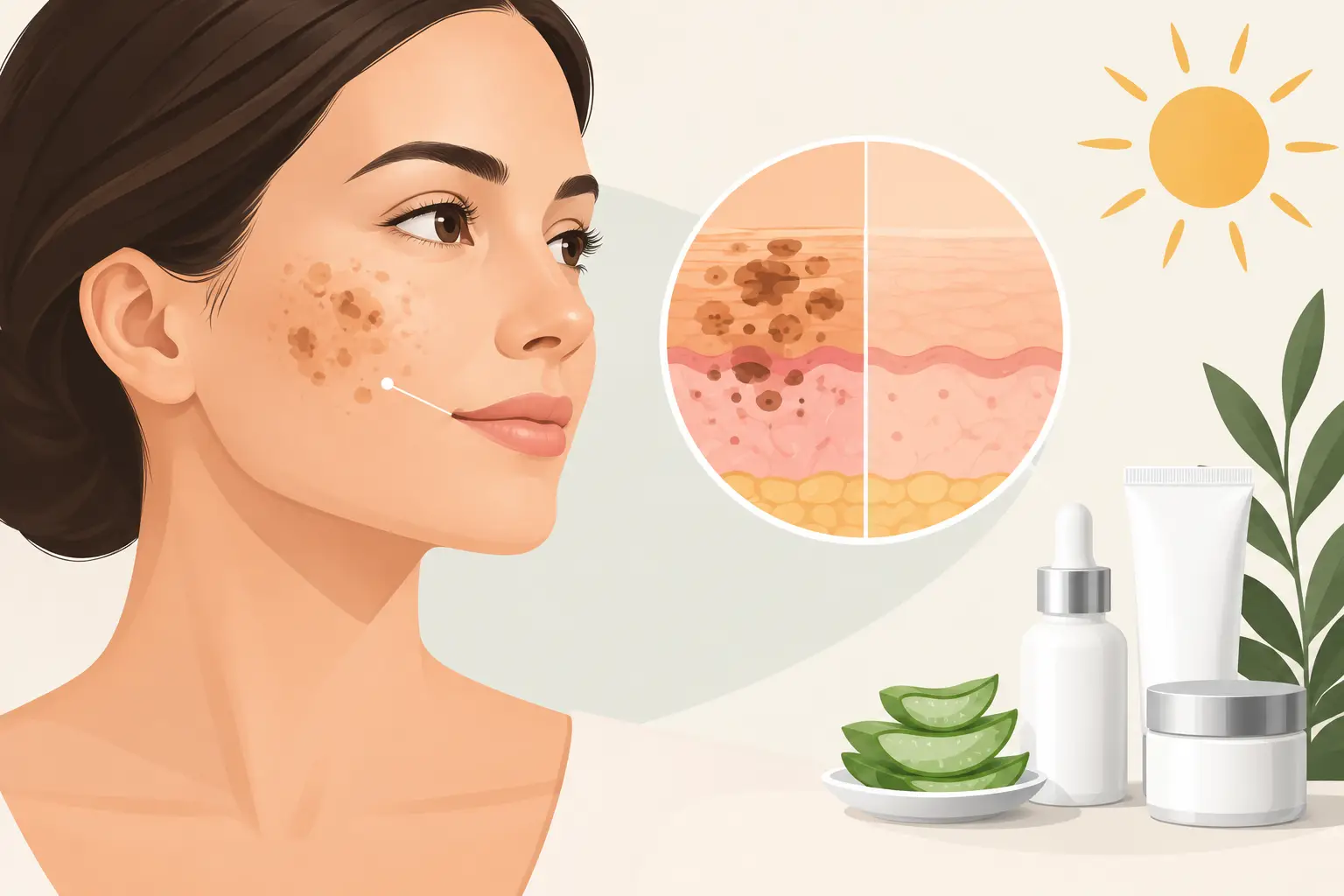
A sunspot can seem to appear overnight: a small brown mark on the cheek, forehead, chest, or backs of the hands that makes the complexion look less even. Yet the best sunspot treatments are rarely about finding one strongest product or one fastest procedure. They begin with identifying what the spot actually is, how deeply pigment sits in the skin, and how your skin tends to respond to irritation.
Sunspots are common, especially after years of incidental sun exposure from commuting, outdoor activities, driving, or simply living near bright windows. They are not a sign that you have done anything wrong. They are, however, a useful signal that your skin may benefit from a more deliberate approach to pigment care and sun protection.
What Is a Sunspot, and Why Does It Matter?
Most people use “sunspot” to describe a flat tan, brown, or gray-brown mark caused by cumulative ultraviolet exposure. Clinically, these are often called solar lentigines. They commonly appear on areas that receive regular light exposure, including the face, shoulders, chest, forearms, and hands.
But not every dark mark is a sunspot. Melasma often appears as broader, symmetrical patches on the cheeks, forehead, or upper lip and can be affected by hormones, heat, and visible light as well as UV exposure. Post-inflammatory hyperpigmentation develops after acne, eczema, injury, or irritation. Freckles have their own genetic pattern and may deepen with sun exposure.
This distinction changes treatment choices. A laser setting that may help a discrete sunspot can worsen melasma if the skin is not assessed carefully. Similarly, a strong exfoliating routine can leave reactive skin more inflamed and, paradoxically, more pigmented. Careful diagnosis is not an extra step. It is the foundation of a safe treatment plan.
A spot that is new, changing, irregular in shape or color, itchy, bleeding, or otherwise concerning should be evaluated by a qualified medical professional before cosmetic treatment. Pigment should never be treated on appearance alone when there is any doubt about its cause.
The Best Sunspot Treatments Start With Prevention
No pigment treatment can fully keep up with ongoing sun exposure. If a treatment lightens a spot but daily UV exposure continues, pigment-producing cells receive the same signal to create more melanin. This is why sunscreen is not simply an aftercare recommendation. It is part of the treatment itself.
Use a broad-spectrum sunscreen with SPF 30 or higher every morning, and apply enough to cover the face, neck, ears, and any exposed chest or arms. Reapply when spending extended time outdoors, sweating, or being near reflective surfaces. A wide-brimmed hat, sunglasses, and shade add practical protection that sunscreen alone cannot always provide.
For people prone to melasma or stubborn discoloration, tinted sunscreen containing iron oxides can be particularly useful because visible light may also contribute to pigmentation. The right formula is the one you can wear consistently. A sunscreen that feels comfortable under makeup or does not leave an unwanted cast is more valuable than a technically excellent product left unused on the shelf.
At-Home Ingredients for Mild, Even Pigment
Topical care can gradually improve mild sunspots and help maintain results after an in-office procedure. It requires patience. Skin turnover and pigment clearance occur over weeks, not days, and overusing active ingredients can trigger dryness and inflammation.
Vitamin C is often used in the morning because it provides antioxidant support and can complement sunscreen. Niacinamide is a gentler option that may support a more even-looking tone while helping the skin barrier. Azelaic acid can be helpful for people managing both acne-related marks and discoloration, particularly when stronger ingredients feel irritating.
Retinoids increase cell turnover and can support long-term improvement in uneven tone and texture. Over-the-counter retinol may suit some people, while prescription tretinoin may be appropriate when recommended by a clinician. Start slowly, use moisturizer, and avoid layering multiple irritating products on the same night unless your skin has been guided to tolerate them.
Hydroquinone remains an effective prescription option for certain pigment concerns, but it is not a casual, indefinite-use ingredient. A clinician may recommend it for a defined period, with monitoring and a plan for maintenance afterward. It may not be appropriate for every skin type, pregnancy status, or pattern of discoloration.
At-home care is usually best for gradual refinement rather than dramatic removal of a long-standing, sharply defined sunspot. If a spot has not changed after a consistent routine, it may be time to discuss procedural options rather than adding more and more products.
In-Office Options for More Noticeable Sunspots
For clearly diagnosed solar lentigines, in-office treatments can often produce more visible improvement than topical products alone. The best option depends on the spot’s depth and color, your natural skin tone, history of pigmentation after irritation, current skincare routine, and tolerance for downtime.
Light and Laser Treatments
Intense pulsed light, often called IPL, and certain pigment-targeting lasers work by directing light energy toward excess melanin. The treated spot may temporarily darken before it flakes or fades, which is a normal part of the response for many patients. Results can be satisfying for scattered sunspots, but treatment must be selected carefully for deeper skin tones or melasma-prone skin, where heat and inflammation can create rebound pigmentation.
A thoughtful consultation should include more than choosing a device. It should consider whether the mark is truly a sunspot, whether active tanning is present, and whether your skincare should be adjusted before and after treatment. The goal is clearer-looking skin without creating unnecessary irritation.
Chemical Peels
Superficial chemical peels use controlled exfoliation to improve dullness, uneven tone, and fine texture. They may be a good choice when sunspots occur alongside congestion, rough texture, or widespread mild discoloration. Peels are often performed as a series, and the formula and strength should be matched to the skin’s sensitivity and pigment risk.
Stronger is not always better. An overly aggressive peel can disrupt the barrier, prolong redness, and increase the chance of post-inflammatory hyperpigmentation. A measured treatment plan usually delivers a more natural and reliable improvement.
Targeted Procedures and Combination Care
Some isolated spots respond best to a precise, spot-focused procedure, while others require a broader plan that combines a topical regimen with light-based treatment or peels. Combination care is not about doing more at once. It is about choosing treatments that address different parts of the pigment process without overwhelming the skin.
For example, an in-office procedure may reduce visible pigment, while daily sunscreen and a carefully selected topical routine help protect the result. When texture, acne marks, redness, and sunspots appear together, treatment timing matters. Addressing every concern aggressively in one visit is not always the kindest approach for the skin.
How to Choose a Treatment Plan That Fits Your Skin
The right plan begins with a few practical questions: Is the pigment made up of individual spots or larger patches? Has it changed recently? Do you tan easily or develop dark marks after acne or irritation? Are you pregnant, nursing, using prescription acne medication, or planning a period of significant sun exposure?
Your timeline matters, too. A procedure may offer a quicker visible change, but it can involve temporary darkening, redness, or flaking. Topicals are typically more gradual and require consistent use. Neither approach is automatically better. The best choice is one that fits your skin biology, schedule, comfort with downtime, and willingness to maintain sun protection.
It is also reasonable to be cautious about packages that promise to erase every mark. Skin responds individually, and pigment can recur with time and exposure. A trustworthy plan explains the expected improvement, possible side effects, recovery period, cost considerations, and what will be done if your skin needs a slower pace.
Aftercare Protects the Result
After a peel, laser, or IPL treatment, follow the aftercare instructions given for your specific procedure. In general, protect the treated area from sun exposure, avoid picking at darkened or flaking spots, and keep the routine gentle while the skin recovers. Pause exfoliating acids, retinoids, and other potentially irritating actives until you are advised to restart them.
Do not judge a pigment treatment too quickly. Treated areas can look temporarily darker, and the skin may need several weeks to settle. Taking photos in the same lighting before treatment and at planned follow-ups can offer a more accurate view of progress than checking the mirror every day.
Clearer-looking skin is often built through small, precise choices: a correct diagnosis, a treatment matched to your pigment pattern, and daily protection that respects the results you have worked for. The most effective plan should feel considered, never rushed, and should leave room for your skin to respond at its own pace.







A sunspot can seem to appear overnight: a small brown mark on the cheek, forehead, chest, or backs of the hands that makes the complexion look less even. Yet the best sunspot treatments are rarely about finding one strongest product or one fastest procedure. They begin with identifying what the spot actually is, how deeply pigment sits in the skin, and how your skin tends to respond to irritation.
Sunspots are common, especially after years of incidental sun exposure from commuting, outdoor activities, driving, or simply living near bright windows. They are not a sign that you have done anything wrong. They are, however, a useful signal that your skin may benefit from a more deliberate approach to pigment care and sun protection.
What Is a Sunspot, and Why Does It Matter?
Most people use “sunspot” to describe a flat tan, brown, or gray-brown mark caused by cumulative ultraviolet exposure. Clinically, these are often called solar lentigines. They commonly appear on areas that receive regular light exposure, including the face, shoulders, chest, forearms, and hands.
But not every dark mark is a sunspot. Melasma often appears as broader, symmetrical patches on the cheeks, forehead, or upper lip and can be affected by hormones, heat, and visible light as well as UV exposure. Post-inflammatory hyperpigmentation develops after acne, eczema, injury, or irritation. Freckles have their own genetic pattern and may deepen with sun exposure.
This distinction changes treatment choices. A laser setting that may help a discrete sunspot can worsen melasma if the skin is not assessed carefully. Similarly, a strong exfoliating routine can leave reactive skin more inflamed and, paradoxically, more pigmented. Careful diagnosis is not an extra step. It is the foundation of a safe treatment plan.
A spot that is new, changing, irregular in shape or color, itchy, bleeding, or otherwise concerning should be evaluated by a qualified medical professional before cosmetic treatment. Pigment should never be treated on appearance alone when there is any doubt about its cause.
The Best Sunspot Treatments Start With Prevention
No pigment treatment can fully keep up with ongoing sun exposure. If a treatment lightens a spot but daily UV exposure continues, pigment-producing cells receive the same signal to create more melanin. This is why sunscreen is not simply an aftercare recommendation. It is part of the treatment itself.
Use a broad-spectrum sunscreen with SPF 30 or higher every morning, and apply enough to cover the face, neck, ears, and any exposed chest or arms. Reapply when spending extended time outdoors, sweating, or being near reflective surfaces. A wide-brimmed hat, sunglasses, and shade add practical protection that sunscreen alone cannot always provide.
For people prone to melasma or stubborn discoloration, tinted sunscreen containing iron oxides can be particularly useful because visible light may also contribute to pigmentation. The right formula is the one you can wear consistently. A sunscreen that feels comfortable under makeup or does not leave an unwanted cast is more valuable than a technically excellent product left unused on the shelf.
At-Home Ingredients for Mild, Even Pigment
Topical care can gradually improve mild sunspots and help maintain results after an in-office procedure. It requires patience. Skin turnover and pigment clearance occur over weeks, not days, and overusing active ingredients can trigger dryness and inflammation.
Vitamin C is often used in the morning because it provides antioxidant support and can complement sunscreen. Niacinamide is a gentler option that may support a more even-looking tone while helping the skin barrier. Azelaic acid can be helpful for people managing both acne-related marks and discoloration, particularly when stronger ingredients feel irritating.
Retinoids increase cell turnover and can support long-term improvement in uneven tone and texture. Over-the-counter retinol may suit some people, while prescription tretinoin may be appropriate when recommended by a clinician. Start slowly, use moisturizer, and avoid layering multiple irritating products on the same night unless your skin has been guided to tolerate them.
Hydroquinone remains an effective prescription option for certain pigment concerns, but it is not a casual, indefinite-use ingredient. A clinician may recommend it for a defined period, with monitoring and a plan for maintenance afterward. It may not be appropriate for every skin type, pregnancy status, or pattern of discoloration.
At-home care is usually best for gradual refinement rather than dramatic removal of a long-standing, sharply defined sunspot. If a spot has not changed after a consistent routine, it may be time to discuss procedural options rather than adding more and more products.
In-Office Options for More Noticeable Sunspots
For clearly diagnosed solar lentigines, in-office treatments can often produce more visible improvement than topical products alone. The best option depends on the spot’s depth and color, your natural skin tone, history of pigmentation after irritation, current skincare routine, and tolerance for downtime.
Light and Laser Treatments
Intense pulsed light, often called IPL, and certain pigment-targeting lasers work by directing light energy toward excess melanin. The treated spot may temporarily darken before it flakes or fades, which is a normal part of the response for many patients. Results can be satisfying for scattered sunspots, but treatment must be selected carefully for deeper skin tones or melasma-prone skin, where heat and inflammation can create rebound pigmentation.
A thoughtful consultation should include more than choosing a device. It should consider whether the mark is truly a sunspot, whether active tanning is present, and whether your skincare should be adjusted before and after treatment. The goal is clearer-looking skin without creating unnecessary irritation.
Chemical Peels
Superficial chemical peels use controlled exfoliation to improve dullness, uneven tone, and fine texture. They may be a good choice when sunspots occur alongside congestion, rough texture, or widespread mild discoloration. Peels are often performed as a series, and the formula and strength should be matched to the skin’s sensitivity and pigment risk.
Stronger is not always better. An overly aggressive peel can disrupt the barrier, prolong redness, and increase the chance of post-inflammatory hyperpigmentation. A measured treatment plan usually delivers a more natural and reliable improvement.
Targeted Procedures and Combination Care
Some isolated spots respond best to a precise, spot-focused procedure, while others require a broader plan that combines a topical regimen with light-based treatment or peels. Combination care is not about doing more at once. It is about choosing treatments that address different parts of the pigment process without overwhelming the skin.
For example, an in-office procedure may reduce visible pigment, while daily sunscreen and a carefully selected topical routine help protect the result. When texture, acne marks, redness, and sunspots appear together, treatment timing matters. Addressing every concern aggressively in one visit is not always the kindest approach for the skin.
How to Choose a Treatment Plan That Fits Your Skin
The right plan begins with a few practical questions: Is the pigment made up of individual spots or larger patches? Has it changed recently? Do you tan easily or develop dark marks after acne or irritation? Are you pregnant, nursing, using prescription acne medication, or planning a period of significant sun exposure?
Your timeline matters, too. A procedure may offer a quicker visible change, but it can involve temporary darkening, redness, or flaking. Topicals are typically more gradual and require consistent use. Neither approach is automatically better. The best choice is one that fits your skin biology, schedule, comfort with downtime, and willingness to maintain sun protection.
It is also reasonable to be cautious about packages that promise to erase every mark. Skin responds individually, and pigment can recur with time and exposure. A trustworthy plan explains the expected improvement, possible side effects, recovery period, cost considerations, and what will be done if your skin needs a slower pace.
Aftercare Protects the Result
After a peel, laser, or IPL treatment, follow the aftercare instructions given for your specific procedure. In general, protect the treated area from sun exposure, avoid picking at darkened or flaking spots, and keep the routine gentle while the skin recovers. Pause exfoliating acids, retinoids, and other potentially irritating actives until you are advised to restart them.
Do not judge a pigment treatment too quickly. Treated areas can look temporarily darker, and the skin may need several weeks to settle. Taking photos in the same lighting before treatment and at planned follow-ups can offer a more accurate view of progress than checking the mirror every day.
Clearer-looking skin is often built through small, precise choices: a correct diagnosis, a treatment matched to your pigment pattern, and daily protection that respects the results you have worked for. The most effective plan should feel considered, never rushed, and should leave room for your skin to respond at its own pace.