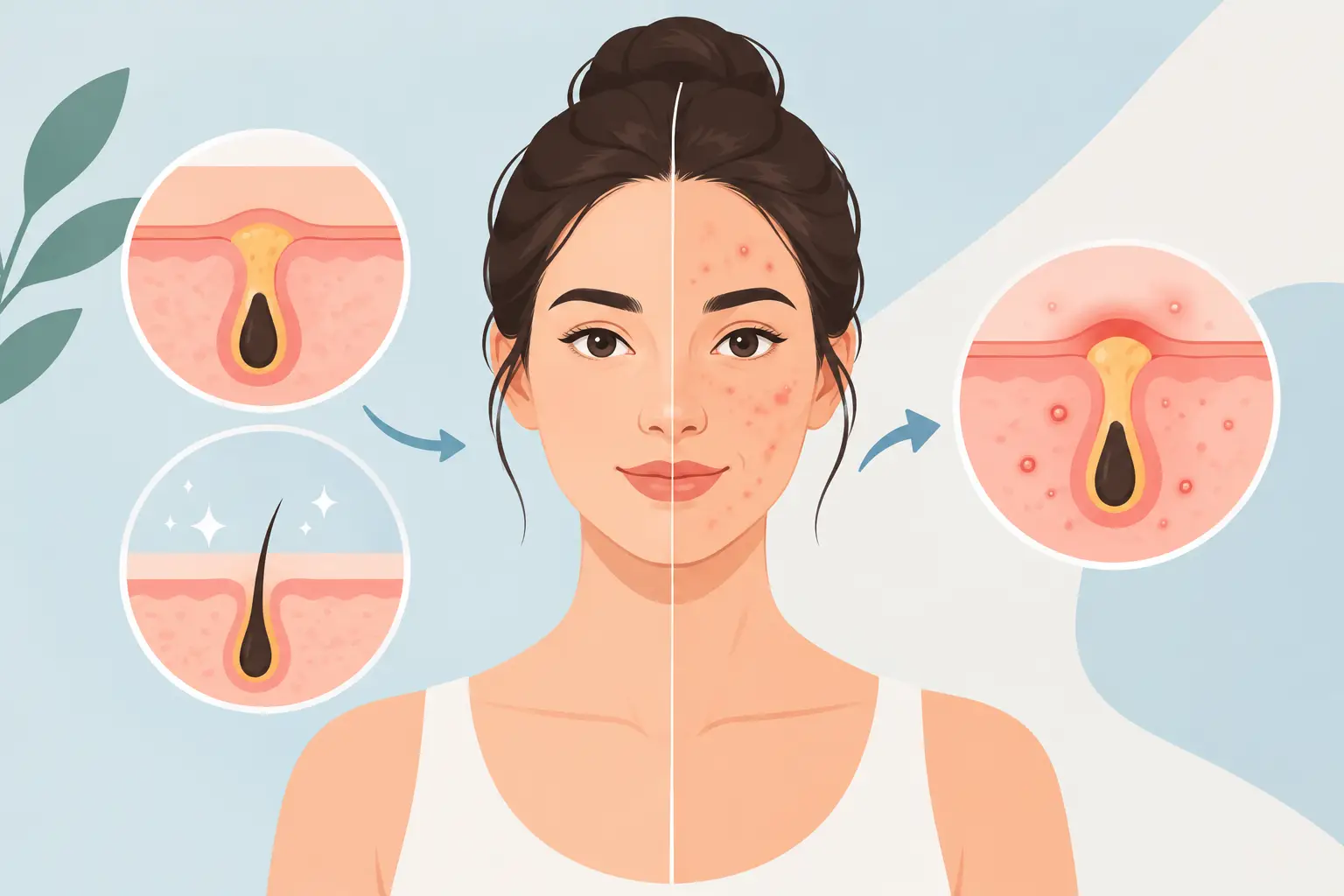
A breakout that returns after months of clear skin can feel especially discouraging. You may be asking, why does acne return when you have been consistent, careful, and finally felt comfortable with your skin? The answer is rarely that you have done something wrong. Acne is a chronic, fluctuating skin condition, and the factors that create it can change with hormones, stress, products, seasons, and treatment timing.
Clear skin is a meaningful result, but it does not always mean the underlying tendency toward clogged pores and inflammation has disappeared. Understanding what changed helps make the next plan more precise - and often less frustrating.
Why Does Acne Return? The Skin’s Pattern Can Change
Acne begins when several processes overlap: excess oil production, buildup of dead skin cells within the pore, growth of acne-related bacteria, and inflammation. A treatment plan may successfully calm one or more of these processes, but the skin can become active again if the original triggers return or a new trigger is introduced.
This is why acne should not be viewed as a simple on-and-off condition. Someone may have oily, clogged skin during one season and more sensitive, inflamed skin during another. A routine that worked beautifully in summer may be too heavy or irritating in winter. Likewise, an adult who has never had severe acne may suddenly develop breakouts around the jawline during a period of hormonal change.
Recurring acne deserves a fresh look rather than an automatic repeat of every product or procedure used before. The location of the breakouts, the type of lesions, the condition of the skin barrier, and the timing of the flare all offer useful clues.
Hormonal Shifts Are a Common Reason for Returning Acne
For many adults, recurrent acne is closely tied to hormone fluctuations. Breakouts that appear along the jawline, chin, lower cheeks, neck, chest, or back can become more noticeable before a menstrual period, after stopping or changing hormonal birth control, during pregnancy, or in the years leading into menopause.
Androgens, a group of hormones present in all genders, can stimulate oil glands. When oil production increases, pores are more likely to become congested. Hormones are not the only cause, but they can explain why skin that once seemed stable suddenly becomes more reactive.
For some people, recurrent acne also accompanies irregular periods, increased facial hair growth, scalp hair thinning, or unexplained weight changes. These signs do not automatically point to a specific diagnosis, but they are worth discussing with a medical professional. Acne care may need to work alongside a broader health evaluation.
Stopping Treatment Too Soon Can Allow Clogs to Build Again
Many acne treatments control the processes that lead to breakouts rather than permanently changing them. Once the skin looks clear, it is understandable to stop every active product or appointment. But microscopic pore blockages can begin forming weeks before a visible pimple appears.
Maintenance is often the quiet part of acne care. It may involve a lower-frequency topical treatment, periodic professional care, or a simplified routine that keeps pores clear without over-treating the skin. The right maintenance plan depends on whether the main concern is clogged pores, inflamed breakouts, post-acne marks, sensitivity, or several of these at once.
There is a trade-off. Continuing strong acne products at the same intensity used during an active flare can lead to dryness, peeling, irritation, and a weakened skin barrier. Stopping everything can allow acne to return. A measured step-down plan is usually more comfortable than either extreme.
Consistency Matters More Than Intensity
Using a strong exfoliant or retinoid aggressively for a few days, then stopping because the skin stings, rarely creates lasting improvement. Acne treatments generally need time and consistency. If a product causes persistent burning, swelling, significant itching, or cracking, it should not be pushed through without guidance. Irritated skin can look and feel worse, even when the original goal was to treat acne.
A carefully adjusted routine is not a lesser routine. For sensitive or dehydrated skin, it may be the more effective one.
Products, Makeup, and Hair Care Can Contribute
Not every acne flare comes from skincare, but changes in daily products can matter. Heavy moisturizers, oil-rich balms, certain makeup formulas, thick sunscreens, and hair products that touch the forehead or cheeks may contribute to congestion in some individuals. Friction and occlusion from masks, helmets, hats, bangs, or a phone held against the face can also make breakouts more persistent in a specific area.
The goal is not to fear every ingredient or replace an entire shelf overnight. That can make it harder to identify the real issue and may disrupt the skin barrier. Instead, look for timing. Did the flare begin after adding a new cleansing balm, styling product, foundation, or workout routine? Are bumps concentrated along the hairline, temples, or chin where a product or object repeatedly touches the skin?
Gentle cleansing after sweating, removing makeup before bed, and choosing products labeled non-comedogenic can be useful starting points. Still, labels are only one part of the picture. A product can be appropriate in general yet not suit your individual skin.
Stress, Sleep, and Lifestyle Changes Can Affect Flares
Stress does not create acne because someone has failed to relax. But prolonged stress may influence inflammation, sleep quality, habits, and hormone signaling, all of which can affect the skin. A busy season can also lead to skipped cleansing, less regular meals, more face touching, or inconsistent treatment use.
Diet is similarly personal. Some people notice a relationship between breakouts and high-glycemic foods, skim milk, whey protein supplements, or a sudden change in eating patterns. Others do not. Restrictive diets are not an automatic acne solution and can create unnecessary pressure. If a pattern seems consistent, it is more helpful to observe it calmly over time than to eliminate multiple food groups at once.
Medications and supplements deserve consideration as well. Certain steroids, testosterone-related therapies, lithium, vitamin B12, or bodybuilding supplements may be associated with acne-like eruptions. A clinician can help determine whether a medication may be contributing and how to address it safely. Never stop a prescribed medicine solely because of a breakout without speaking with the prescribing provider.
It May Not Be the Same Kind of Breakout
A return of bumps is not always a return of classic acne. Folliculitis, perioral dermatitis, rosacea, contact irritation, and yeast-related folliculitis can resemble acne but require different care. Treating every bump with stronger acne products may delay improvement if the diagnosis is not correct.
Clues that a closer evaluation may be helpful include uniform itchy bumps, a rash around the mouth or nose, flushing and visible blood vessels, sudden severe breakouts, painful deep nodules, or marks that are beginning to scar. Acne that persists despite a thoughtful over-the-counter routine also deserves professional assessment rather than endless product experimentation.
A More Useful Response to Recurrent Acne
When acne returns, resist the urge to attack it with every active ingredient at once. Start by considering the timing, location, and appearance of the flare. Think about changes in hormones, stress, medications, products, exercise, or treatment consistency. Photos taken over several weeks can be surprisingly helpful, especially when breakouts follow a monthly pattern.
Then focus on a plan that matches the current condition of your skin. Inflamed acne, clogged pores, acne marks, and barrier damage may need different priorities. At Somsei Clinic, this begins with a careful consultation rather than a one-size-fits-all package: examining the active concern, discussing what has been tried, and recommending only the care that fits the skin’s present needs.
Professional treatment may include prescription topical or oral medication when appropriate, targeted procedures, extraction when suitable, or a maintenance approach designed around your tolerance and schedule. Results are usually more sustainable when treatment and aftercare are planned together.
When to Seek Care Sooner
Prompt medical guidance is especially valuable for painful cysts, rapidly worsening acne, scarring, significant emotional distress, or acne that begins suddenly alongside other hormonal symptoms. Early treatment can help reduce the risk of long-lasting marks and scars. It can also spare you the cycle of buying stronger products, irritating your skin, and feeling uncertain about what to try next.
Your skin does not need to be treated harshly to be treated seriously. Recurrent acne is often a signal that your skin needs a more current, more individualized plan - one that respects both what has improved and what has changed.







A breakout that returns after months of clear skin can feel especially discouraging. You may be asking, why does acne return when you have been consistent, careful, and finally felt comfortable with your skin? The answer is rarely that you have done something wrong. Acne is a chronic, fluctuating skin condition, and the factors that create it can change with hormones, stress, products, seasons, and treatment timing.
Clear skin is a meaningful result, but it does not always mean the underlying tendency toward clogged pores and inflammation has disappeared. Understanding what changed helps make the next plan more precise - and often less frustrating.
Why Does Acne Return? The Skin’s Pattern Can Change
Acne begins when several processes overlap: excess oil production, buildup of dead skin cells within the pore, growth of acne-related bacteria, and inflammation. A treatment plan may successfully calm one or more of these processes, but the skin can become active again if the original triggers return or a new trigger is introduced.
This is why acne should not be viewed as a simple on-and-off condition. Someone may have oily, clogged skin during one season and more sensitive, inflamed skin during another. A routine that worked beautifully in summer may be too heavy or irritating in winter. Likewise, an adult who has never had severe acne may suddenly develop breakouts around the jawline during a period of hormonal change.
Recurring acne deserves a fresh look rather than an automatic repeat of every product or procedure used before. The location of the breakouts, the type of lesions, the condition of the skin barrier, and the timing of the flare all offer useful clues.
Hormonal Shifts Are a Common Reason for Returning Acne
For many adults, recurrent acne is closely tied to hormone fluctuations. Breakouts that appear along the jawline, chin, lower cheeks, neck, chest, or back can become more noticeable before a menstrual period, after stopping or changing hormonal birth control, during pregnancy, or in the years leading into menopause.
Androgens, a group of hormones present in all genders, can stimulate oil glands. When oil production increases, pores are more likely to become congested. Hormones are not the only cause, but they can explain why skin that once seemed stable suddenly becomes more reactive.
For some people, recurrent acne also accompanies irregular periods, increased facial hair growth, scalp hair thinning, or unexplained weight changes. These signs do not automatically point to a specific diagnosis, but they are worth discussing with a medical professional. Acne care may need to work alongside a broader health evaluation.
Stopping Treatment Too Soon Can Allow Clogs to Build Again
Many acne treatments control the processes that lead to breakouts rather than permanently changing them. Once the skin looks clear, it is understandable to stop every active product or appointment. But microscopic pore blockages can begin forming weeks before a visible pimple appears.
Maintenance is often the quiet part of acne care. It may involve a lower-frequency topical treatment, periodic professional care, or a simplified routine that keeps pores clear without over-treating the skin. The right maintenance plan depends on whether the main concern is clogged pores, inflamed breakouts, post-acne marks, sensitivity, or several of these at once.
There is a trade-off. Continuing strong acne products at the same intensity used during an active flare can lead to dryness, peeling, irritation, and a weakened skin barrier. Stopping everything can allow acne to return. A measured step-down plan is usually more comfortable than either extreme.
Consistency Matters More Than Intensity
Using a strong exfoliant or retinoid aggressively for a few days, then stopping because the skin stings, rarely creates lasting improvement. Acne treatments generally need time and consistency. If a product causes persistent burning, swelling, significant itching, or cracking, it should not be pushed through without guidance. Irritated skin can look and feel worse, even when the original goal was to treat acne.
A carefully adjusted routine is not a lesser routine. For sensitive or dehydrated skin, it may be the more effective one.
Products, Makeup, and Hair Care Can Contribute
Not every acne flare comes from skincare, but changes in daily products can matter. Heavy moisturizers, oil-rich balms, certain makeup formulas, thick sunscreens, and hair products that touch the forehead or cheeks may contribute to congestion in some individuals. Friction and occlusion from masks, helmets, hats, bangs, or a phone held against the face can also make breakouts more persistent in a specific area.
The goal is not to fear every ingredient or replace an entire shelf overnight. That can make it harder to identify the real issue and may disrupt the skin barrier. Instead, look for timing. Did the flare begin after adding a new cleansing balm, styling product, foundation, or workout routine? Are bumps concentrated along the hairline, temples, or chin where a product or object repeatedly touches the skin?
Gentle cleansing after sweating, removing makeup before bed, and choosing products labeled non-comedogenic can be useful starting points. Still, labels are only one part of the picture. A product can be appropriate in general yet not suit your individual skin.
Stress, Sleep, and Lifestyle Changes Can Affect Flares
Stress does not create acne because someone has failed to relax. But prolonged stress may influence inflammation, sleep quality, habits, and hormone signaling, all of which can affect the skin. A busy season can also lead to skipped cleansing, less regular meals, more face touching, or inconsistent treatment use.
Diet is similarly personal. Some people notice a relationship between breakouts and high-glycemic foods, skim milk, whey protein supplements, or a sudden change in eating patterns. Others do not. Restrictive diets are not an automatic acne solution and can create unnecessary pressure. If a pattern seems consistent, it is more helpful to observe it calmly over time than to eliminate multiple food groups at once.
Medications and supplements deserve consideration as well. Certain steroids, testosterone-related therapies, lithium, vitamin B12, or bodybuilding supplements may be associated with acne-like eruptions. A clinician can help determine whether a medication may be contributing and how to address it safely. Never stop a prescribed medicine solely because of a breakout without speaking with the prescribing provider.
It May Not Be the Same Kind of Breakout
A return of bumps is not always a return of classic acne. Folliculitis, perioral dermatitis, rosacea, contact irritation, and yeast-related folliculitis can resemble acne but require different care. Treating every bump with stronger acne products may delay improvement if the diagnosis is not correct.
Clues that a closer evaluation may be helpful include uniform itchy bumps, a rash around the mouth or nose, flushing and visible blood vessels, sudden severe breakouts, painful deep nodules, or marks that are beginning to scar. Acne that persists despite a thoughtful over-the-counter routine also deserves professional assessment rather than endless product experimentation.
A More Useful Response to Recurrent Acne
When acne returns, resist the urge to attack it with every active ingredient at once. Start by considering the timing, location, and appearance of the flare. Think about changes in hormones, stress, medications, products, exercise, or treatment consistency. Photos taken over several weeks can be surprisingly helpful, especially when breakouts follow a monthly pattern.
Then focus on a plan that matches the current condition of your skin. Inflamed acne, clogged pores, acne marks, and barrier damage may need different priorities. At Somsei Clinic, this begins with a careful consultation rather than a one-size-fits-all package: examining the active concern, discussing what has been tried, and recommending only the care that fits the skin’s present needs.
Professional treatment may include prescription topical or oral medication when appropriate, targeted procedures, extraction when suitable, or a maintenance approach designed around your tolerance and schedule. Results are usually more sustainable when treatment and aftercare are planned together.
When to Seek Care Sooner
Prompt medical guidance is especially valuable for painful cysts, rapidly worsening acne, scarring, significant emotional distress, or acne that begins suddenly alongside other hormonal symptoms. Early treatment can help reduce the risk of long-lasting marks and scars. It can also spare you the cycle of buying stronger products, irritating your skin, and feeling uncertain about what to try next.
Your skin does not need to be treated harshly to be treated seriously. Recurrent acne is often a signal that your skin needs a more current, more individualized plan - one that respects both what has improved and what has changed.