A brown mark left after a breakout and a faint, widespread shadow of melasma can look similar in the mirror, yet they may need very different care. That is why the choice between pico laser versus toning laser should not begin with whichever treatment is more familiar or more heavily promoted. It should begin with the type of pigment, the condition of the skin barrier, and the change you hope to see over time.
Both approaches can have a place in a thoughtful pigment-care plan. Neither is automatically the better laser. The more useful question is whether the treatment’s energy, pace, and recovery profile fit your skin’s current needs.
Pico Laser Versus Toning Laser: The Core Difference
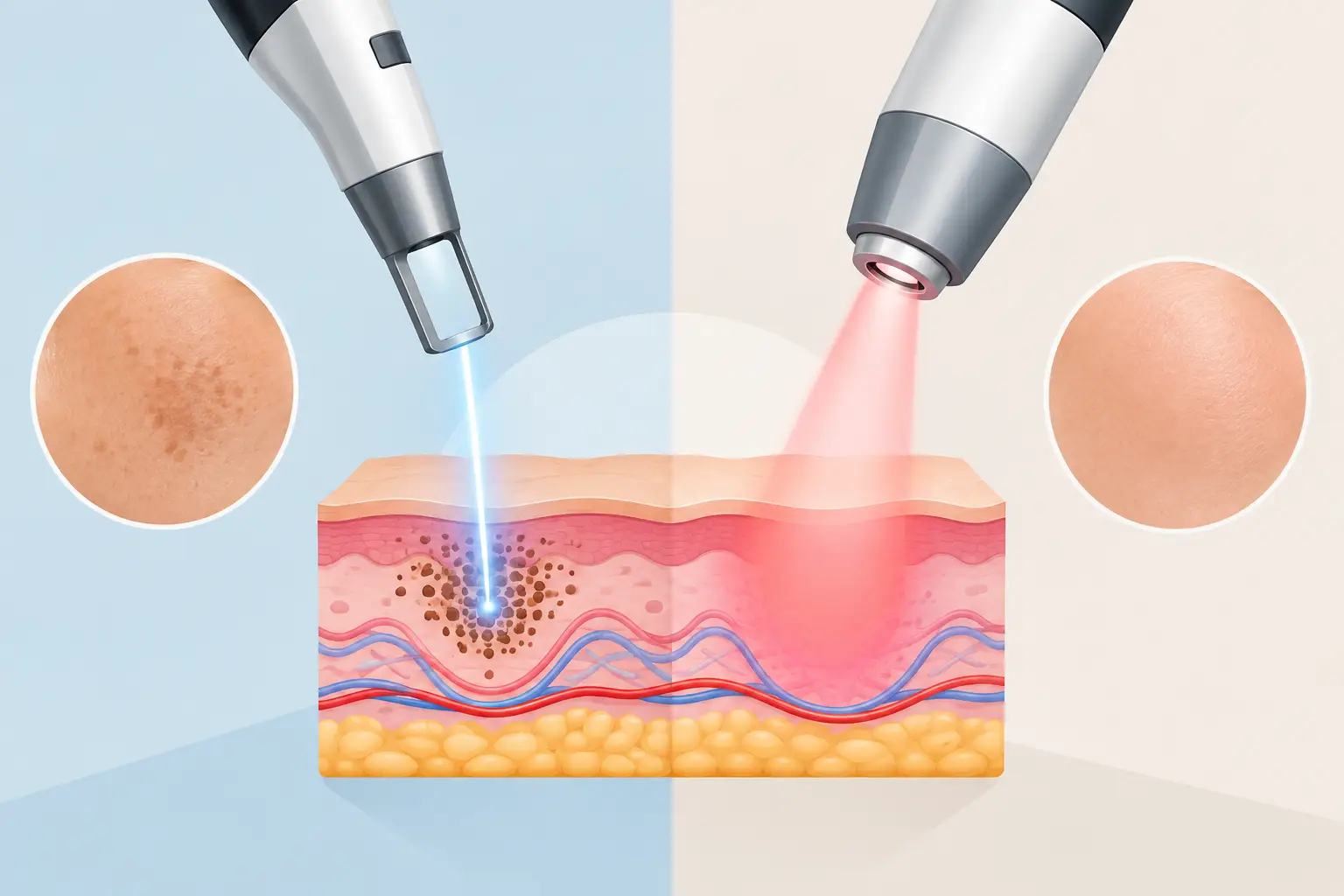
A pico laser delivers energy in extraordinarily short pulses, measured in picoseconds. This rapid delivery creates a photoacoustic effect that can break pigment into very fine particles while limiting the spread of heat into surrounding tissue. Depending on the wavelength, settings, and handpiece, pico technology may be used for certain sunspots, post-acne discoloration, freckles, tattoo pigment, and selected texture concerns.
Toning laser usually refers to a low-fluence, repeated-pass approach, often performed with a Q-switched Nd:YAG laser. Rather than visibly lifting one isolated spot in a single aggressive treatment, laser toning aims to gradually influence diffuse pigment and support a more even-looking complexion. It is frequently considered for concerns such as uneven tone, dullness, and carefully selected cases of melasma.
The names describe different things. Pico refers primarily to pulse duration, while toning describes a treatment method and energy strategy. A pico laser can be used gently, and a toning protocol can vary considerably based on the device and the clinician’s settings. The label alone does not tell you whether a treatment is right for your skin.
How Treatment Goals Change the Recommendation
For a clearly defined sunspot or a cluster of post-acne marks, a pico laser may be considered when the goal is more targeted pigment fragmentation. Some patients appreciate that it can address visible spots with a relatively focused approach. Even so, stronger is not always better. Darker skin tones, recently tanned skin, active inflammation, and a history of post-inflammatory hyperpigmentation may call for more conservative settings or a different sequence of care.
Laser toning may be a better fit when discoloration is broad and subtle rather than sharply bordered. Think of a complexion that seems generally uneven, with pigment that fluctuates after sun exposure, heat, hormonal changes, or irritation. The intended result is usually gradual refinement, not a dramatic overnight shift.
Melasma deserves special care in this conversation. It is not simply surface-level pigment. It is a chronic, reactive condition that can worsen with excessive heat, inflammation, ultraviolet exposure, and sometimes overly frequent treatment. A laser may be part of a melasma plan for some people, but it should not replace consistent sun protection, pigment-stabilizing skincare, and assessment of possible triggers. When melasma is active or easily irritated, restraint can be more valuable than intensity.
Recovery Is More Than Visible Downtime
Patients often compare lasers by asking which one has less downtime. That is understandable, but visible redness or flaking is only part of recovery. The skin’s inflammatory response matters as well, especially for people prone to dark marks after acne, irritation, or procedures.
With a targeted pico treatment, some people experience temporary redness, mild swelling, darkening of treated pigment, or fine crusting, depending on the settings and the concern being treated. The appearance of a spot can change before it improves. Picking or exfoliating the area too soon can increase the risk of prolonged discoloration.
A gentle toning protocol may involve less obvious recovery after each visit. However, a comfortable treatment is not necessarily a treatment to repeat without limits. Excessive frequency or poorly matched settings can irritate the skin and, in some cases, contribute to uneven lightening or rebound pigmentation. The safest plan respects the skin’s response between sessions instead of treating on a fixed schedule regardless of changes.
For either option, daily broad-spectrum sunscreen is not an optional extra. Pigment treatment without reliable sun protection often becomes a cycle of improvement followed by recurrence. Hats, shade, and careful attention to heat exposure can also be meaningful for patients with melasma or easily triggered redness.
Why Skin Tone and Skin History Matter
The same brown spot can behave differently from one person to another. A patient with fair skin and stable, isolated sun damage may tolerate a focused treatment differently than someone with a deeper skin tone, active acne, eczema, rosacea, or a tendency to develop dark marks after minor inflammation.
A careful consultation should include more than a quick look at the pigment. It should consider when the discoloration began, whether it changes seasonally, prior laser experiences, current skincare, prescription medications, recent tanning, and any history of cold sores if treatment is planned around the mouth. Active acne and a disrupted skin barrier may need to be addressed first so that laser treatment does not add unnecessary inflammation.
This is also why before-and-after images should be viewed with caution. They can show what is possible, but they cannot reveal the patient’s skin type, treatment settings, home care, lighting, or the months of maintenance behind the result. Your own skin history is more useful than someone else’s photograph when planning treatment.
A Personalized Plan Often Uses More Than One Tool
Pico laser and toning laser are sometimes presented as competing choices. In practice, a good plan may use neither, one, or both at different stages. A patient may first need acne control and barrier support before treating post-acne marks. Another may benefit from conservative toning for diffuse unevenness, then targeted spot treatment only after the skin is stable.
Topical care also matters. Depending on the diagnosis, a clinician may recommend ingredients that support pigment regulation, cell turnover, hydration, or inflammation control. The right formula depends on tolerance and timing. Introducing multiple strong products immediately after a laser can create irritation that undermines the result.
The same principle applies to treatment intervals. More sessions are not automatically more effective. The skin needs enough time to show its true response, and the plan should be adjusted if redness lingers, pigment darkens unexpectedly, or the complexion becomes sensitive. Natural-looking improvement usually comes from measured progress rather than chasing a perfectly uniform, filtered appearance.
Questions Worth Asking Before You Choose
Before agreeing to either treatment, ask what type of pigment is being treated and what the clinician expects the laser to change. It is reasonable to ask whether the concern appears to be melasma, sun damage, post-inflammatory hyperpigmentation, freckles, or a combination. Those distinctions affect both treatment choice and the likelihood of recurrence.
You can also ask about the expected number of sessions, the settings being considered, the recovery you may see, and what signs would mean the plan should be modified. If a recommendation does not include discussion of sun protection, home care, or the possibility that your pigment could recur, the conversation is incomplete.
At Somsei Clinic, the goal of a pigment consultation is not to assign every concern to a single device. It is to examine the skin carefully and recommend only the care that supports a safer, more natural result.
The best laser plan should leave you feeling informed, not pressured. When the diagnosis is clear and the pace respects your skin, gradual change can be one of the most reassuring forms of care.







A brown mark left after a breakout and a faint, widespread shadow of melasma can look similar in the mirror, yet they may need very different care. That is why the choice between pico laser versus toning laser should not begin with whichever treatment is more familiar or more heavily promoted. It should begin with the type of pigment, the condition of the skin barrier, and the change you hope to see over time.
Both approaches can have a place in a thoughtful pigment-care plan. Neither is automatically the better laser. The more useful question is whether the treatment’s energy, pace, and recovery profile fit your skin’s current needs.
Pico Laser Versus Toning Laser: The Core Difference
A pico laser delivers energy in extraordinarily short pulses, measured in picoseconds. This rapid delivery creates a photoacoustic effect that can break pigment into very fine particles while limiting the spread of heat into surrounding tissue. Depending on the wavelength, settings, and handpiece, pico technology may be used for certain sunspots, post-acne discoloration, freckles, tattoo pigment, and selected texture concerns.
Toning laser usually refers to a low-fluence, repeated-pass approach, often performed with a Q-switched Nd:YAG laser. Rather than visibly lifting one isolated spot in a single aggressive treatment, laser toning aims to gradually influence diffuse pigment and support a more even-looking complexion. It is frequently considered for concerns such as uneven tone, dullness, and carefully selected cases of melasma.
The names describe different things. Pico refers primarily to pulse duration, while toning describes a treatment method and energy strategy. A pico laser can be used gently, and a toning protocol can vary considerably based on the device and the clinician’s settings. The label alone does not tell you whether a treatment is right for your skin.
How Treatment Goals Change the Recommendation
For a clearly defined sunspot or a cluster of post-acne marks, a pico laser may be considered when the goal is more targeted pigment fragmentation. Some patients appreciate that it can address visible spots with a relatively focused approach. Even so, stronger is not always better. Darker skin tones, recently tanned skin, active inflammation, and a history of post-inflammatory hyperpigmentation may call for more conservative settings or a different sequence of care.
Laser toning may be a better fit when discoloration is broad and subtle rather than sharply bordered. Think of a complexion that seems generally uneven, with pigment that fluctuates after sun exposure, heat, hormonal changes, or irritation. The intended result is usually gradual refinement, not a dramatic overnight shift.
Melasma deserves special care in this conversation. It is not simply surface-level pigment. It is a chronic, reactive condition that can worsen with excessive heat, inflammation, ultraviolet exposure, and sometimes overly frequent treatment. A laser may be part of a melasma plan for some people, but it should not replace consistent sun protection, pigment-stabilizing skincare, and assessment of possible triggers. When melasma is active or easily irritated, restraint can be more valuable than intensity.
Recovery Is More Than Visible Downtime
Patients often compare lasers by asking which one has less downtime. That is understandable, but visible redness or flaking is only part of recovery. The skin’s inflammatory response matters as well, especially for people prone to dark marks after acne, irritation, or procedures.
With a targeted pico treatment, some people experience temporary redness, mild swelling, darkening of treated pigment, or fine crusting, depending on the settings and the concern being treated. The appearance of a spot can change before it improves. Picking or exfoliating the area too soon can increase the risk of prolonged discoloration.
A gentle toning protocol may involve less obvious recovery after each visit. However, a comfortable treatment is not necessarily a treatment to repeat without limits. Excessive frequency or poorly matched settings can irritate the skin and, in some cases, contribute to uneven lightening or rebound pigmentation. The safest plan respects the skin’s response between sessions instead of treating on a fixed schedule regardless of changes.
For either option, daily broad-spectrum sunscreen is not an optional extra. Pigment treatment without reliable sun protection often becomes a cycle of improvement followed by recurrence. Hats, shade, and careful attention to heat exposure can also be meaningful for patients with melasma or easily triggered redness.
Why Skin Tone and Skin History Matter
The same brown spot can behave differently from one person to another. A patient with fair skin and stable, isolated sun damage may tolerate a focused treatment differently than someone with a deeper skin tone, active acne, eczema, rosacea, or a tendency to develop dark marks after minor inflammation.
A careful consultation should include more than a quick look at the pigment. It should consider when the discoloration began, whether it changes seasonally, prior laser experiences, current skincare, prescription medications, recent tanning, and any history of cold sores if treatment is planned around the mouth. Active acne and a disrupted skin barrier may need to be addressed first so that laser treatment does not add unnecessary inflammation.
This is also why before-and-after images should be viewed with caution. They can show what is possible, but they cannot reveal the patient’s skin type, treatment settings, home care, lighting, or the months of maintenance behind the result. Your own skin history is more useful than someone else’s photograph when planning treatment.
A Personalized Plan Often Uses More Than One Tool
Pico laser and toning laser are sometimes presented as competing choices. In practice, a good plan may use neither, one, or both at different stages. A patient may first need acne control and barrier support before treating post-acne marks. Another may benefit from conservative toning for diffuse unevenness, then targeted spot treatment only after the skin is stable.
Topical care also matters. Depending on the diagnosis, a clinician may recommend ingredients that support pigment regulation, cell turnover, hydration, or inflammation control. The right formula depends on tolerance and timing. Introducing multiple strong products immediately after a laser can create irritation that undermines the result.
The same principle applies to treatment intervals. More sessions are not automatically more effective. The skin needs enough time to show its true response, and the plan should be adjusted if redness lingers, pigment darkens unexpectedly, or the complexion becomes sensitive. Natural-looking improvement usually comes from measured progress rather than chasing a perfectly uniform, filtered appearance.
Questions Worth Asking Before You Choose
Before agreeing to either treatment, ask what type of pigment is being treated and what the clinician expects the laser to change. It is reasonable to ask whether the concern appears to be melasma, sun damage, post-inflammatory hyperpigmentation, freckles, or a combination. Those distinctions affect both treatment choice and the likelihood of recurrence.
You can also ask about the expected number of sessions, the settings being considered, the recovery you may see, and what signs would mean the plan should be modified. If a recommendation does not include discussion of sun protection, home care, or the possibility that your pigment could recur, the conversation is incomplete.
At Somsei Clinic, the goal of a pigment consultation is not to assign every concern to a single device. It is to examine the skin carefully and recommend only the care that supports a safer, more natural result.
The best laser plan should leave you feeling informed, not pressured. When the diagnosis is clear and the pace respects your skin, gradual change can be one of the most reassuring forms of care.