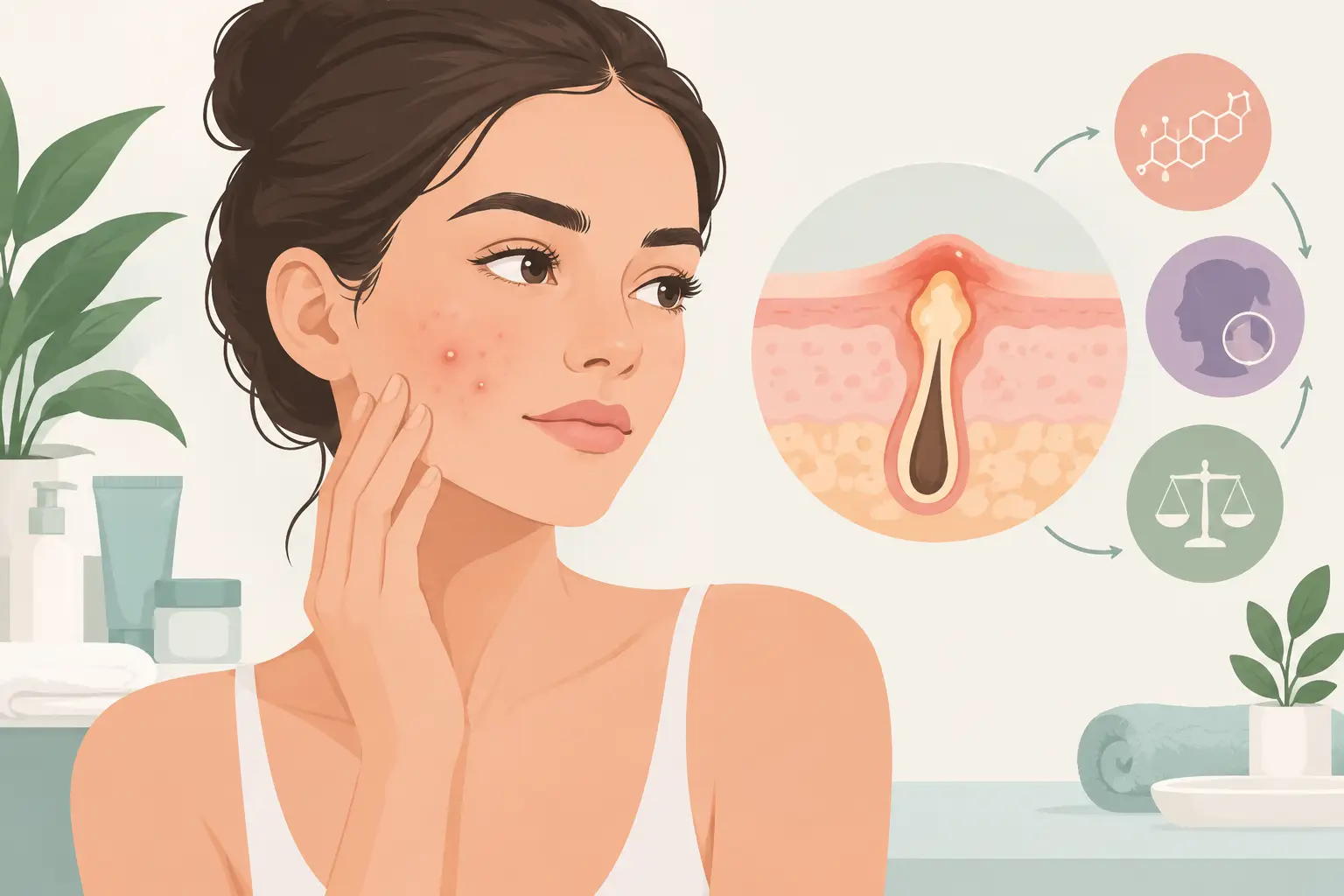
Breakouts that return along the chin, jawline, neck, or lower cheeks at the same point each month can feel especially discouraging. Learning how to manage hormonal breakouts is less about finding one aggressive product and more about recognizing patterns, protecting the skin barrier, and choosing treatment that fits your skin and health history.
Hormonal acne is common well beyond the teenage years. It can appear in your 20s, 30s, 40s, or during periods of change such as stopping birth control, pregnancy, postpartum recovery, perimenopause, or times of significant stress. A thoughtful approach can reduce both active inflammation and the cycle of marks that often follows.
Why Hormonal Breakouts Behave Differently
Hormones influence how much oil the skin produces and how readily pores become congested. When oil production rises, dead skin cells and bacteria can become trapped within the pore, leading to blackheads, whiteheads, tender bumps, or deeper cyst-like lesions.
The location and timing may offer clues. Hormonal breakouts often cluster around the lower face and may flare predictably before a menstrual period. Still, location alone does not confirm the cause. Acne can also be influenced by friction from masks or helmets, hair products, shaving, makeup, stress, certain medications, and skincare that is too heavy or irritating.
This is why a careful consultation matters. Two people with similar-looking jawline acne may need very different plans. One may have congestion from pore-clogging products, while another may be dealing with painful recurring lesions that require prescription care. The goal is not to label every blemish hormonal. It is to understand what your skin is doing and respond without overcorrecting.
How to Manage Hormonal Breakouts With a Steady Routine
When skin is inflamed, more products are not always better. A simple routine followed consistently is usually more helpful than changing treatments every few days.
Cleanse without stripping the skin
Wash your face twice daily and after heavy sweating with a gentle cleanser. Skin that feels tight, squeaky, or stinging after cleansing is often being stripped of its protective oils. That irritation can make acne treatments harder to tolerate and can leave redness looking more pronounced.
If you wear long-lasting makeup or sunscreen, take the time to remove it thoroughly at night. Avoid harsh scrubs, cleansing brushes, and frequent exfoliating pads while breakouts are active. Friction does not clear clogged pores faster, and it can worsen inflammation.
Choose one acne-focused active at a time
For mild breakouts, over-the-counter acne ingredients can be useful when introduced gradually. Salicylic acid can help keep pores clear, while benzoyl peroxide may reduce acne-causing bacteria and inflammation. Retinoids can support cell turnover and help prevent new clogged pores, though they may cause dryness at first.
The best choice depends on your skin sensitivity, the type of acne present, and what else you use. Starting several strong products at once can lead to peeling, burning, and a compromised skin barrier. Rather than applying every active nightly, begin with one product two or three nights a week and increase only if your skin remains comfortable.
If you are pregnant, trying to conceive, or breastfeeding, check with a qualified clinician before using acne medications or active ingredients. Some options that are appropriate in other circumstances may not be recommended during pregnancy.
Moisturize and wear sunscreen every day
Moisturizer is not a reward for clear skin. It is part of acne care. Look for a lightweight, non-comedogenic formula that helps your skin tolerate treatment without feeling greasy. When the barrier is supported, many people experience less dryness and are better able to stay consistent with their plan.
Daily broad-spectrum sunscreen also matters, especially if you develop dark marks after pimples. Sun exposure can deepen discoloration and make post-breakout marks linger longer. Choose a formula you enjoy wearing enough to use every morning.
Look for Patterns Before You Blame Your Lifestyle
It is tempting to attribute every flare to a single food, a stressful week, or one missed night of cleansing. Skin is usually more complex than that. Tracking breakouts for two or three months can reveal whether they correlate with your cycle, a new supplement, a medication change, sleep disruption, shaving habits, or a product introduced around the same time.
Stress does not cause every case of acne, but it can influence inflammation, sleep, and routines. A realistic effort to protect sleep, eat regularly, and make room for recovery can support overall skin health. Extreme dietary restrictions, however, often create more stress than benefit. If you suspect a particular food affects your skin, make changes carefully and observe rather than eliminating large food groups without guidance.
Hands-off habits also make a meaningful difference. Picking at deeper lesions can increase inflammation, scarring, and lingering discoloration. If a pimple feels impossible to leave alone, a hydrocolloid patch may provide a physical reminder to let it heal.
When At-Home Care Is Not Enough
A home routine can be helpful, but it has limits. Seek medical guidance if breakouts are painful, leave scars, spread suddenly, persist despite several months of consistent care, or affect your confidence and daily life. Earlier treatment is especially valuable for deep, recurring lesions because each flare carries a risk of lasting marks.
A clinician can assess whether acne-focused prescription treatments, professional procedures, or a broader medical evaluation may be appropriate. In some cases, persistent adult acne occurs alongside irregular periods, increased facial hair, scalp hair thinning, or other symptoms that deserve discussion with a healthcare professional. These signs do not automatically point to one diagnosis, but they are worth mentioning during your visit.
Treatment should be built around your goals and tolerance, not around a one-size-fits-all package. Some skin benefits from a gradual topical plan. Some needs short-term support for active inflammation. Others need a strategy that addresses acne and post-inflammatory discoloration together. The right sequence is often more valuable than doing everything at once.
Give Your Plan Time to Work
Acne treatment rarely produces a meaningful change overnight. Many topical plans need six to twelve weeks of steady use before improvement becomes clear, and temporary dryness or mild adjustment can occur when introducing active ingredients. This does not mean you should push through severe burning, swelling, hives, or persistent discomfort. Those are reasons to stop the product and seek advice.
Take photos in the same lighting every few weeks instead of judging your skin day by day. Acne naturally fluctuates, and progress may first appear as fewer painful lesions, faster healing, or less frequent flaring. These smaller changes are useful signs that a plan is moving in the right direction.
Common Mistakes That Can Keep Breakouts Active
The most common issue is treating acne like a cleanliness problem. Overwashing, alcohol-heavy toners, harsh exfoliation, and frequent spot treatment can create irritation without addressing the underlying pattern. Another common mistake is switching products too quickly. When a routine changes every week, it becomes difficult to tell what is helping and what is causing a reaction.
Be mindful of products that touch the lower face, too. Hair oils, heavy styling creams, fragranced beard products, makeup sponges that are not washed regularly, and phone screens can all contribute to irritation or congestion for some people. This does not mean every product must be removed. It means considering contact points when breakouts are persistent in one area.
A note on professional treatments
Professional acne care can be useful when it is chosen for the current condition of the skin. Extractions, chemical exfoliation, light-based care, or targeted procedures may be considered in certain situations, but they are not interchangeable and are not always appropriate during an inflamed flare. A careful skin assessment helps determine whether the priority is calming inflammation, clearing congestion, preventing scars, or improving residual marks.
The most reassuring approach is one that leaves room to adjust. Your skin may respond differently across seasons, stress levels, and hormonal transitions. A treatment plan should be precise enough to create progress, yet gentle enough that you can continue it comfortably.
Hormonal breakouts can be persistent, but they do not require you to fight your skin. Start with a simple, consistent foundation, notice the patterns that are truly yours, and ask for medical support before repeated flares leave a longer mark than they need to.







Breakouts that return along the chin, jawline, neck, or lower cheeks at the same point each month can feel especially discouraging. Learning how to manage hormonal breakouts is less about finding one aggressive product and more about recognizing patterns, protecting the skin barrier, and choosing treatment that fits your skin and health history.
Hormonal acne is common well beyond the teenage years. It can appear in your 20s, 30s, 40s, or during periods of change such as stopping birth control, pregnancy, postpartum recovery, perimenopause, or times of significant stress. A thoughtful approach can reduce both active inflammation and the cycle of marks that often follows.
Why Hormonal Breakouts Behave Differently
Hormones influence how much oil the skin produces and how readily pores become congested. When oil production rises, dead skin cells and bacteria can become trapped within the pore, leading to blackheads, whiteheads, tender bumps, or deeper cyst-like lesions.
The location and timing may offer clues. Hormonal breakouts often cluster around the lower face and may flare predictably before a menstrual period. Still, location alone does not confirm the cause. Acne can also be influenced by friction from masks or helmets, hair products, shaving, makeup, stress, certain medications, and skincare that is too heavy or irritating.
This is why a careful consultation matters. Two people with similar-looking jawline acne may need very different plans. One may have congestion from pore-clogging products, while another may be dealing with painful recurring lesions that require prescription care. The goal is not to label every blemish hormonal. It is to understand what your skin is doing and respond without overcorrecting.
How to Manage Hormonal Breakouts With a Steady Routine
When skin is inflamed, more products are not always better. A simple routine followed consistently is usually more helpful than changing treatments every few days.
Cleanse without stripping the skin
Wash your face twice daily and after heavy sweating with a gentle cleanser. Skin that feels tight, squeaky, or stinging after cleansing is often being stripped of its protective oils. That irritation can make acne treatments harder to tolerate and can leave redness looking more pronounced.
If you wear long-lasting makeup or sunscreen, take the time to remove it thoroughly at night. Avoid harsh scrubs, cleansing brushes, and frequent exfoliating pads while breakouts are active. Friction does not clear clogged pores faster, and it can worsen inflammation.
Choose one acne-focused active at a time
For mild breakouts, over-the-counter acne ingredients can be useful when introduced gradually. Salicylic acid can help keep pores clear, while benzoyl peroxide may reduce acne-causing bacteria and inflammation. Retinoids can support cell turnover and help prevent new clogged pores, though they may cause dryness at first.
The best choice depends on your skin sensitivity, the type of acne present, and what else you use. Starting several strong products at once can lead to peeling, burning, and a compromised skin barrier. Rather than applying every active nightly, begin with one product two or three nights a week and increase only if your skin remains comfortable.
If you are pregnant, trying to conceive, or breastfeeding, check with a qualified clinician before using acne medications or active ingredients. Some options that are appropriate in other circumstances may not be recommended during pregnancy.
Moisturize and wear sunscreen every day
Moisturizer is not a reward for clear skin. It is part of acne care. Look for a lightweight, non-comedogenic formula that helps your skin tolerate treatment without feeling greasy. When the barrier is supported, many people experience less dryness and are better able to stay consistent with their plan.
Daily broad-spectrum sunscreen also matters, especially if you develop dark marks after pimples. Sun exposure can deepen discoloration and make post-breakout marks linger longer. Choose a formula you enjoy wearing enough to use every morning.
Look for Patterns Before You Blame Your Lifestyle
It is tempting to attribute every flare to a single food, a stressful week, or one missed night of cleansing. Skin is usually more complex than that. Tracking breakouts for two or three months can reveal whether they correlate with your cycle, a new supplement, a medication change, sleep disruption, shaving habits, or a product introduced around the same time.
Stress does not cause every case of acne, but it can influence inflammation, sleep, and routines. A realistic effort to protect sleep, eat regularly, and make room for recovery can support overall skin health. Extreme dietary restrictions, however, often create more stress than benefit. If you suspect a particular food affects your skin, make changes carefully and observe rather than eliminating large food groups without guidance.
Hands-off habits also make a meaningful difference. Picking at deeper lesions can increase inflammation, scarring, and lingering discoloration. If a pimple feels impossible to leave alone, a hydrocolloid patch may provide a physical reminder to let it heal.
When At-Home Care Is Not Enough
A home routine can be helpful, but it has limits. Seek medical guidance if breakouts are painful, leave scars, spread suddenly, persist despite several months of consistent care, or affect your confidence and daily life. Earlier treatment is especially valuable for deep, recurring lesions because each flare carries a risk of lasting marks.
A clinician can assess whether acne-focused prescription treatments, professional procedures, or a broader medical evaluation may be appropriate. In some cases, persistent adult acne occurs alongside irregular periods, increased facial hair, scalp hair thinning, or other symptoms that deserve discussion with a healthcare professional. These signs do not automatically point to one diagnosis, but they are worth mentioning during your visit.
Treatment should be built around your goals and tolerance, not around a one-size-fits-all package. Some skin benefits from a gradual topical plan. Some needs short-term support for active inflammation. Others need a strategy that addresses acne and post-inflammatory discoloration together. The right sequence is often more valuable than doing everything at once.
Give Your Plan Time to Work
Acne treatment rarely produces a meaningful change overnight. Many topical plans need six to twelve weeks of steady use before improvement becomes clear, and temporary dryness or mild adjustment can occur when introducing active ingredients. This does not mean you should push through severe burning, swelling, hives, or persistent discomfort. Those are reasons to stop the product and seek advice.
Take photos in the same lighting every few weeks instead of judging your skin day by day. Acne naturally fluctuates, and progress may first appear as fewer painful lesions, faster healing, or less frequent flaring. These smaller changes are useful signs that a plan is moving in the right direction.
Common Mistakes That Can Keep Breakouts Active
The most common issue is treating acne like a cleanliness problem. Overwashing, alcohol-heavy toners, harsh exfoliation, and frequent spot treatment can create irritation without addressing the underlying pattern. Another common mistake is switching products too quickly. When a routine changes every week, it becomes difficult to tell what is helping and what is causing a reaction.
Be mindful of products that touch the lower face, too. Hair oils, heavy styling creams, fragranced beard products, makeup sponges that are not washed regularly, and phone screens can all contribute to irritation or congestion for some people. This does not mean every product must be removed. It means considering contact points when breakouts are persistent in one area.
A note on professional treatments
Professional acne care can be useful when it is chosen for the current condition of the skin. Extractions, chemical exfoliation, light-based care, or targeted procedures may be considered in certain situations, but they are not interchangeable and are not always appropriate during an inflamed flare. A careful skin assessment helps determine whether the priority is calming inflammation, clearing congestion, preventing scars, or improving residual marks.
The most reassuring approach is one that leaves room to adjust. Your skin may respond differently across seasons, stress levels, and hormonal transitions. A treatment plan should be precise enough to create progress, yet gentle enough that you can continue it comfortably.
Hormonal breakouts can be persistent, but they do not require you to fight your skin. Start with a simple, consistent foundation, notice the patterns that are truly yours, and ask for medical support before repeated flares leave a longer mark than they need to.