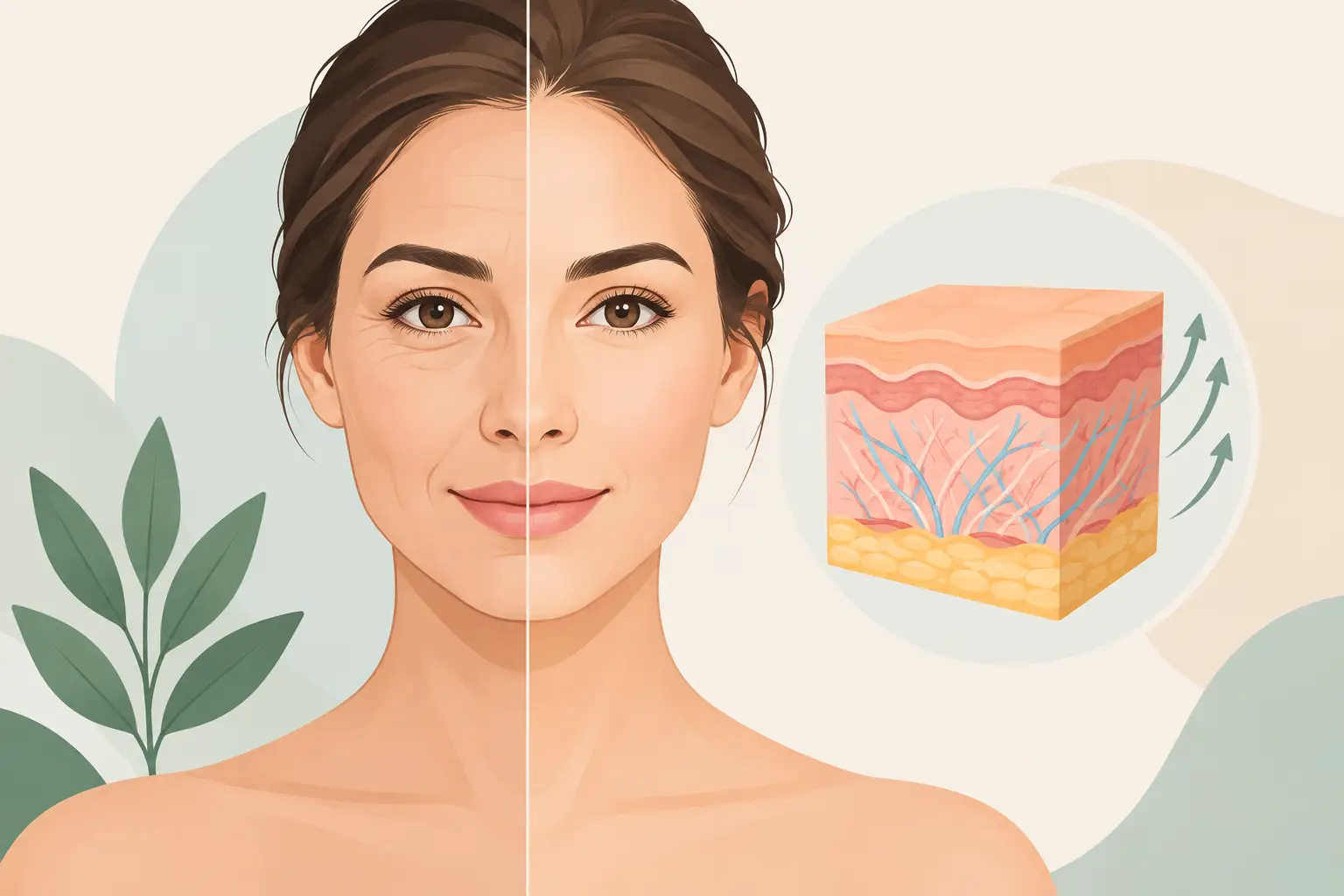
A lifted appearance should not make you look unfamiliar to yourself. The most satisfying natural lifting results are often the ones people notice indirectly: you look rested, your facial contours seem more defined, and your expression feels less heavy without appearing changed. Reaching that point is rarely about choosing the strongest treatment or treating every area at once. It begins with understanding what is actually causing the change you see in the mirror.
For some people, the concern is early skin laxity around the jawline. For others, volume loss in the cheeks makes the lower face appear less supported, while texture changes and fine lines can create a tired impression even when the facial structure is still balanced. A careful lifting plan separates these concerns before recommending treatment.
What Natural Lifting Results Really Mean
Natural does not mean that no change is visible. It means the improvement fits your own features, proportions, and stage of aging. Your face should still move naturally when you smile or speak. The goal is not to erase every fold or create sharp contours that were never part of your face. It is to restore a sense of balance.
This distinction matters because “lifting” is often used as one broad term, even though it can involve several different concerns. Skin elasticity, collagen density, facial volume, muscle movement, and the structure of the jawline all influence how lifted or relaxed the face appears. Treating only one factor can be helpful, but it may not address the full reason an area looks less defined.
For example, someone with mild lower-face laxity and good facial volume may benefit from an energy-based approach focused on skin tightening. Someone whose midface has lost support may need a different strategy, possibly one that considers volume balance before expecting a strong lifting effect from tightening alone. There is no single treatment that is right for every face or every age.
Start With the Cause, Not the Treatment Name
A good consultation does more than identify a popular procedure. It looks closely at your skin thickness, elasticity, facial symmetry, degree of volume loss, expression patterns, and the areas that concern you most. It also considers what you do not want: an overfilled look, a dramatic change, extended downtime, or a plan that feels difficult to maintain.
The conversation should include your timeline as well. Some treatments create a more immediate visual change, while others encourage gradual improvement as the skin responds over time. If you have an upcoming event, that may affect the recommended sequence. If your priority is subtle, long-term maintenance, a slower approach may be a better fit.
At Somsei Clinic, the intention is to begin with a detailed, one-on-one assessment and suggest only the care that is needed. That can mean one focused treatment, a staged plan, or simply addressing skin quality first before deciding whether lifting treatment is necessary. Restraint is part of precise aesthetic care.
Skin Tightening and Structural Support Are Different Goals
It is easy to expect every lifting treatment to do the same thing, but treatment categories work differently. Energy-based procedures may be selected to support collagen remodeling and improve the appearance of mild laxity. Injectable treatments can be considered when carefully placed support or wrinkle relaxation is appropriate. Skin-focused care may improve texture, hydration, and radiance, making the face appear healthier even when it does not physically reposition tissue.
These approaches are not interchangeable. A person with dry, creased skin may look more refreshed after improving skin condition, while a person with loss of cheek support may not achieve the desired balance from skincare alone. Combining treatments can be effective, but more treatments do not automatically produce a more natural result. The combination must have a clear reason.
Why Gradual Change Often Looks More Convincing
A subtle treatment plan gives the face time to settle and allows both the patient and the clinician to evaluate change with perspective. This is especially valuable when treating the midface, jawline, or areas around the mouth, where small adjustments can influence the overall impression of the face.
Gradual improvement can also be easier to maintain. Rather than waiting for concerns to become pronounced and then pursuing a large correction, some patients prefer periodic care that supports skin quality and facial balance over time. The right interval depends on the treatment, the skin’s response, lifestyle factors, and individual aging patterns.
This does not mean that slower is always better. A person with a clear concern and appropriate treatment indication may benefit from a more direct approach. The point is to match the pace of care to the face in front of you, not to follow a fixed package or a trend seen online.
The Details That Protect a Natural Look
Natural-looking outcomes rely on decisions that may seem small but have a meaningful effect. Treatment should account for facial asymmetry rather than forcing both sides to look identical. It should preserve movement instead of chasing complete stillness. It should also respect the difference between improving a contour and adding unnecessary volume.
Your lifestyle matters, too. Weight changes, sleep, stress, smoking, sun exposure, and daily skincare can all affect the skin’s appearance and resilience. A lifting procedure cannot replace sunscreen, consistent skin care, or treatment for active inflammation and pigmentation concerns. When the skin surface is irritated or uneven, addressing those issues may be the more useful first step.
There is also value in realistic expectations. Non-surgical lifting treatments can create meaningful refinement for the right candidate, but they do not produce the same result as surgery. If laxity is advanced, a clinician should explain the limits clearly rather than promising a result that the treatment cannot reliably deliver. Trust grows when the expected benefit, possible discomfort, recovery period, and maintenance needs are discussed honestly.
Questions Worth Asking During a Lifting Consultation
You do not need to know every device or technique before your appointment. Asking a few clear questions can help you understand whether the plan is truly personalized. Consider asking what is causing the concern in your specific case, why a recommended treatment suits that concern, when results are likely to appear, and what maintenance may be needed.
It is also reasonable to ask what will happen if you do nothing for now. Sometimes the answer is that observation, skin care, or a later revisit is completely appropriate. A thoughtful clinic should make room for that option. A treatment plan should feel like an informed decision, not a response to pressure.
Photos can be useful for tracking progress, particularly when changes are gradual. They should be taken under similar lighting and angles whenever possible. Day-to-day mirror checks are not always reliable because swelling, hydration, sleep, and lighting can make a face look different from one day to the next.
A Plan That Respects Your Face
The best lifting plan may be surprisingly simple. You may need focused skin tightening, a conservative approach to support, or a combination of skin quality care and periodic maintenance. You may also decide that your concern is not ready for treatment yet. Each of these can be a sensible outcome when the decision follows a careful assessment.
Natural-looking care is not about pursuing a younger version of someone else. It is about helping your features look supported, rested, and in harmony with the person you are now. When treatment is measured and personalized, the result has room to feel like your own reflection.







A lifted appearance should not make you look unfamiliar to yourself. The most satisfying natural lifting results are often the ones people notice indirectly: you look rested, your facial contours seem more defined, and your expression feels less heavy without appearing changed. Reaching that point is rarely about choosing the strongest treatment or treating every area at once. It begins with understanding what is actually causing the change you see in the mirror.
For some people, the concern is early skin laxity around the jawline. For others, volume loss in the cheeks makes the lower face appear less supported, while texture changes and fine lines can create a tired impression even when the facial structure is still balanced. A careful lifting plan separates these concerns before recommending treatment.
What Natural Lifting Results Really Mean
Natural does not mean that no change is visible. It means the improvement fits your own features, proportions, and stage of aging. Your face should still move naturally when you smile or speak. The goal is not to erase every fold or create sharp contours that were never part of your face. It is to restore a sense of balance.
This distinction matters because “lifting” is often used as one broad term, even though it can involve several different concerns. Skin elasticity, collagen density, facial volume, muscle movement, and the structure of the jawline all influence how lifted or relaxed the face appears. Treating only one factor can be helpful, but it may not address the full reason an area looks less defined.
For example, someone with mild lower-face laxity and good facial volume may benefit from an energy-based approach focused on skin tightening. Someone whose midface has lost support may need a different strategy, possibly one that considers volume balance before expecting a strong lifting effect from tightening alone. There is no single treatment that is right for every face or every age.
Start With the Cause, Not the Treatment Name
A good consultation does more than identify a popular procedure. It looks closely at your skin thickness, elasticity, facial symmetry, degree of volume loss, expression patterns, and the areas that concern you most. It also considers what you do not want: an overfilled look, a dramatic change, extended downtime, or a plan that feels difficult to maintain.
The conversation should include your timeline as well. Some treatments create a more immediate visual change, while others encourage gradual improvement as the skin responds over time. If you have an upcoming event, that may affect the recommended sequence. If your priority is subtle, long-term maintenance, a slower approach may be a better fit.
At Somsei Clinic, the intention is to begin with a detailed, one-on-one assessment and suggest only the care that is needed. That can mean one focused treatment, a staged plan, or simply addressing skin quality first before deciding whether lifting treatment is necessary. Restraint is part of precise aesthetic care.
Skin Tightening and Structural Support Are Different Goals
It is easy to expect every lifting treatment to do the same thing, but treatment categories work differently. Energy-based procedures may be selected to support collagen remodeling and improve the appearance of mild laxity. Injectable treatments can be considered when carefully placed support or wrinkle relaxation is appropriate. Skin-focused care may improve texture, hydration, and radiance, making the face appear healthier even when it does not physically reposition tissue.
These approaches are not interchangeable. A person with dry, creased skin may look more refreshed after improving skin condition, while a person with loss of cheek support may not achieve the desired balance from skincare alone. Combining treatments can be effective, but more treatments do not automatically produce a more natural result. The combination must have a clear reason.
Why Gradual Change Often Looks More Convincing
A subtle treatment plan gives the face time to settle and allows both the patient and the clinician to evaluate change with perspective. This is especially valuable when treating the midface, jawline, or areas around the mouth, where small adjustments can influence the overall impression of the face.
Gradual improvement can also be easier to maintain. Rather than waiting for concerns to become pronounced and then pursuing a large correction, some patients prefer periodic care that supports skin quality and facial balance over time. The right interval depends on the treatment, the skin’s response, lifestyle factors, and individual aging patterns.
This does not mean that slower is always better. A person with a clear concern and appropriate treatment indication may benefit from a more direct approach. The point is to match the pace of care to the face in front of you, not to follow a fixed package or a trend seen online.
The Details That Protect a Natural Look
Natural-looking outcomes rely on decisions that may seem small but have a meaningful effect. Treatment should account for facial asymmetry rather than forcing both sides to look identical. It should preserve movement instead of chasing complete stillness. It should also respect the difference between improving a contour and adding unnecessary volume.
Your lifestyle matters, too. Weight changes, sleep, stress, smoking, sun exposure, and daily skincare can all affect the skin’s appearance and resilience. A lifting procedure cannot replace sunscreen, consistent skin care, or treatment for active inflammation and pigmentation concerns. When the skin surface is irritated or uneven, addressing those issues may be the more useful first step.
There is also value in realistic expectations. Non-surgical lifting treatments can create meaningful refinement for the right candidate, but they do not produce the same result as surgery. If laxity is advanced, a clinician should explain the limits clearly rather than promising a result that the treatment cannot reliably deliver. Trust grows when the expected benefit, possible discomfort, recovery period, and maintenance needs are discussed honestly.
Questions Worth Asking During a Lifting Consultation
You do not need to know every device or technique before your appointment. Asking a few clear questions can help you understand whether the plan is truly personalized. Consider asking what is causing the concern in your specific case, why a recommended treatment suits that concern, when results are likely to appear, and what maintenance may be needed.
It is also reasonable to ask what will happen if you do nothing for now. Sometimes the answer is that observation, skin care, or a later revisit is completely appropriate. A thoughtful clinic should make room for that option. A treatment plan should feel like an informed decision, not a response to pressure.
Photos can be useful for tracking progress, particularly when changes are gradual. They should be taken under similar lighting and angles whenever possible. Day-to-day mirror checks are not always reliable because swelling, hydration, sleep, and lighting can make a face look different from one day to the next.
A Plan That Respects Your Face
The best lifting plan may be surprisingly simple. You may need focused skin tightening, a conservative approach to support, or a combination of skin quality care and periodic maintenance. You may also decide that your concern is not ready for treatment yet. Each of these can be a sensible outcome when the decision follows a careful assessment.
Natural-looking care is not about pursuing a younger version of someone else. It is about helping your features look supported, rested, and in harmony with the person you are now. When treatment is measured and personalized, the result has room to feel like your own reflection.