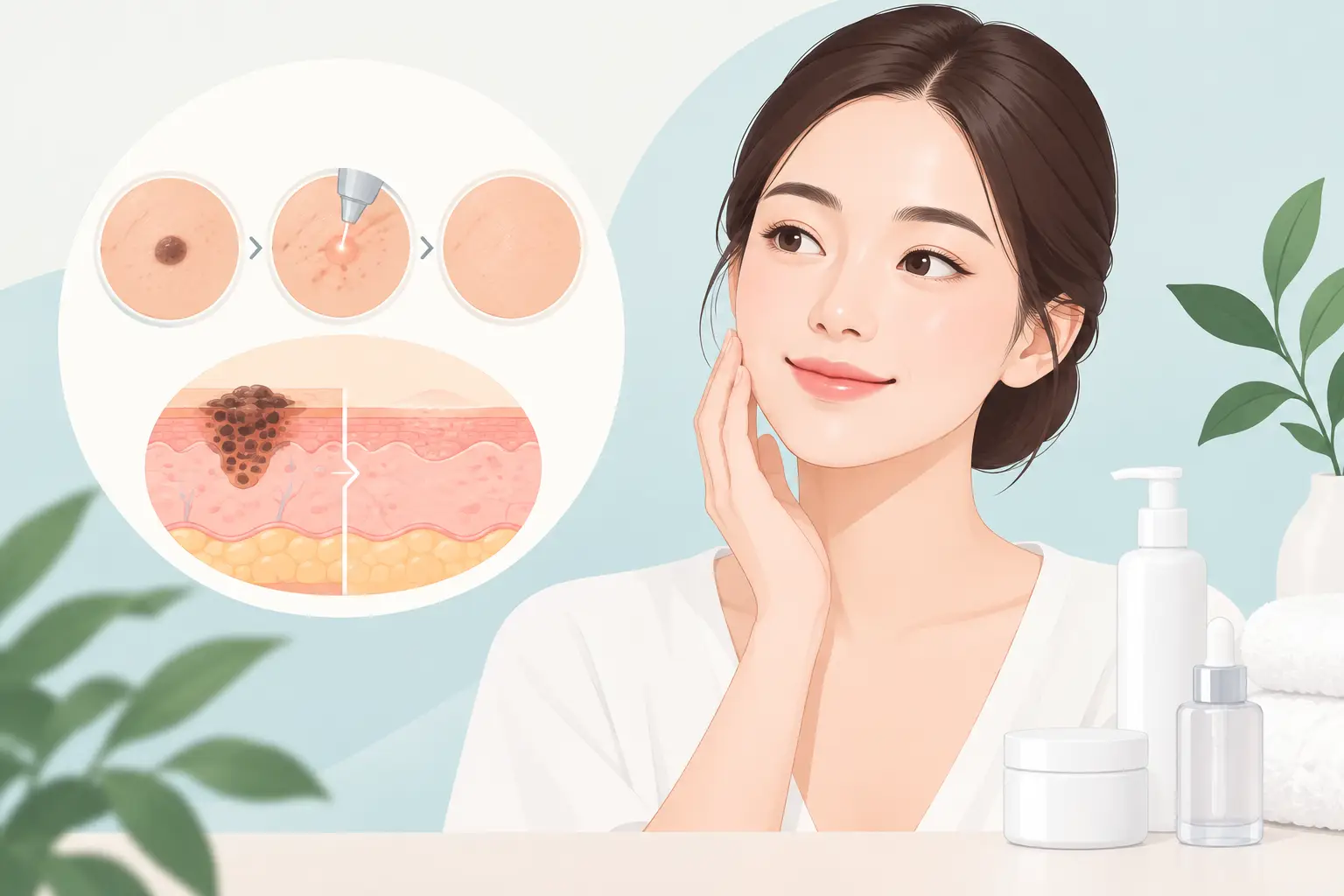
A tiny treated spot can look more noticeable before it looks better. After mole removal, the skin may appear pink, feel mildly tender, form a dark crust, or look temporarily darker than expected. These changes can be unsettling, especially when the treatment area is on the face. Yet the early healing period often has a meaningful effect on how comfortably the skin recovers and how even the final color appears.
The most helpful approach is not to do more, but to do the right amount: protect the area, avoid friction, and follow the instructions given for your specific procedure. Laser removal, shave removal, excision, and chemical cautery can leave the skin with different needs. Your clinician’s aftercare directions should always take priority over general advice.
점 제거 후 관리 방법: The First 24 Hours
For the first day, keep the area clean and avoid unnecessary contact. If a dressing was placed, leave it on for the time your clinician advised. Some small laser-treated areas may not need a bandage, while a shaved or excised mole may require more structured wound care.
A little pinpoint bleeding or clear fluid can occur shortly after treatment. If this happens, apply gentle, steady pressure with clean gauze for the amount of time recommended by your clinic. Do not repeatedly lift the gauze to check the area, since this can interrupt clotting. If bleeding does not settle, contact the clinic that performed the procedure.
Avoid hot showers, saunas, steam rooms, swimming pools, and strenuous workouts on the first day unless you were told otherwise. Heat and sweat can increase redness and irritation. If the area is on the face, sleep with your head slightly elevated if swelling is a concern, and try not to press your face into the pillow.
Keep It Clean, Moist, and Undisturbed
Once you have been told it is safe to cleanse, use lukewarm water and a mild cleanser. Let water run over the area rather than scrubbing it. Pat dry with a clean towel or gauze. A fresh towel is preferable to one that has been sitting in a humid bathroom for several days.
Your clinician may recommend a thin layer of petrolatum ointment or a prescribed topical medication. This is not about making the area look glossy. It helps support a protected healing environment and may reduce cracking of the surface. Use only the product and frequency advised. Adding antibiotic creams, essential oils, acne spot treatments, or multiple soothing products without guidance can cause contact irritation and make it harder to identify the source of a reaction.
The crust that forms after some mole removal procedures is part of healing. It may look like a small dark dot or a thin scab. Do not pick, peel, scratch, or try to speed up its removal. Prematurely lifting a crust can prolong redness, cause bleeding, and raise the chance of a visible mark. If it catches on clothing or feels itchy, protect the area with a small dressing if appropriate and ask your clinician how to manage it.
Sun Protection Is Part of the Treatment
After mole removal, newly healing skin is more vulnerable to post-inflammatory color change. Sun exposure can make a treated area stay darker or redder for longer, particularly in skin that is prone to pigmentation. This is why sun protection is not an optional finishing step. It is part of careful aftercare.
When the skin is fully closed and your clinician approves sunscreen use on the area, apply a broad-spectrum SPF 30 or higher every morning. Reapply when spending time outdoors, sweating, or sitting near sunny windows for extended periods. A hat, visor, or physical shade adds useful protection, especially during the first several weeks.
Do not apply sunscreen directly to an open wound unless your clinician has specifically instructed you to do so. During that stage, physical coverage and the recommended ointment or dressing are usually the safer choices. The exact timing depends on how the mole was removed and how your skin is healing.
Makeup, Skin Care, and Exercise: When Can You Resume Them?
This is one of the most common questions because the answer depends on location and treatment depth. Makeup can introduce friction and bacteria, and removing it requires rubbing. For a small, closed, superficial area, some people may be cleared to use makeup after a short period. For an open or crusted spot, waiting longer is generally wiser. Follow the timeline provided by your clinician rather than covering the area simply because it is visible.
Active skin care should also pause around the treated spot. Retinoids, exfoliating acids, benzoyl peroxide, vitamin C products that sting, scrubs, and peeling pads can irritate fresh skin. Keep these products away from the area until the skin barrier has recovered and you have been cleared to restart them. Your usual routine can often continue on the surrounding skin, but apply products carefully so they do not migrate onto the healing site.
Light daily activity is usually fine if it does not cause heavy sweating or rubbing. More intense exercise may need to wait for several days, especially if the area is covered, sutured, or located where movement stretches the skin. Swimming should wait until the wound is closed and your clinician says it is appropriate. Pool water, hot tubs, and open water can all increase irritation or infection risk.
What Is Normal and What Deserves a Call
Mild redness, tenderness, swelling, itching, and a temporary dark crust can be expected during healing. The color of a treated site can also shift over time. It may look pink first, then brownish, then gradually fade. Healing is rarely identical from one spot to another, even on the same person.
Contact your clinician promptly if pain is increasing rather than improving, if redness spreads beyond the treated area, or if you notice warmth, significant swelling, pus-like drainage, fever, or a persistent bad odor. Ongoing bleeding, a wound that opens, or a rash spreading around the treatment site also merits professional advice. These signs do not always mean there is a serious problem, but they should not be managed by trial and error at home.
If your mole was removed for medical evaluation, ask when and how pathology results will be communicated. A cosmetic-looking mole can sometimes require microscopic assessment, and receiving the result is an important part of the care process.
A More Personal Timeline for Healing
It is tempting to compare your skin with photos online or with a friend’s experience. But recovery varies with the removal method, the size and depth of the mole, its location, your natural skin tone, sun exposure, and any history of scarring or pigmentation. Areas such as the nose, jawline, chest, shoulders, and back may heal differently because of movement, oil production, friction, or tension on the skin.
People with a history of raised scars, keloids, eczema, cold sores near the treatment area, diabetes, immune suppression, or medications that affect healing should mention this before treatment and keep the follow-up plan especially clear. In some cases, a more gradual approach or closer monitoring is the more thoughtful choice.
At Somsei Clinic, careful aftercare begins with understanding the procedure performed and the skin in front of us, rather than applying one rule to every treated spot. The goal is not to rush the healing process. It is to give the skin calm, consistent conditions to recover naturally.
If you are unsure whether a change is normal, a brief check is always preferable to picking, over-treating, or waiting in worry. Gentle attention in the days after removal protects more than the treated spot - it supports a result that feels comfortable and looks naturally at home in your skin.







A tiny treated spot can look more noticeable before it looks better. After mole removal, the skin may appear pink, feel mildly tender, form a dark crust, or look temporarily darker than expected. These changes can be unsettling, especially when the treatment area is on the face. Yet the early healing period often has a meaningful effect on how comfortably the skin recovers and how even the final color appears.
The most helpful approach is not to do more, but to do the right amount: protect the area, avoid friction, and follow the instructions given for your specific procedure. Laser removal, shave removal, excision, and chemical cautery can leave the skin with different needs. Your clinician’s aftercare directions should always take priority over general advice.
점 제거 후 관리 방법: The First 24 Hours
For the first day, keep the area clean and avoid unnecessary contact. If a dressing was placed, leave it on for the time your clinician advised. Some small laser-treated areas may not need a bandage, while a shaved or excised mole may require more structured wound care.
A little pinpoint bleeding or clear fluid can occur shortly after treatment. If this happens, apply gentle, steady pressure with clean gauze for the amount of time recommended by your clinic. Do not repeatedly lift the gauze to check the area, since this can interrupt clotting. If bleeding does not settle, contact the clinic that performed the procedure.
Avoid hot showers, saunas, steam rooms, swimming pools, and strenuous workouts on the first day unless you were told otherwise. Heat and sweat can increase redness and irritation. If the area is on the face, sleep with your head slightly elevated if swelling is a concern, and try not to press your face into the pillow.
Keep It Clean, Moist, and Undisturbed
Once you have been told it is safe to cleanse, use lukewarm water and a mild cleanser. Let water run over the area rather than scrubbing it. Pat dry with a clean towel or gauze. A fresh towel is preferable to one that has been sitting in a humid bathroom for several days.
Your clinician may recommend a thin layer of petrolatum ointment or a prescribed topical medication. This is not about making the area look glossy. It helps support a protected healing environment and may reduce cracking of the surface. Use only the product and frequency advised. Adding antibiotic creams, essential oils, acne spot treatments, or multiple soothing products without guidance can cause contact irritation and make it harder to identify the source of a reaction.
The crust that forms after some mole removal procedures is part of healing. It may look like a small dark dot or a thin scab. Do not pick, peel, scratch, or try to speed up its removal. Prematurely lifting a crust can prolong redness, cause bleeding, and raise the chance of a visible mark. If it catches on clothing or feels itchy, protect the area with a small dressing if appropriate and ask your clinician how to manage it.
Sun Protection Is Part of the Treatment
After mole removal, newly healing skin is more vulnerable to post-inflammatory color change. Sun exposure can make a treated area stay darker or redder for longer, particularly in skin that is prone to pigmentation. This is why sun protection is not an optional finishing step. It is part of careful aftercare.
When the skin is fully closed and your clinician approves sunscreen use on the area, apply a broad-spectrum SPF 30 or higher every morning. Reapply when spending time outdoors, sweating, or sitting near sunny windows for extended periods. A hat, visor, or physical shade adds useful protection, especially during the first several weeks.
Do not apply sunscreen directly to an open wound unless your clinician has specifically instructed you to do so. During that stage, physical coverage and the recommended ointment or dressing are usually the safer choices. The exact timing depends on how the mole was removed and how your skin is healing.
Makeup, Skin Care, and Exercise: When Can You Resume Them?
This is one of the most common questions because the answer depends on location and treatment depth. Makeup can introduce friction and bacteria, and removing it requires rubbing. For a small, closed, superficial area, some people may be cleared to use makeup after a short period. For an open or crusted spot, waiting longer is generally wiser. Follow the timeline provided by your clinician rather than covering the area simply because it is visible.
Active skin care should also pause around the treated spot. Retinoids, exfoliating acids, benzoyl peroxide, vitamin C products that sting, scrubs, and peeling pads can irritate fresh skin. Keep these products away from the area until the skin barrier has recovered and you have been cleared to restart them. Your usual routine can often continue on the surrounding skin, but apply products carefully so they do not migrate onto the healing site.
Light daily activity is usually fine if it does not cause heavy sweating or rubbing. More intense exercise may need to wait for several days, especially if the area is covered, sutured, or located where movement stretches the skin. Swimming should wait until the wound is closed and your clinician says it is appropriate. Pool water, hot tubs, and open water can all increase irritation or infection risk.
What Is Normal and What Deserves a Call
Mild redness, tenderness, swelling, itching, and a temporary dark crust can be expected during healing. The color of a treated site can also shift over time. It may look pink first, then brownish, then gradually fade. Healing is rarely identical from one spot to another, even on the same person.
Contact your clinician promptly if pain is increasing rather than improving, if redness spreads beyond the treated area, or if you notice warmth, significant swelling, pus-like drainage, fever, or a persistent bad odor. Ongoing bleeding, a wound that opens, or a rash spreading around the treatment site also merits professional advice. These signs do not always mean there is a serious problem, but they should not be managed by trial and error at home.
If your mole was removed for medical evaluation, ask when and how pathology results will be communicated. A cosmetic-looking mole can sometimes require microscopic assessment, and receiving the result is an important part of the care process.
A More Personal Timeline for Healing
It is tempting to compare your skin with photos online or with a friend’s experience. But recovery varies with the removal method, the size and depth of the mole, its location, your natural skin tone, sun exposure, and any history of scarring or pigmentation. Areas such as the nose, jawline, chest, shoulders, and back may heal differently because of movement, oil production, friction, or tension on the skin.
People with a history of raised scars, keloids, eczema, cold sores near the treatment area, diabetes, immune suppression, or medications that affect healing should mention this before treatment and keep the follow-up plan especially clear. In some cases, a more gradual approach or closer monitoring is the more thoughtful choice.
At Somsei Clinic, careful aftercare begins with understanding the procedure performed and the skin in front of us, rather than applying one rule to every treated spot. The goal is not to rush the healing process. It is to give the skin calm, consistent conditions to recover naturally.
If you are unsure whether a change is normal, a brief check is always preferable to picking, over-treating, or waiting in worry. Gentle attention in the days after removal protects more than the treated spot - it supports a result that feels comfortable and looks naturally at home in your skin.