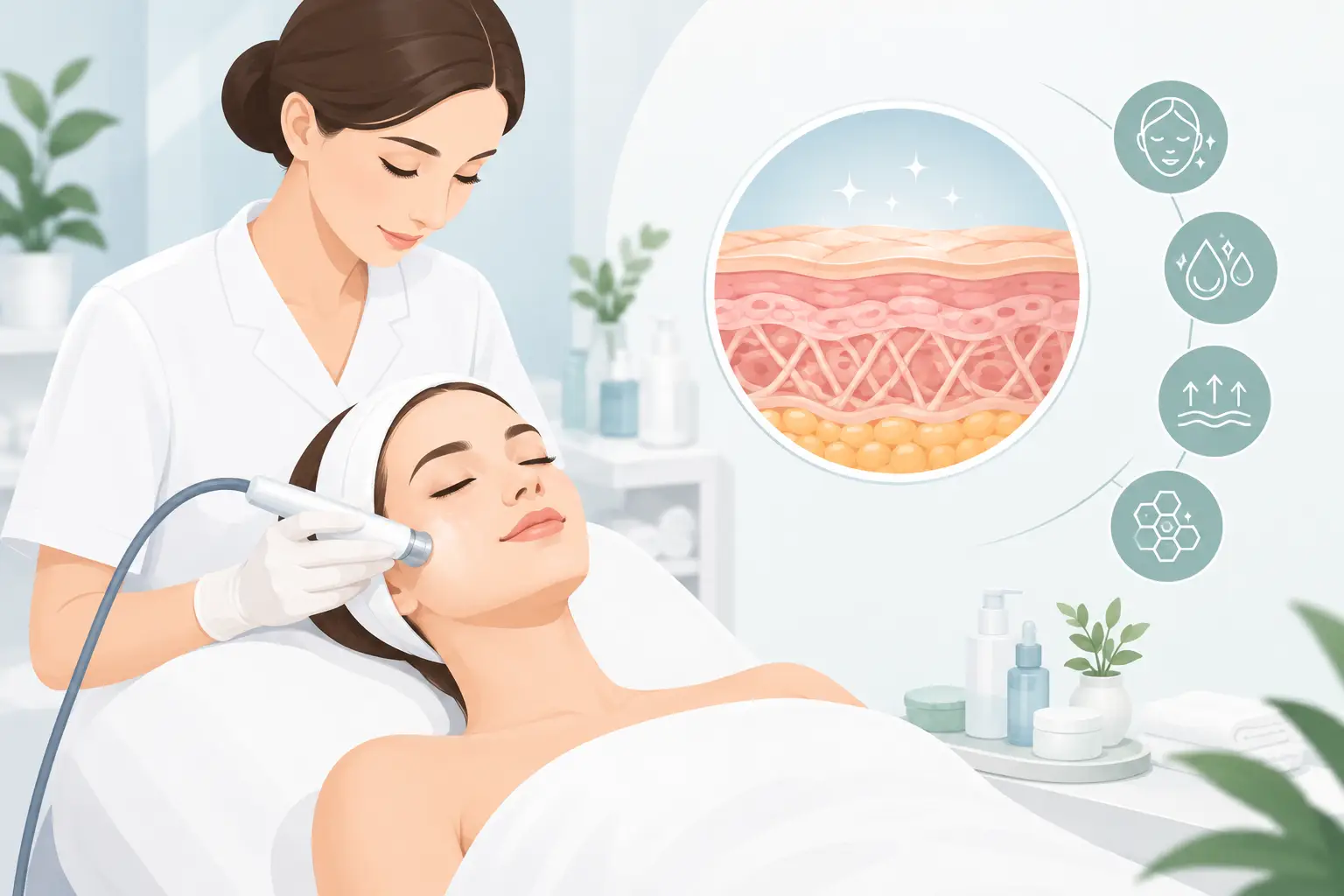
A dull complexion before an important meeting, acne that keeps returning in the same area, or makeup that suddenly settles into fine lines can feel like separate concerns. Often, they are connected by the same factors: inflammation, dehydration, uneven cell turnover, pigment changes, and a weakening skin barrier. The 메디컬 스파 피부관리 효과 people notice most are not usually dramatic overnight changes. They are the gradual return of clearer texture, steadier hydration, and a more rested-looking complexion through care chosen for the skin’s current condition.
A medical spa approach sits between basic home care and treatment-focused dermatology. It can support skin health with professional cleansing, exfoliation, calming care, hydration, and device-assisted treatments when appropriate. Its value comes from assessing what the skin needs now, rather than applying the same intensive routine to every concern.
What Makes Medical Spa Skin Care Different?
A standard facial may feel relaxing and leave the skin temporarily refreshed. Medical spa skin care can offer that comfort while placing more emphasis on skin assessment, treatment safety, and a plan that can change as the skin changes. This matters when concerns such as active acne, post-acne discoloration, melasma, persistent redness, enlarged pores, or early laxity are involved.
The goal is not to make every visit stronger than the last. For some people, a focused cleansing and soothing session is the right choice. For others, carefully selected exfoliation, light-based care, or procedures that support collagen can be part of a longer plan. A thoughtful clinician considers skin sensitivity, current medications, sun exposure, previous treatments, and how much recovery time fits into a person’s real life.
This medical perspective is especially helpful because a treatment that works well for one concern may not be right for another. Aggressive exfoliation, for example, may temporarily smooth a congested complexion but can aggravate irritation or trigger more discoloration in skin prone to hyperpigmentation. The right approach is rarely about doing more. It is about doing enough, at the right interval, with room for the skin to recover.
메디컬 스파 피부관리 효과: What Can Improve?
Results vary with the treatment type, skin condition, and consistency of care. Still, many patients seek medical spa care because it can address several visible concerns at once without requiring a single, overly aggressive procedure.
Texture, congestion, and a tired appearance
Professional cleansing and appropriate exfoliation can help remove surface buildup, soften rough texture, and improve the look of congested pores. Skin may look brighter after one session, especially when dehydration and dullness are the main concerns. But persistent clogged pores or acne generally require repeated care and, in some cases, medical acne treatment rather than facials alone.
For people who feel that their skin looks tired even after resting, the cause may be a combination of dry surface layers, uneven texture, and slower-looking radiance. Hydration-focused care can make the complexion appear smoother and help makeup sit more evenly. The effect is often subtle but meaningful: skin looks more like itself on a good day.
Uneven tone and post-acne marks
Dark spots after breakouts, sun-related pigmentation, and uneven tone usually improve gradually. A medical spa plan may support pigment management by pairing gentle, appropriate treatments with daily sun protection and skin-barrier care. Results depend heavily on the depth and cause of the discoloration.
Melasma deserves particular caution. It can worsen with heat, irritation, hormonal changes, and unprotected sun exposure. In that situation, more intensive treatment is not automatically better. A careful plan may prioritize calming inflammation, consistent sunscreen use, and measured treatment intervals to avoid provoking the very pigmentation being addressed.
Fine lines, firmness, and skin quality
When people say they want lifting or anti-aging care, they may be describing several different goals: softer fine lines, better hydration, improved elasticity, a more even tone, or a less fatigued appearance. Medical spa care can support skin quality and may help the complexion look smoother and more refreshed over time.
However, skin care treatments do not create the same changes as procedures designed for deeper volume loss or more significant laxity. A well-designed plan should be honest about this distinction. If the concern is primarily dryness and surface texture, skin care can make a visible difference. If there is substantial sagging or structural volume change, another treatment category may be more appropriate. Sometimes the best choice is to begin conservatively, observe the response, and build only when needed.
Why a Personalized Plan Matters More Than a Popular Treatment
Social media can make one device, peel, or injectable treatment seem universally necessary. Skin does not work that way. The person with oily, inflamed acne may need a different sequence from the person with dry, reactive skin and brown spots, even if both describe their complexion as uneven.
A personalized plan begins with a clear conversation. What is the main concern? When did it start? What has already been tried? Is the goal to prepare for an event, control recurring breakouts, maintain results from another procedure, or create a sustainable routine for the next year? These answers affect the timing and intensity of care.
At Somsei Clinic, this kind of planning is centered on direct consultation and recommending only the care that is needed. For patients near Dunchon-dong and Olympic Park Foreon, that can mean combining medical judgment with a comfortable, ongoing care experience rather than moving immediately into a preset package.
Some skin concerns also benefit from a layered approach. Acne management may include medical treatment, carefully timed professional care, and home routine adjustments. Pigment concerns may require sun protection habits, targeted treatment, and maintenance. Aging concerns may involve skin quality care alongside a separate discussion of volume, muscle movement, or laxity. A plan can be comprehensive without becoming excessive.
What Results Should You Expect, and When?
A realistic timeline protects both the skin and the patient’s expectations. After a hydration or cleansing-focused session, the skin may feel softer and look more luminous within days. Redness, active breakouts, pigment changes, and textural concerns often take several weeks or longer to improve because skin renewal is gradual.
It is also normal for results to fluctuate. Stress, sleep, seasonal dryness, travel, menstrual cycles, new products, and sun exposure can all affect the complexion. This does not always mean a treatment has failed. It may mean the plan needs adjustment.
For that reason, maintenance is not simply a sales concept. Skin is living tissue that responds to daily conditions. Regular but appropriately spaced care can help maintain improvements, particularly for congestion, dryness, mild textural changes, and recurring dullness. The ideal interval depends on skin sensitivity, treatment type, and the patient’s goals.
How to Choose Care Without Overdoing It
Before booking a medical spa treatment, look for a setting where someone asks questions rather than immediately offering a menu of procedures. You should understand what the treatment is intended to improve, what it cannot realistically change, how much downtime to expect, and what home care will support recovery.
Be cautious about pursuing a procedure simply because it is popular or because a friend had a good result. Similar-looking concerns can have different causes. Redness may be irritation, acne inflammation, vascular changes, or a reaction to products. Dark marks may be post-inflammatory pigmentation, freckles, melasma, or sun damage. Accurate diagnosis changes the treatment choice.
It is also reasonable to ask whether your current routine is making the concern worse. Using too many active ingredients, exfoliating too frequently, or switching products constantly can weaken the skin barrier and create a cycle of sensitivity. Sometimes the most valuable recommendation is a simpler routine and time for the skin to settle before adding another procedure.
Medical spa care works best when it feels like attentive maintenance, not a race toward a different face. With careful assessment, measured treatment, and enough time to see how the skin responds, each visit can become a small, reliable step toward skin that looks healthier, calmer, and naturally well cared for.







A dull complexion before an important meeting, acne that keeps returning in the same area, or makeup that suddenly settles into fine lines can feel like separate concerns. Often, they are connected by the same factors: inflammation, dehydration, uneven cell turnover, pigment changes, and a weakening skin barrier. The 메디컬 스파 피부관리 효과 people notice most are not usually dramatic overnight changes. They are the gradual return of clearer texture, steadier hydration, and a more rested-looking complexion through care chosen for the skin’s current condition.
A medical spa approach sits between basic home care and treatment-focused dermatology. It can support skin health with professional cleansing, exfoliation, calming care, hydration, and device-assisted treatments when appropriate. Its value comes from assessing what the skin needs now, rather than applying the same intensive routine to every concern.
What Makes Medical Spa Skin Care Different?
A standard facial may feel relaxing and leave the skin temporarily refreshed. Medical spa skin care can offer that comfort while placing more emphasis on skin assessment, treatment safety, and a plan that can change as the skin changes. This matters when concerns such as active acne, post-acne discoloration, melasma, persistent redness, enlarged pores, or early laxity are involved.
The goal is not to make every visit stronger than the last. For some people, a focused cleansing and soothing session is the right choice. For others, carefully selected exfoliation, light-based care, or procedures that support collagen can be part of a longer plan. A thoughtful clinician considers skin sensitivity, current medications, sun exposure, previous treatments, and how much recovery time fits into a person’s real life.
This medical perspective is especially helpful because a treatment that works well for one concern may not be right for another. Aggressive exfoliation, for example, may temporarily smooth a congested complexion but can aggravate irritation or trigger more discoloration in skin prone to hyperpigmentation. The right approach is rarely about doing more. It is about doing enough, at the right interval, with room for the skin to recover.
메디컬 스파 피부관리 효과: What Can Improve?
Results vary with the treatment type, skin condition, and consistency of care. Still, many patients seek medical spa care because it can address several visible concerns at once without requiring a single, overly aggressive procedure.
Texture, congestion, and a tired appearance
Professional cleansing and appropriate exfoliation can help remove surface buildup, soften rough texture, and improve the look of congested pores. Skin may look brighter after one session, especially when dehydration and dullness are the main concerns. But persistent clogged pores or acne generally require repeated care and, in some cases, medical acne treatment rather than facials alone.
For people who feel that their skin looks tired even after resting, the cause may be a combination of dry surface layers, uneven texture, and slower-looking radiance. Hydration-focused care can make the complexion appear smoother and help makeup sit more evenly. The effect is often subtle but meaningful: skin looks more like itself on a good day.
Uneven tone and post-acne marks
Dark spots after breakouts, sun-related pigmentation, and uneven tone usually improve gradually. A medical spa plan may support pigment management by pairing gentle, appropriate treatments with daily sun protection and skin-barrier care. Results depend heavily on the depth and cause of the discoloration.
Melasma deserves particular caution. It can worsen with heat, irritation, hormonal changes, and unprotected sun exposure. In that situation, more intensive treatment is not automatically better. A careful plan may prioritize calming inflammation, consistent sunscreen use, and measured treatment intervals to avoid provoking the very pigmentation being addressed.
Fine lines, firmness, and skin quality
When people say they want lifting or anti-aging care, they may be describing several different goals: softer fine lines, better hydration, improved elasticity, a more even tone, or a less fatigued appearance. Medical spa care can support skin quality and may help the complexion look smoother and more refreshed over time.
However, skin care treatments do not create the same changes as procedures designed for deeper volume loss or more significant laxity. A well-designed plan should be honest about this distinction. If the concern is primarily dryness and surface texture, skin care can make a visible difference. If there is substantial sagging or structural volume change, another treatment category may be more appropriate. Sometimes the best choice is to begin conservatively, observe the response, and build only when needed.
Why a Personalized Plan Matters More Than a Popular Treatment
Social media can make one device, peel, or injectable treatment seem universally necessary. Skin does not work that way. The person with oily, inflamed acne may need a different sequence from the person with dry, reactive skin and brown spots, even if both describe their complexion as uneven.
A personalized plan begins with a clear conversation. What is the main concern? When did it start? What has already been tried? Is the goal to prepare for an event, control recurring breakouts, maintain results from another procedure, or create a sustainable routine for the next year? These answers affect the timing and intensity of care.
At Somsei Clinic, this kind of planning is centered on direct consultation and recommending only the care that is needed. For patients near Dunchon-dong and Olympic Park Foreon, that can mean combining medical judgment with a comfortable, ongoing care experience rather than moving immediately into a preset package.
Some skin concerns also benefit from a layered approach. Acne management may include medical treatment, carefully timed professional care, and home routine adjustments. Pigment concerns may require sun protection habits, targeted treatment, and maintenance. Aging concerns may involve skin quality care alongside a separate discussion of volume, muscle movement, or laxity. A plan can be comprehensive without becoming excessive.
What Results Should You Expect, and When?
A realistic timeline protects both the skin and the patient’s expectations. After a hydration or cleansing-focused session, the skin may feel softer and look more luminous within days. Redness, active breakouts, pigment changes, and textural concerns often take several weeks or longer to improve because skin renewal is gradual.
It is also normal for results to fluctuate. Stress, sleep, seasonal dryness, travel, menstrual cycles, new products, and sun exposure can all affect the complexion. This does not always mean a treatment has failed. It may mean the plan needs adjustment.
For that reason, maintenance is not simply a sales concept. Skin is living tissue that responds to daily conditions. Regular but appropriately spaced care can help maintain improvements, particularly for congestion, dryness, mild textural changes, and recurring dullness. The ideal interval depends on skin sensitivity, treatment type, and the patient’s goals.
How to Choose Care Without Overdoing It
Before booking a medical spa treatment, look for a setting where someone asks questions rather than immediately offering a menu of procedures. You should understand what the treatment is intended to improve, what it cannot realistically change, how much downtime to expect, and what home care will support recovery.
Be cautious about pursuing a procedure simply because it is popular or because a friend had a good result. Similar-looking concerns can have different causes. Redness may be irritation, acne inflammation, vascular changes, or a reaction to products. Dark marks may be post-inflammatory pigmentation, freckles, melasma, or sun damage. Accurate diagnosis changes the treatment choice.
It is also reasonable to ask whether your current routine is making the concern worse. Using too many active ingredients, exfoliating too frequently, or switching products constantly can weaken the skin barrier and create a cycle of sensitivity. Sometimes the most valuable recommendation is a simpler routine and time for the skin to settle before adding another procedure.
Medical spa care works best when it feels like attentive maintenance, not a race toward a different face. With careful assessment, measured treatment, and enough time to see how the skin responds, each visit can become a small, reliable step toward skin that looks healthier, calmer, and naturally well cared for.