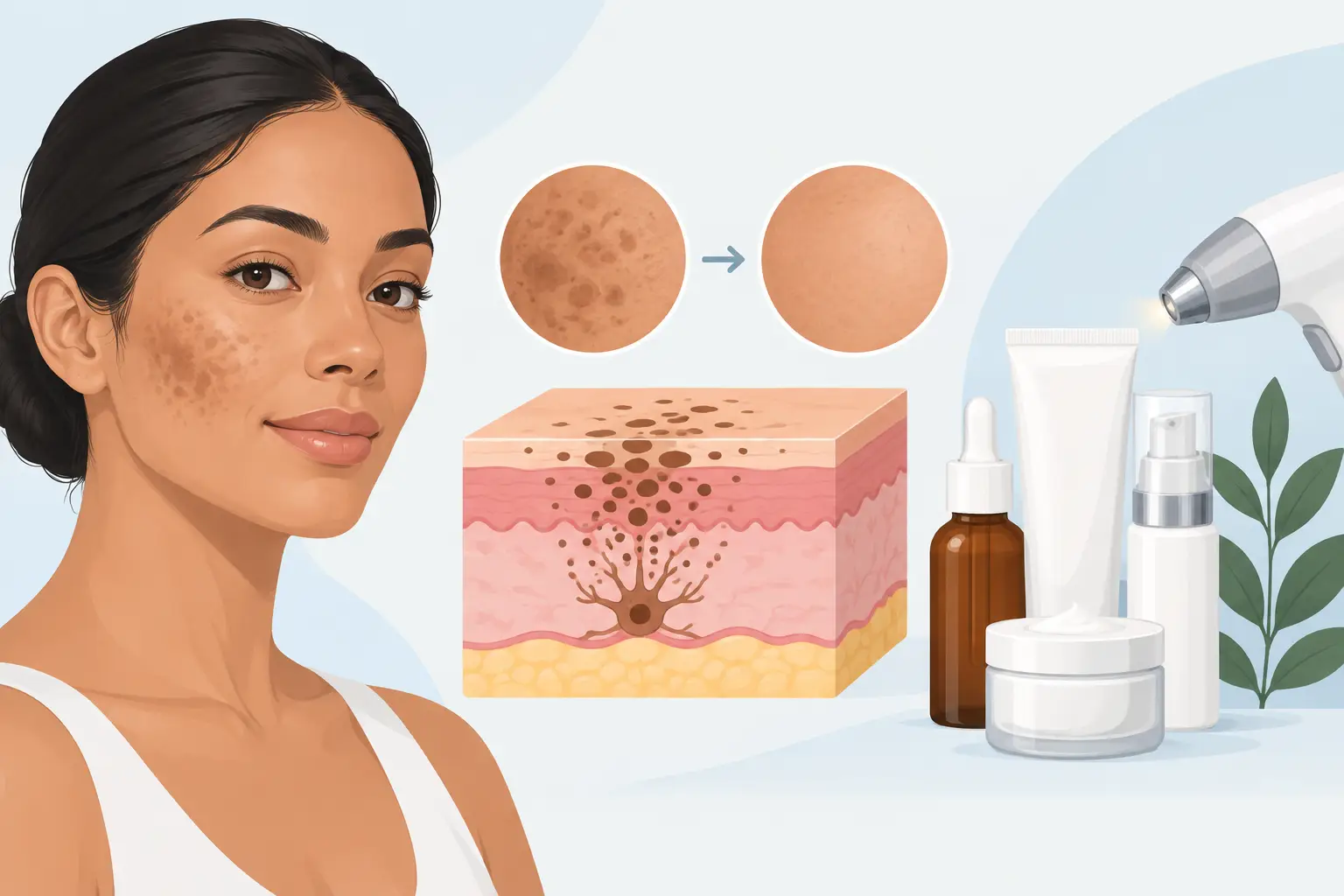
A dark mark that remains after a blemish has healed can feel more persistent than the blemish itself. So can patches that deepen every summer, or spots that seem to multiply with time. A useful hyperpigmentation treatment options guide begins with one truth: discoloration is not one single condition, and the right approach depends on why the pigment appeared, how deep it sits, and how your skin responds to irritation.
Treating pigment well is usually less about finding the strongest procedure and more about making careful decisions in the right order. That includes identifying the cause, calming any active inflammation, protecting the skin consistently, and choosing treatment methods that respect your skin tone and daily routine.
Start by identifying the type of pigmentation
“Dark spots” is a convenient phrase, but it can describe several different concerns. Post-inflammatory hyperpigmentation often follows acne, eczema, ingrown hairs, friction, or a skin injury. The marks may be brown, gray-brown, or deeper in tone, and they can linger after the original inflammation is gone.
Melasma usually appears as broader, symmetrical patches on the cheeks, forehead, upper lip, or jawline. Sun exposure can worsen it, but heat, visible light, hormones, and genetic tendency can also contribute. This makes melasma especially prone to recurrence, even after it has improved.
Sun spots, also called solar lentigines, tend to be more defined marks that develop gradually on areas with years of accumulated sun exposure, such as the face, chest, shoulders, and hands. Freckles may darken with sun exposure as well, while a changing or unusually dark spot should be assessed medically rather than treated as a cosmetic concern.
The distinction matters. A treatment that works beautifully for a few isolated sun spots may be too aggressive for melasma. A routine designed for acne marks may fall short if active breakouts continue to create new pigment.
The foundation of hyperpigmentation treatment options
Pigment treatment is easier to protect than to repeat. Daily sun protection is therefore part of treatment, not an optional finishing step. A broad-spectrum sunscreen with SPF 30 or higher, applied generously and reapplied during prolonged outdoor exposure, helps prevent existing discoloration from becoming darker and reduces the chance of new spots developing.
For melasma or persistent uneven tone, a tinted sunscreen containing iron oxides can be particularly helpful. In addition to ultraviolet light, visible light may contribute to pigment changes in some people. A hat, sunglasses, and shade are practical additions when walking, driving, or spending time near reflective surfaces.
Just as important is reducing avoidable irritation. Over-scrubbing, frequent exfoliation, picking acne, or introducing several active products at once can trigger inflammation and create more discoloration. Skin that stings, peels, or feels persistently tight may need a simpler routine before stronger pigment-focused treatment begins.
Topical treatments: gradual improvement with consistency
Topical care is often the starting point for diffuse pigmentation, acne marks, and melasma management. Results are gradual. Most people need several weeks to begin seeing change and a few months of consistent use to judge whether a regimen is working.
Prescription and clinician-guided options
Hydroquinone remains one of the more established pigment-reducing ingredients, but it should be used thoughtfully. It is typically recommended for a limited treatment period and under clinical guidance, especially for people prone to irritation or those treating melasma. The goal is controlled improvement, not continuous use without reassessment.
Retinoids can support cell turnover and may be useful when acne, texture, and discoloration overlap. They can also cause dryness and irritation when started too quickly. A clinician may recommend a gradual schedule, a buffering moisturizer, or an alternative if the skin barrier is already compromised.
Other prescription approaches may include formulas that combine pigment-control ingredients with anti-inflammatory components. The right choice depends on the pigmentation pattern, skin sensitivity, pregnancy or breastfeeding status, other medications, and treatment history.
Over-the-counter supportive ingredients
Azelaic acid, vitamin C, niacinamide, kojic acid, and tranexamic acid are commonly used in brightening routines. They do not all work in the same way, and combining too many at once does not necessarily produce faster results. A well-chosen routine with one or two active ingredients is often easier to tolerate and maintain.
For example, someone with acne marks and sensitive skin may benefit from a calming, acne-conscious plan rather than a high-strength exfoliating routine. Someone with stable sun spots may use antioxidant support alongside sunscreen while considering a targeted in-office procedure. The best product plan is one your skin can use consistently without becoming inflamed.
In-office procedures: when targeted care is appropriate
Procedures can be helpful when topical treatment alone is not producing enough improvement, when pigment is localized, or when a person wants a more focused approach. They should not be viewed as interchangeable. Device settings, treatment depth, preparation, and aftercare all influence both results and safety.
Chemical peels
Superficial chemical peels encourage controlled exfoliation and can improve dullness, acne-related marks, and uneven tone. They are often performed as a series rather than as a one-time treatment. Peels can be a measured option for many concerns, but deeper is not automatically better. Overly aggressive peeling may create irritation and post-inflammatory hyperpigmentation, particularly in deeper skin tones.
Laser and light-based treatment
Lasers and light-based devices can address selected sun spots, freckles, and certain types of discoloration. They can offer noticeable improvement for the right indication, but they require careful diagnosis. Melasma, for instance, may temporarily improve with certain energy-based treatments yet recur or worsen if the skin is overheated or irritated.
For this reason, treatment settings should be individualized rather than chosen from a standard menu. Skin tone, pigment depth, tanning history, sensitivity, and the possibility of melasma all deserve consideration before a procedure is recommended.
Microneedling and combination plans
Microneedling may be considered when discoloration appears alongside acne scarring or textural concerns. It is not a replacement for pigment-specific treatment, but it can be part of a broader plan in selected cases. Combination care might pair a conservative procedure schedule with home care and strict sun protection, allowing the skin time to recover between sessions.
What results should realistically look like
Healthy expectations protect both your skin and your confidence. Hyperpigmentation usually fades gradually, and the timeline is influenced by the cause, depth, skin tone, ongoing sun exposure, hormones, and whether new inflammation is still occurring. Fresh, surface-level marks may respond more quickly than long-standing or deeper pigment.
Improvement does not always mean every mark disappears completely. Often, a successful plan means the overall tone becomes more even, patches become less noticeable, acne marks fade more predictably, and the skin is less likely to develop new discoloration. For melasma, maintenance is often part of the plan because it can be a chronic, recurrent condition.
It can help to take photos in the same lighting every four to six weeks. Day-to-day mirror checks are unreliable, especially when lighting, hydration, and temporary redness can change how pigment appears.
When a personalized consultation matters most
A consultation is particularly valuable if spots are changing in shape, size, color, or sensation; if discoloration appeared suddenly; or if you have tried multiple products without improvement. It is also helpful before a peel or laser treatment if you have melasma, a history of dark marks after irritation, a deeper skin tone, or sensitive skin.
A careful clinician will look beyond the pigment itself. Active acne, rosacea, eczema, shaving irritation, medication use, hormonal factors, and recent sun exposure can all affect treatment choices. Sometimes the most effective first step is not a procedure. It may be getting breakouts under control, repairing a weakened skin barrier, or simplifying an overly active routine.
At Somsei Clinic, this kind of evaluation is intended to guide a tailored plan rather than a one-size-fits-all package. The focus is on recommending only what the skin needs, then adjusting the plan as the skin responds.
Your skin does not need to be pushed into a dramatic change to look clearer and more even. With accurate diagnosis, patient care, and a treatment plan that respects its limits, gradual improvement can become both visible and sustainable.







A dark mark that remains after a blemish has healed can feel more persistent than the blemish itself. So can patches that deepen every summer, or spots that seem to multiply with time. A useful hyperpigmentation treatment options guide begins with one truth: discoloration is not one single condition, and the right approach depends on why the pigment appeared, how deep it sits, and how your skin responds to irritation.
Treating pigment well is usually less about finding the strongest procedure and more about making careful decisions in the right order. That includes identifying the cause, calming any active inflammation, protecting the skin consistently, and choosing treatment methods that respect your skin tone and daily routine.
Start by identifying the type of pigmentation
“Dark spots” is a convenient phrase, but it can describe several different concerns. Post-inflammatory hyperpigmentation often follows acne, eczema, ingrown hairs, friction, or a skin injury. The marks may be brown, gray-brown, or deeper in tone, and they can linger after the original inflammation is gone.
Melasma usually appears as broader, symmetrical patches on the cheeks, forehead, upper lip, or jawline. Sun exposure can worsen it, but heat, visible light, hormones, and genetic tendency can also contribute. This makes melasma especially prone to recurrence, even after it has improved.
Sun spots, also called solar lentigines, tend to be more defined marks that develop gradually on areas with years of accumulated sun exposure, such as the face, chest, shoulders, and hands. Freckles may darken with sun exposure as well, while a changing or unusually dark spot should be assessed medically rather than treated as a cosmetic concern.
The distinction matters. A treatment that works beautifully for a few isolated sun spots may be too aggressive for melasma. A routine designed for acne marks may fall short if active breakouts continue to create new pigment.
The foundation of hyperpigmentation treatment options
Pigment treatment is easier to protect than to repeat. Daily sun protection is therefore part of treatment, not an optional finishing step. A broad-spectrum sunscreen with SPF 30 or higher, applied generously and reapplied during prolonged outdoor exposure, helps prevent existing discoloration from becoming darker and reduces the chance of new spots developing.
For melasma or persistent uneven tone, a tinted sunscreen containing iron oxides can be particularly helpful. In addition to ultraviolet light, visible light may contribute to pigment changes in some people. A hat, sunglasses, and shade are practical additions when walking, driving, or spending time near reflective surfaces.
Just as important is reducing avoidable irritation. Over-scrubbing, frequent exfoliation, picking acne, or introducing several active products at once can trigger inflammation and create more discoloration. Skin that stings, peels, or feels persistently tight may need a simpler routine before stronger pigment-focused treatment begins.
Topical treatments: gradual improvement with consistency
Topical care is often the starting point for diffuse pigmentation, acne marks, and melasma management. Results are gradual. Most people need several weeks to begin seeing change and a few months of consistent use to judge whether a regimen is working.
Prescription and clinician-guided options
Hydroquinone remains one of the more established pigment-reducing ingredients, but it should be used thoughtfully. It is typically recommended for a limited treatment period and under clinical guidance, especially for people prone to irritation or those treating melasma. The goal is controlled improvement, not continuous use without reassessment.
Retinoids can support cell turnover and may be useful when acne, texture, and discoloration overlap. They can also cause dryness and irritation when started too quickly. A clinician may recommend a gradual schedule, a buffering moisturizer, or an alternative if the skin barrier is already compromised.
Other prescription approaches may include formulas that combine pigment-control ingredients with anti-inflammatory components. The right choice depends on the pigmentation pattern, skin sensitivity, pregnancy or breastfeeding status, other medications, and treatment history.
Over-the-counter supportive ingredients
Azelaic acid, vitamin C, niacinamide, kojic acid, and tranexamic acid are commonly used in brightening routines. They do not all work in the same way, and combining too many at once does not necessarily produce faster results. A well-chosen routine with one or two active ingredients is often easier to tolerate and maintain.
For example, someone with acne marks and sensitive skin may benefit from a calming, acne-conscious plan rather than a high-strength exfoliating routine. Someone with stable sun spots may use antioxidant support alongside sunscreen while considering a targeted in-office procedure. The best product plan is one your skin can use consistently without becoming inflamed.
In-office procedures: when targeted care is appropriate
Procedures can be helpful when topical treatment alone is not producing enough improvement, when pigment is localized, or when a person wants a more focused approach. They should not be viewed as interchangeable. Device settings, treatment depth, preparation, and aftercare all influence both results and safety.
Chemical peels
Superficial chemical peels encourage controlled exfoliation and can improve dullness, acne-related marks, and uneven tone. They are often performed as a series rather than as a one-time treatment. Peels can be a measured option for many concerns, but deeper is not automatically better. Overly aggressive peeling may create irritation and post-inflammatory hyperpigmentation, particularly in deeper skin tones.
Laser and light-based treatment
Lasers and light-based devices can address selected sun spots, freckles, and certain types of discoloration. They can offer noticeable improvement for the right indication, but they require careful diagnosis. Melasma, for instance, may temporarily improve with certain energy-based treatments yet recur or worsen if the skin is overheated or irritated.
For this reason, treatment settings should be individualized rather than chosen from a standard menu. Skin tone, pigment depth, tanning history, sensitivity, and the possibility of melasma all deserve consideration before a procedure is recommended.
Microneedling and combination plans
Microneedling may be considered when discoloration appears alongside acne scarring or textural concerns. It is not a replacement for pigment-specific treatment, but it can be part of a broader plan in selected cases. Combination care might pair a conservative procedure schedule with home care and strict sun protection, allowing the skin time to recover between sessions.
What results should realistically look like
Healthy expectations protect both your skin and your confidence. Hyperpigmentation usually fades gradually, and the timeline is influenced by the cause, depth, skin tone, ongoing sun exposure, hormones, and whether new inflammation is still occurring. Fresh, surface-level marks may respond more quickly than long-standing or deeper pigment.
Improvement does not always mean every mark disappears completely. Often, a successful plan means the overall tone becomes more even, patches become less noticeable, acne marks fade more predictably, and the skin is less likely to develop new discoloration. For melasma, maintenance is often part of the plan because it can be a chronic, recurrent condition.
It can help to take photos in the same lighting every four to six weeks. Day-to-day mirror checks are unreliable, especially when lighting, hydration, and temporary redness can change how pigment appears.
When a personalized consultation matters most
A consultation is particularly valuable if spots are changing in shape, size, color, or sensation; if discoloration appeared suddenly; or if you have tried multiple products without improvement. It is also helpful before a peel or laser treatment if you have melasma, a history of dark marks after irritation, a deeper skin tone, or sensitive skin.
A careful clinician will look beyond the pigment itself. Active acne, rosacea, eczema, shaving irritation, medication use, hormonal factors, and recent sun exposure can all affect treatment choices. Sometimes the most effective first step is not a procedure. It may be getting breakouts under control, repairing a weakened skin barrier, or simplifying an overly active routine.
At Somsei Clinic, this kind of evaluation is intended to guide a tailored plan rather than a one-size-fits-all package. The focus is on recommending only what the skin needs, then adjusting the plan as the skin responds.
Your skin does not need to be pushed into a dramatic change to look clearer and more even. With accurate diagnosis, patient care, and a treatment plan that respects its limits, gradual improvement can become both visible and sustainable.