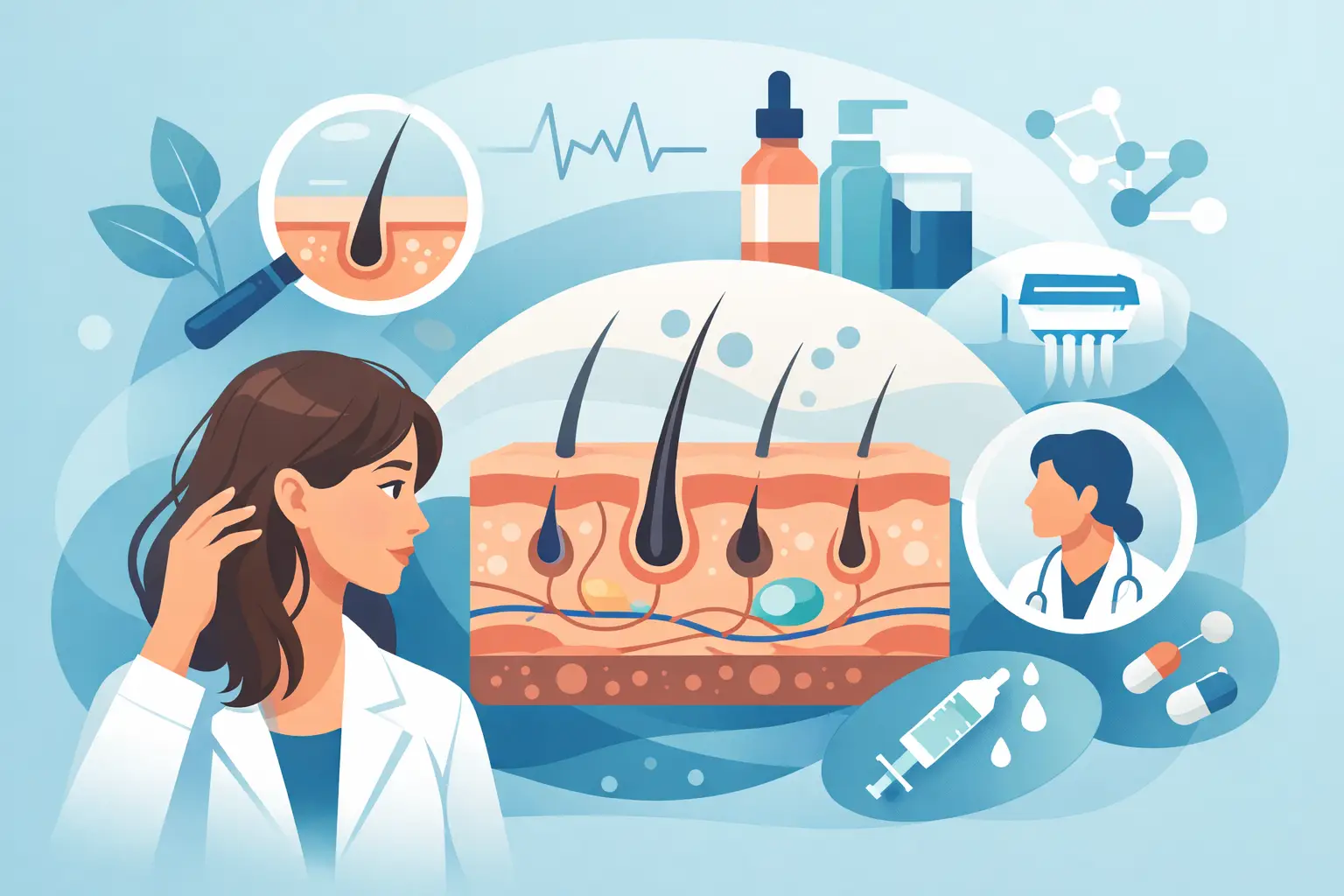
Hair loss rarely begins as a dramatic change. More often, it appears as extra strands around the shower drain, a wider part in photographs, a ponytail that feels lighter, or a hairline that no longer looks quite familiar. Searching for 탈모 관리 피부과 care is often a sign that someone wants more than a quick product recommendation. They want to understand what is changing, why it may be happening, and what can realistically be done.
A thoughtful dermatology visit should make that process feel clearer, not more overwhelming. Hair loss has many causes, and the most appropriate plan depends on the pattern of shedding, the scalp condition, medical history, daily habits, and the person’s goals. The right care is not always the most extensive care. It is the care that is medically appropriate and sustainable for that individual.
Hair Loss Is a Symptom, Not One Diagnosis
Hair shedding is normal. Most people lose some hair each day as follicles move through their natural growth cycle. The concern begins when the amount noticeably increases, density does not recover, or the hair becomes progressively finer over time.
Pattern hair loss is one common reason people seek treatment. In women, it may look like gradual widening through the part or reduced volume at the crown. In men, it may begin with temple recession, thinning at the crown, or both. Genetics can play a major role, but family history is not the whole picture. Hormonal changes, aging, inflammation, and individual follicle sensitivity can affect the pace and pattern of thinning.
Other forms of hair loss can occur more suddenly. Physical stress, illness, major surgery, rapid weight change, restrictive eating, childbirth, emotional strain, and some medications may trigger diffuse shedding several weeks or months later. This is often temporary, but it still deserves a careful evaluation when shedding is severe or prolonged.
Scalp conditions matter as well. Itching, flaking, tenderness, redness, pimples, or thick scale can interfere with comfort and may contribute to shedding. A healthy scalp does not guarantee full hair density, but ongoing scalp inflammation should not be ignored while pursuing hair growth treatments.
What a 탈모 관리 피부과 Visit Should Clarify
The first goal of a hair loss consultation is not to select a procedure. It is to identify the most likely cause and determine whether there are signs that need prompt medical attention. A dermatologist will typically ask when the change began, whether it was sudden or gradual, where thinning is most visible, and whether there have been recent changes in health, stress, diet, sleep, medications, or hormonal status.
The examination should look beyond the visible area of concern. Hair density, shaft thickness, the shape of the hairline, scalp condition, and the distribution of loss each provide useful clues. In some cases, a closer scalp examination or laboratory evaluation may be recommended. The purpose is not to order every possible test. It is to investigate when the history or findings suggest a medical contributor.
This distinction is especially valuable because certain signs should not be treated as ordinary thinning. Round patches of hair loss, scalp pain, scarring, broken hairs, eyebrow loss, or rapidly worsening shedding may require a different approach. Starting generic hair supplements or undergoing repeated scalp procedures without a diagnosis can delay the care that is actually needed.
A good consultation also establishes a baseline. Photos, a clear description of the pattern, and a shared definition of the goal make follow-up more meaningful. For one person, success may mean slowing further thinning. For another, it may mean reducing shedding, improving part-line coverage, or supporting stronger-looking hair before an important life event. These are related but different goals.
Treatment Plans Need Time and Priorities
Hair grows slowly, and follicles do not respond on the same schedule as skin. This is one reason hair loss care can feel emotionally difficult. A person may do everything correctly for several weeks and still see little visible change. Meaningful assessment often requires several months of consistent treatment and periodic review.
Depending on the diagnosis, a plan may include topical or oral medical treatment, scalp inflammation management, nutritional guidance when a true deficiency is suspected, and in-office options intended to support scalp and follicle health. Not every patient needs every category of treatment. The safest and most effective plan is usually built in layers, beginning with what addresses the underlying pattern most directly.
For example, someone with gradual hereditary thinning and no scalp symptoms may benefit most from a long-term medical regimen and regular monitoring. Someone experiencing sudden diffuse shedding after illness may need reassurance, a review of possible triggers, and targeted testing rather than an aggressive series of procedures. A person with flaking and irritation may first need scalp treatment before adding growth-focused care.
This is where careful medical judgment matters. Hair loss treatment should not be sold as a fixed package because the cause, timeline, and response vary widely. A plan may be adjusted after several months based on shedding, density, tolerance, and lifestyle. Consistency usually has more value than doing too much at once.
Choosing Treatment With Realistic Expectations
There is no universal treatment that restores every strand of lost hair. Some follicles can be strengthened and supported. Some shedding cycles can settle. Some areas may show visible improvement, while others may primarily stabilize. The earlier progressive thinning is addressed, the more opportunity there may be to preserve existing follicles, but even then, results are gradual rather than immediate.
Before beginning care, it helps to discuss four practical questions: What is the likely diagnosis? What change is reasonably expected? How long should the treatment be continued before judging it? What side effects, costs, and maintenance are involved?
These questions matter because convenience is part of a successful plan. A treatment that is clinically appropriate but impossible to maintain may not serve the patient well. Some people prefer a simple home routine. Others may value scheduled in-office support and close follow-up. Neither preference is inherently better. The goal is to build an approach that fits daily life without compromising medical safety.
Be cautious with promises of instant regrowth, guaranteed results, or one-time solutions for every kind of hair loss. Hair care is often ongoing care. An honest plan should explain what may improve, what may need continued treatment, and when reassessment is appropriate.
Daily Habits That Support Scalp and Hair Health
Daily habits cannot reverse every cause of hair loss, but they can protect the hair that is present and reduce unnecessary stress on the scalp. Harsh chemical processing, frequent high-heat styling, and tightly pulled hairstyles can contribute to breakage or traction-related loss over time. Choosing gentler styling practices is particularly helpful when hair already feels fine or fragile.
Nutrition also deserves a balanced view. Hair requires adequate protein and overall nourishment, but supplements are not automatically beneficial. Taking high-dose vitamins without a confirmed need can be unhelpful and, in some cases, counterproductive. A clinician can help determine when dietary adjustment or testing is more appropriate than adding multiple products.
Sleep, stress management, and recovery after illness also influence the broader conditions in which hair grows. These are not simplistic explanations for every hair concern. They are supportive factors that work best alongside an accurate diagnosis and a well-organized treatment plan.
When to Schedule a Dermatology Evaluation
It is reasonable to seek care when shedding continues for more than a few months, thinning becomes visible, or the change causes distress. Earlier evaluation is particularly worthwhile if hair loss is sudden, patchy, accompanied by scalp discomfort, or associated with changes in general health.
For patients who have already tried shampoos, supplements, or online recommendations without clarity, the next step does not need to be more trial and error. A direct consultation can help separate cosmetic concerns from medical ones and clarify which options are worth considering.
At Somsei Clinic, hair loss care begins with attentive consultation, scalp and hair assessment, and a plan designed around what is genuinely needed. The focus is not on dramatic promises, but on precise treatment choices, a comfortable care experience, and follow-up that respects the time hair needs to respond.
Hair loss can affect confidence long before it becomes obvious to anyone else. Bringing the concern to a dermatologist early creates space for clear answers and measured decisions. The best next step is often simply a careful evaluation, followed by a plan you can understand and maintain.







Hair loss rarely begins as a dramatic change. More often, it appears as extra strands around the shower drain, a wider part in photographs, a ponytail that feels lighter, or a hairline that no longer looks quite familiar. Searching for 탈모 관리 피부과 care is often a sign that someone wants more than a quick product recommendation. They want to understand what is changing, why it may be happening, and what can realistically be done.
A thoughtful dermatology visit should make that process feel clearer, not more overwhelming. Hair loss has many causes, and the most appropriate plan depends on the pattern of shedding, the scalp condition, medical history, daily habits, and the person’s goals. The right care is not always the most extensive care. It is the care that is medically appropriate and sustainable for that individual.
Hair Loss Is a Symptom, Not One Diagnosis
Hair shedding is normal. Most people lose some hair each day as follicles move through their natural growth cycle. The concern begins when the amount noticeably increases, density does not recover, or the hair becomes progressively finer over time.
Pattern hair loss is one common reason people seek treatment. In women, it may look like gradual widening through the part or reduced volume at the crown. In men, it may begin with temple recession, thinning at the crown, or both. Genetics can play a major role, but family history is not the whole picture. Hormonal changes, aging, inflammation, and individual follicle sensitivity can affect the pace and pattern of thinning.
Other forms of hair loss can occur more suddenly. Physical stress, illness, major surgery, rapid weight change, restrictive eating, childbirth, emotional strain, and some medications may trigger diffuse shedding several weeks or months later. This is often temporary, but it still deserves a careful evaluation when shedding is severe or prolonged.
Scalp conditions matter as well. Itching, flaking, tenderness, redness, pimples, or thick scale can interfere with comfort and may contribute to shedding. A healthy scalp does not guarantee full hair density, but ongoing scalp inflammation should not be ignored while pursuing hair growth treatments.
What a 탈모 관리 피부과 Visit Should Clarify
The first goal of a hair loss consultation is not to select a procedure. It is to identify the most likely cause and determine whether there are signs that need prompt medical attention. A dermatologist will typically ask when the change began, whether it was sudden or gradual, where thinning is most visible, and whether there have been recent changes in health, stress, diet, sleep, medications, or hormonal status.
The examination should look beyond the visible area of concern. Hair density, shaft thickness, the shape of the hairline, scalp condition, and the distribution of loss each provide useful clues. In some cases, a closer scalp examination or laboratory evaluation may be recommended. The purpose is not to order every possible test. It is to investigate when the history or findings suggest a medical contributor.
This distinction is especially valuable because certain signs should not be treated as ordinary thinning. Round patches of hair loss, scalp pain, scarring, broken hairs, eyebrow loss, or rapidly worsening shedding may require a different approach. Starting generic hair supplements or undergoing repeated scalp procedures without a diagnosis can delay the care that is actually needed.
A good consultation also establishes a baseline. Photos, a clear description of the pattern, and a shared definition of the goal make follow-up more meaningful. For one person, success may mean slowing further thinning. For another, it may mean reducing shedding, improving part-line coverage, or supporting stronger-looking hair before an important life event. These are related but different goals.
Treatment Plans Need Time and Priorities
Hair grows slowly, and follicles do not respond on the same schedule as skin. This is one reason hair loss care can feel emotionally difficult. A person may do everything correctly for several weeks and still see little visible change. Meaningful assessment often requires several months of consistent treatment and periodic review.
Depending on the diagnosis, a plan may include topical or oral medical treatment, scalp inflammation management, nutritional guidance when a true deficiency is suspected, and in-office options intended to support scalp and follicle health. Not every patient needs every category of treatment. The safest and most effective plan is usually built in layers, beginning with what addresses the underlying pattern most directly.
For example, someone with gradual hereditary thinning and no scalp symptoms may benefit most from a long-term medical regimen and regular monitoring. Someone experiencing sudden diffuse shedding after illness may need reassurance, a review of possible triggers, and targeted testing rather than an aggressive series of procedures. A person with flaking and irritation may first need scalp treatment before adding growth-focused care.
This is where careful medical judgment matters. Hair loss treatment should not be sold as a fixed package because the cause, timeline, and response vary widely. A plan may be adjusted after several months based on shedding, density, tolerance, and lifestyle. Consistency usually has more value than doing too much at once.
Choosing Treatment With Realistic Expectations
There is no universal treatment that restores every strand of lost hair. Some follicles can be strengthened and supported. Some shedding cycles can settle. Some areas may show visible improvement, while others may primarily stabilize. The earlier progressive thinning is addressed, the more opportunity there may be to preserve existing follicles, but even then, results are gradual rather than immediate.
Before beginning care, it helps to discuss four practical questions: What is the likely diagnosis? What change is reasonably expected? How long should the treatment be continued before judging it? What side effects, costs, and maintenance are involved?
These questions matter because convenience is part of a successful plan. A treatment that is clinically appropriate but impossible to maintain may not serve the patient well. Some people prefer a simple home routine. Others may value scheduled in-office support and close follow-up. Neither preference is inherently better. The goal is to build an approach that fits daily life without compromising medical safety.
Be cautious with promises of instant regrowth, guaranteed results, or one-time solutions for every kind of hair loss. Hair care is often ongoing care. An honest plan should explain what may improve, what may need continued treatment, and when reassessment is appropriate.
Daily Habits That Support Scalp and Hair Health
Daily habits cannot reverse every cause of hair loss, but they can protect the hair that is present and reduce unnecessary stress on the scalp. Harsh chemical processing, frequent high-heat styling, and tightly pulled hairstyles can contribute to breakage or traction-related loss over time. Choosing gentler styling practices is particularly helpful when hair already feels fine or fragile.
Nutrition also deserves a balanced view. Hair requires adequate protein and overall nourishment, but supplements are not automatically beneficial. Taking high-dose vitamins without a confirmed need can be unhelpful and, in some cases, counterproductive. A clinician can help determine when dietary adjustment or testing is more appropriate than adding multiple products.
Sleep, stress management, and recovery after illness also influence the broader conditions in which hair grows. These are not simplistic explanations for every hair concern. They are supportive factors that work best alongside an accurate diagnosis and a well-organized treatment plan.
When to Schedule a Dermatology Evaluation
It is reasonable to seek care when shedding continues for more than a few months, thinning becomes visible, or the change causes distress. Earlier evaluation is particularly worthwhile if hair loss is sudden, patchy, accompanied by scalp discomfort, or associated with changes in general health.
For patients who have already tried shampoos, supplements, or online recommendations without clarity, the next step does not need to be more trial and error. A direct consultation can help separate cosmetic concerns from medical ones and clarify which options are worth considering.
At Somsei Clinic, hair loss care begins with attentive consultation, scalp and hair assessment, and a plan designed around what is genuinely needed. The focus is not on dramatic promises, but on precise treatment choices, a comfortable care experience, and follow-up that respects the time hair needs to respond.
Hair loss can affect confidence long before it becomes obvious to anyone else. Bringing the concern to a dermatologist early creates space for clear answers and measured decisions. The best next step is often simply a careful evaluation, followed by a plan you can understand and maintain.