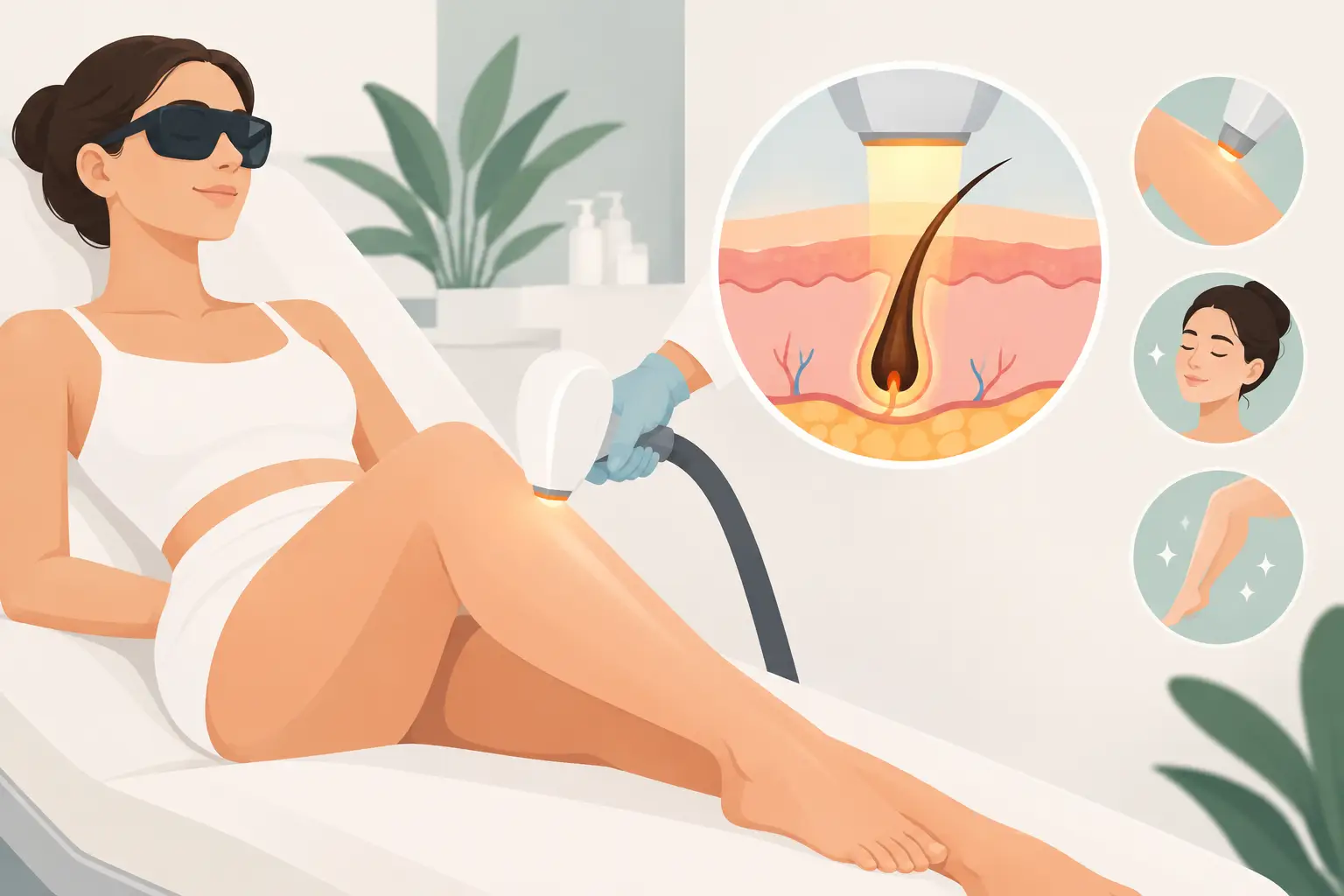
For many people, the question is not whether they want less shaving, waxing, or ingrown-hair irritation. It is simply: does laser hair removal hurt? The honest answer is that you may feel it, but most patients describe the sensation as brief and manageable rather than deeply painful. A well-planned treatment should not feel like something you have to endure without support.
Laser hair removal is most comfortable when the treatment settings, cooling method, and treatment pace are chosen for your skin, hair, and the area being treated. That is why an individual consultation matters more than promises that a procedure is completely painless.
Does laser hair removal hurt during treatment?
A common description is a quick snap against the skin, similar to a small rubber band. Some people feel a short burst of heat at the same moment. The sensation lasts only as the laser pulse is delivered, rather than continuing for minutes afterward.
Still, comfort is personal. One person may find underarm treatment easy but feel more sensitivity around the bikini line. Another may be more aware of treatment on the upper lip, where the skin is thin and the area is close to the nose. Your pain tolerance, stress level, menstrual cycle, skin condition, and prior hair-removal habits can all affect how the appointment feels.
Modern laser systems often include contact cooling, chilled air, or another cooling approach to help protect the skin and reduce discomfort. Treatment can also be adjusted thoughtfully. Starting conservatively and observing your skin’s response may be more appropriate than pursuing the highest possible setting from the first session.
Why some areas feel more sensitive
Not every body area has the same density of nerve endings or the same hair thickness. Areas with coarser, darker hair can create a stronger sensation because the laser targets pigment within the hair follicle. Delicate areas may also feel more intense even when the hair is fine.
The upper lip, bikini area, and lower legs are often considered more sensitive. Underarms can feel sharp for a few seconds, though the treatment area is small, so the appointment is usually quick. Arms, thighs, and the back may feel easier for many people because there is more surface area and, in some cases, finer hair.
This does not mean that a sensitive area must be treated painfully. It means the approach should be more careful. Cooling between passes, clear communication, and small adjustments to the pace can make a meaningful difference.
Hair thickness and skin tone matter
Laser hair removal works by directing light energy toward pigment in the hair. Dark, coarse hair often responds well, but it can also produce a more noticeable heat sensation. Lighter or finer hairs may require a different expectation for results and treatment planning.
Skin tone is equally important. The device and settings must be selected with care to target the hair while respecting the surrounding skin. Using overly aggressive settings is not a sign of better care. Precise treatment is safer and more comfortable than a one-size-fits-all approach.
Your skin’s condition can change the experience
Recently tanned, sun-sensitive, irritated, or inflamed skin may be more reactive. Active rashes, open skin, and certain skin conditions should be evaluated before treatment. If you are using prescription acne medication, retinoids, exfoliating products, or photosensitizing medications, share that information during your consultation.
A careful clinician will assess whether treatment should proceed, be modified, or be postponed. Protecting skin health comes before keeping to a schedule.
What happens after laser hair removal?
After treatment, the skin may look mildly red or feel warm, much like it does after light sun exposure. This often settles within several hours, though some people experience temporary redness or small bumps around the hair follicles for a day or two.
A cool compress and a gentle, fragrance-free moisturizer can be comforting if your skin feels warm. Avoid hot baths, saunas, intense exercise, exfoliation, and direct sun exposure immediately after treatment if your clinician recommends doing so. Daily sunscreen is especially important on exposed areas.
The goal is not to ignore discomfort after an appointment. Mild, short-lived sensitivity can be expected, but increasing pain, blistering, marked swelling, or skin color changes should be reported to your medical provider promptly. Clear aftercare instructions and a way to ask questions are part of responsible treatment.
How to make laser hair removal more comfortable
Preparation can affect both comfort and safety. Your provider will give guidance specific to the laser and the treatment area, but a few habits are commonly helpful.
First, shave the treatment area as instructed, often the day before or shortly before your appointment. Shaving leaves the follicle in place for the laser to target while avoiding long hair above the skin that can absorb heat. Do not wax, tweeze, or use epilators in the weeks leading up to treatment unless your clinician gives different instructions, because these methods remove the hair root.
Second, arrive with clean skin. Avoid lotions, deodorant, makeup, self-tanner, and fragranced products on the treatment area unless you have been told otherwise. If the skin is freshly tanned, sunburned, or irritated, let the clinic know before your visit.
Finally, speak openly about your comfort level. If you have had a painful hair-removal experience before, say so. If you are especially anxious about a particular area, mention it before treatment starts. Taking short pauses, using additional cooling, or adapting the plan may be appropriate options.
Is numbing cream necessary?
For many laser hair removal appointments, cooling and appropriate settings are enough. Some patients may consider a topical numbing cream for a particularly sensitive area, but it should only be used with guidance from the treating clinic.
Numbing products are not automatically the best answer. Used incorrectly, they can cause unwanted side effects or make it harder to recognize excessive heat. A clinician can help determine whether one is appropriate, how much to use, and when to apply it. Comfort should be managed safely, not improvised at home.
The trade-off: comfort and effective treatment
It is understandable to want a completely sensation-free experience. Yet laser treatment needs enough energy to affect the targeted follicles. Settings that are too low may feel easier in the moment but may not provide a meaningful response. Settings that are too high can increase the risk of unnecessary irritation.
The right treatment sits between those extremes. It considers your skin tone, hair characteristics, treatment area, history of sensitivity, and how your skin responds from session to session. Hair grows in cycles, so laser hair removal is also a series of treatments rather than a single appointment. As growth changes over time, the treatment plan may need adjustment.
This is one reason personalized care matters. The best plan is not defined by how intense it feels. It is defined by whether it is appropriate for your skin and can be continued comfortably and safely over time.
Questions worth asking before your appointment
Before beginning, ask which laser system is recommended for your skin and hair type, how the skin will be cooled, and what sensations are normal during and after treatment. It is also reasonable to ask how your provider adjusts settings, what you should avoid before the appointment, and what signs mean you should contact the clinic afterward.
You should feel able to ask these questions without being rushed. A thoughtful consultation includes not only discussing the area you want to treat, but also reviewing your skin history, current medications, previous reactions, and desired level of hair reduction.
Laser hair removal does not need to be approached as a test of pain tolerance. With careful assessment, proper preparation, and a provider who listens throughout the session, most people find the brief sensations manageable. The most reassuring first step is a consultation that treats your comfort and your skin health with equal care.







For many people, the question is not whether they want less shaving, waxing, or ingrown-hair irritation. It is simply: does laser hair removal hurt? The honest answer is that you may feel it, but most patients describe the sensation as brief and manageable rather than deeply painful. A well-planned treatment should not feel like something you have to endure without support.
Laser hair removal is most comfortable when the treatment settings, cooling method, and treatment pace are chosen for your skin, hair, and the area being treated. That is why an individual consultation matters more than promises that a procedure is completely painless.
Does laser hair removal hurt during treatment?
A common description is a quick snap against the skin, similar to a small rubber band. Some people feel a short burst of heat at the same moment. The sensation lasts only as the laser pulse is delivered, rather than continuing for minutes afterward.
Still, comfort is personal. One person may find underarm treatment easy but feel more sensitivity around the bikini line. Another may be more aware of treatment on the upper lip, where the skin is thin and the area is close to the nose. Your pain tolerance, stress level, menstrual cycle, skin condition, and prior hair-removal habits can all affect how the appointment feels.
Modern laser systems often include contact cooling, chilled air, or another cooling approach to help protect the skin and reduce discomfort. Treatment can also be adjusted thoughtfully. Starting conservatively and observing your skin’s response may be more appropriate than pursuing the highest possible setting from the first session.
Why some areas feel more sensitive
Not every body area has the same density of nerve endings or the same hair thickness. Areas with coarser, darker hair can create a stronger sensation because the laser targets pigment within the hair follicle. Delicate areas may also feel more intense even when the hair is fine.
The upper lip, bikini area, and lower legs are often considered more sensitive. Underarms can feel sharp for a few seconds, though the treatment area is small, so the appointment is usually quick. Arms, thighs, and the back may feel easier for many people because there is more surface area and, in some cases, finer hair.
This does not mean that a sensitive area must be treated painfully. It means the approach should be more careful. Cooling between passes, clear communication, and small adjustments to the pace can make a meaningful difference.
Hair thickness and skin tone matter
Laser hair removal works by directing light energy toward pigment in the hair. Dark, coarse hair often responds well, but it can also produce a more noticeable heat sensation. Lighter or finer hairs may require a different expectation for results and treatment planning.
Skin tone is equally important. The device and settings must be selected with care to target the hair while respecting the surrounding skin. Using overly aggressive settings is not a sign of better care. Precise treatment is safer and more comfortable than a one-size-fits-all approach.
Your skin’s condition can change the experience
Recently tanned, sun-sensitive, irritated, or inflamed skin may be more reactive. Active rashes, open skin, and certain skin conditions should be evaluated before treatment. If you are using prescription acne medication, retinoids, exfoliating products, or photosensitizing medications, share that information during your consultation.
A careful clinician will assess whether treatment should proceed, be modified, or be postponed. Protecting skin health comes before keeping to a schedule.
What happens after laser hair removal?
After treatment, the skin may look mildly red or feel warm, much like it does after light sun exposure. This often settles within several hours, though some people experience temporary redness or small bumps around the hair follicles for a day or two.
A cool compress and a gentle, fragrance-free moisturizer can be comforting if your skin feels warm. Avoid hot baths, saunas, intense exercise, exfoliation, and direct sun exposure immediately after treatment if your clinician recommends doing so. Daily sunscreen is especially important on exposed areas.
The goal is not to ignore discomfort after an appointment. Mild, short-lived sensitivity can be expected, but increasing pain, blistering, marked swelling, or skin color changes should be reported to your medical provider promptly. Clear aftercare instructions and a way to ask questions are part of responsible treatment.
How to make laser hair removal more comfortable
Preparation can affect both comfort and safety. Your provider will give guidance specific to the laser and the treatment area, but a few habits are commonly helpful.
First, shave the treatment area as instructed, often the day before or shortly before your appointment. Shaving leaves the follicle in place for the laser to target while avoiding long hair above the skin that can absorb heat. Do not wax, tweeze, or use epilators in the weeks leading up to treatment unless your clinician gives different instructions, because these methods remove the hair root.
Second, arrive with clean skin. Avoid lotions, deodorant, makeup, self-tanner, and fragranced products on the treatment area unless you have been told otherwise. If the skin is freshly tanned, sunburned, or irritated, let the clinic know before your visit.
Finally, speak openly about your comfort level. If you have had a painful hair-removal experience before, say so. If you are especially anxious about a particular area, mention it before treatment starts. Taking short pauses, using additional cooling, or adapting the plan may be appropriate options.
Is numbing cream necessary?
For many laser hair removal appointments, cooling and appropriate settings are enough. Some patients may consider a topical numbing cream for a particularly sensitive area, but it should only be used with guidance from the treating clinic.
Numbing products are not automatically the best answer. Used incorrectly, they can cause unwanted side effects or make it harder to recognize excessive heat. A clinician can help determine whether one is appropriate, how much to use, and when to apply it. Comfort should be managed safely, not improvised at home.
The trade-off: comfort and effective treatment
It is understandable to want a completely sensation-free experience. Yet laser treatment needs enough energy to affect the targeted follicles. Settings that are too low may feel easier in the moment but may not provide a meaningful response. Settings that are too high can increase the risk of unnecessary irritation.
The right treatment sits between those extremes. It considers your skin tone, hair characteristics, treatment area, history of sensitivity, and how your skin responds from session to session. Hair grows in cycles, so laser hair removal is also a series of treatments rather than a single appointment. As growth changes over time, the treatment plan may need adjustment.
This is one reason personalized care matters. The best plan is not defined by how intense it feels. It is defined by whether it is appropriate for your skin and can be continued comfortably and safely over time.
Questions worth asking before your appointment
Before beginning, ask which laser system is recommended for your skin and hair type, how the skin will be cooled, and what sensations are normal during and after treatment. It is also reasonable to ask how your provider adjusts settings, what you should avoid before the appointment, and what signs mean you should contact the clinic afterward.
You should feel able to ask these questions without being rushed. A thoughtful consultation includes not only discussing the area you want to treat, but also reviewing your skin history, current medications, previous reactions, and desired level of hair reduction.
Laser hair removal does not need to be approached as a test of pain tolerance. With careful assessment, proper preparation, and a provider who listens throughout the session, most people find the brief sensations manageable. The most reassuring first step is a consultation that treats your comfort and your skin health with equal care.