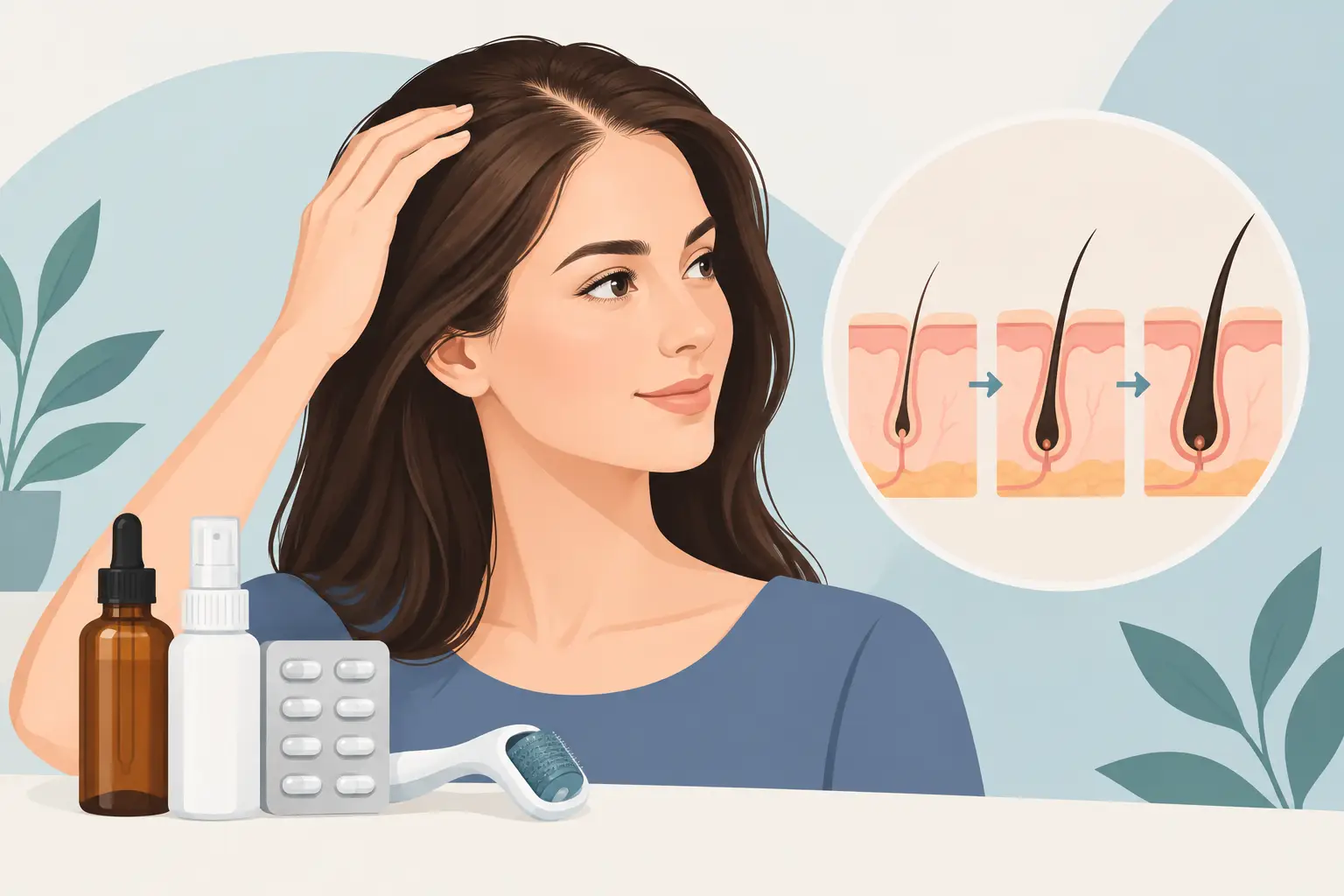
A widening part, more hair around the shower drain, or a ponytail that feels less full can be easy to dismiss at first. Yet hair thinning often changes gradually, and the best treatments for thinning hair are most effective when they begin with an accurate understanding of why the change is happening. A treatment that helps one person may be unnecessary, ineffective, or inappropriate for another.
Hair care deserves the same thoughtful approach as skin care: a careful look at the current condition, a realistic discussion of goals, and a plan that favors what is genuinely needed. Whether the concern is a recent increase in shedding or a long-standing pattern of reduced density, the goal is not a dramatic promise. It is to protect existing hair, support healthier growth where possible, and create a plan that fits your health and daily routine.
Why diagnosis comes before treatment
Thinning hair is a symptom, not a single diagnosis. Pattern hair loss, also called androgenetic alopecia, is common in both men and women. It usually develops slowly. Men may notice recession at the temples or thinning at the crown, while women often see a broader part or less density across the top of the scalp.
Other causes need a different approach. Telogen effluvium is temporary shedding that can occur several months after illness, surgery, rapid weight change, childbirth, intense stress, or a significant dietary change. Thyroid conditions, iron deficiency, certain medications, scalp inflammation, and tight hairstyles can also contribute. Patchy hair loss, burning, pain, scaling, or noticeable redness may point to conditions that should be evaluated promptly, including inflammatory or autoimmune forms of hair loss.
A careful consultation reviews the timeline, family history, styling practices, medications, medical history, and scalp findings. Blood work is not required for everyone, but it can be helpful when symptoms and history suggest a nutritional, hormonal, or thyroid-related contributor. This step prevents a common frustration: investing in treatment before identifying a correctable cause.
Best treatments for thinning hair with pattern loss
Topical minoxidil
Topical minoxidil is often a first-line option for pattern thinning. Available as a foam or solution, it supports the growth phase of the hair cycle and can help preserve density over time. It is used consistently on the scalp, not simply on the visible hair.
Patience matters. Some people notice a temporary increase in shedding during the first several weeks as older hairs move through the cycle. Visible improvement often takes three to six months, and continued use is needed to maintain results. Scalp irritation, dryness, or unwanted facial hair growth can occur, particularly if the product spreads beyond the scalp. The formula, strength, and frequency can be adjusted with professional guidance when irritation is an issue.
Prescription oral medications
For appropriate patients, prescription medication can address the hormonal component of pattern hair loss. Finasteride is commonly considered for men and may slow further loss and improve density for some patients. It is not appropriate for everyone, especially people who are pregnant or may become pregnant, and potential sexual, mood, and other side effects deserve a clear discussion before starting.
For women with signs of androgen-related thinning, spironolactone may be considered in selected cases. It requires medical screening and follow-up because it can affect blood pressure, potassium levels, and menstrual patterns. Oral minoxidil in low doses is another option some clinicians use when topical treatment is not tolerated or has not been sufficient. Because it can cause swelling, changes in heart rate, excess hair growth, and other side effects, it should only be considered after an individual medical review.
Medication is not a shortcut. It is a long-term management tool, and the right choice depends on health history, reproductive considerations, the pattern of loss, and comfort with ongoing treatment.
In-office scalp treatments
Platelet-rich plasma, often called PRP, uses a concentrated portion of a patient’s own blood that is prepared and placed into the scalp. It may be considered for some people with early pattern thinning who want an in-office option alongside a home regimen. Research suggests it can improve hair density for certain patients, but results vary, protocols differ, and maintenance sessions are typically needed.
PRP should not be presented as a replacement for diagnosis or as a guaranteed solution. It may be less useful in areas where follicles have been inactive for a long time, and it is not the first response to every form of shedding. A clinician should explain the expected degree of improvement, treatment interval, discomfort, cost, and whether a simpler treatment should come first.
Low-level light therapy is another noninvasive option. Devices such as laser caps or combs may offer modest support for some people with pattern hair loss when used consistently. The main trade-off is commitment: results are gradual, and devices vary in quality and evidence. It can be a reasonable addition for someone who prefers a non-drug approach, but it is not a substitute for investigating a rapidly changing scalp condition.
When the issue is sudden shedding
Sudden shedding can feel alarming, but it does not always mean permanent hair loss. With telogen effluvium, many follicles shift into a resting phase after a physical or emotional trigger. Shedding may become noticeable two to three months later, which can make the connection difficult to recognize.
The central treatment is finding and addressing the trigger. This may mean reviewing nutrition after restrictive dieting, correcting a documented deficiency, allowing recovery after illness, or adjusting a medication with the prescribing clinician. Hair often regains density gradually once the trigger has resolved, though the recovery process can take months.
This is where unnecessary treatment can create confusion. Starting several products at once makes it difficult to know what helped, and it can irritate an already sensitive scalp. A measured plan and follow-up photographs are often more useful than reacting to each day of shedding.
Scalp health and everyday habits still matter
Hair follicles grow from the scalp, so persistent itching, flaking, tenderness, or buildup deserves attention. Conditions such as seborrheic dermatitis can increase inflammation and make topical treatments harder to tolerate. Targeted medicated shampoos or scalp treatment may be recommended depending on the findings.
Gentle habits will not reverse genetic pattern loss on their own, but they can reduce avoidable breakage and traction. Avoid hairstyles that pull tightly at the hairline, repeated bleaching when the hair is fragile, and aggressive brushing of wet hair. Choose adequate protein and a varied diet rather than taking high-dose supplements without evidence of a deficiency. More biotin or iron is not automatically better and can interfere with certain laboratory tests or cause unwanted effects.
Stress management also has a place, not as a simplistic explanation for hair loss, but as support for overall recovery and consistency. Treatment works best when it is realistic enough to continue.
Setting a treatment timeline you can trust
Hair grows slowly, which makes online before-and-after images particularly misleading. A fair assessment usually requires several months, with standardized photos taken under similar lighting and part placement. The first sign of progress may be less shedding or improved stability rather than immediately visible fullness.
A personalized plan may start with one evidence-based treatment, then add options only when the diagnosis, response, and goals support it. This is especially valuable for patients who have sensitive scalps, medical conditions, pregnancy considerations, or limited time for complex routines. If a treatment is not helping after a reasonable interval, the plan should be reassessed rather than endlessly expanded.
The most reassuring next step is not choosing the most aggressive option. It is scheduling a thoughtful evaluation, asking what type of hair loss is present, and understanding which treatments are worth your time. With a clear diagnosis and steady care, protecting the hair you have can be a meaningful and achievable goal.







A widening part, more hair around the shower drain, or a ponytail that feels less full can be easy to dismiss at first. Yet hair thinning often changes gradually, and the best treatments for thinning hair are most effective when they begin with an accurate understanding of why the change is happening. A treatment that helps one person may be unnecessary, ineffective, or inappropriate for another.
Hair care deserves the same thoughtful approach as skin care: a careful look at the current condition, a realistic discussion of goals, and a plan that favors what is genuinely needed. Whether the concern is a recent increase in shedding or a long-standing pattern of reduced density, the goal is not a dramatic promise. It is to protect existing hair, support healthier growth where possible, and create a plan that fits your health and daily routine.
Why diagnosis comes before treatment
Thinning hair is a symptom, not a single diagnosis. Pattern hair loss, also called androgenetic alopecia, is common in both men and women. It usually develops slowly. Men may notice recession at the temples or thinning at the crown, while women often see a broader part or less density across the top of the scalp.
Other causes need a different approach. Telogen effluvium is temporary shedding that can occur several months after illness, surgery, rapid weight change, childbirth, intense stress, or a significant dietary change. Thyroid conditions, iron deficiency, certain medications, scalp inflammation, and tight hairstyles can also contribute. Patchy hair loss, burning, pain, scaling, or noticeable redness may point to conditions that should be evaluated promptly, including inflammatory or autoimmune forms of hair loss.
A careful consultation reviews the timeline, family history, styling practices, medications, medical history, and scalp findings. Blood work is not required for everyone, but it can be helpful when symptoms and history suggest a nutritional, hormonal, or thyroid-related contributor. This step prevents a common frustration: investing in treatment before identifying a correctable cause.
Best treatments for thinning hair with pattern loss
Topical minoxidil
Topical minoxidil is often a first-line option for pattern thinning. Available as a foam or solution, it supports the growth phase of the hair cycle and can help preserve density over time. It is used consistently on the scalp, not simply on the visible hair.
Patience matters. Some people notice a temporary increase in shedding during the first several weeks as older hairs move through the cycle. Visible improvement often takes three to six months, and continued use is needed to maintain results. Scalp irritation, dryness, or unwanted facial hair growth can occur, particularly if the product spreads beyond the scalp. The formula, strength, and frequency can be adjusted with professional guidance when irritation is an issue.
Prescription oral medications
For appropriate patients, prescription medication can address the hormonal component of pattern hair loss. Finasteride is commonly considered for men and may slow further loss and improve density for some patients. It is not appropriate for everyone, especially people who are pregnant or may become pregnant, and potential sexual, mood, and other side effects deserve a clear discussion before starting.
For women with signs of androgen-related thinning, spironolactone may be considered in selected cases. It requires medical screening and follow-up because it can affect blood pressure, potassium levels, and menstrual patterns. Oral minoxidil in low doses is another option some clinicians use when topical treatment is not tolerated or has not been sufficient. Because it can cause swelling, changes in heart rate, excess hair growth, and other side effects, it should only be considered after an individual medical review.
Medication is not a shortcut. It is a long-term management tool, and the right choice depends on health history, reproductive considerations, the pattern of loss, and comfort with ongoing treatment.
In-office scalp treatments
Platelet-rich plasma, often called PRP, uses a concentrated portion of a patient’s own blood that is prepared and placed into the scalp. It may be considered for some people with early pattern thinning who want an in-office option alongside a home regimen. Research suggests it can improve hair density for certain patients, but results vary, protocols differ, and maintenance sessions are typically needed.
PRP should not be presented as a replacement for diagnosis or as a guaranteed solution. It may be less useful in areas where follicles have been inactive for a long time, and it is not the first response to every form of shedding. A clinician should explain the expected degree of improvement, treatment interval, discomfort, cost, and whether a simpler treatment should come first.
Low-level light therapy is another noninvasive option. Devices such as laser caps or combs may offer modest support for some people with pattern hair loss when used consistently. The main trade-off is commitment: results are gradual, and devices vary in quality and evidence. It can be a reasonable addition for someone who prefers a non-drug approach, but it is not a substitute for investigating a rapidly changing scalp condition.
When the issue is sudden shedding
Sudden shedding can feel alarming, but it does not always mean permanent hair loss. With telogen effluvium, many follicles shift into a resting phase after a physical or emotional trigger. Shedding may become noticeable two to three months later, which can make the connection difficult to recognize.
The central treatment is finding and addressing the trigger. This may mean reviewing nutrition after restrictive dieting, correcting a documented deficiency, allowing recovery after illness, or adjusting a medication with the prescribing clinician. Hair often regains density gradually once the trigger has resolved, though the recovery process can take months.
This is where unnecessary treatment can create confusion. Starting several products at once makes it difficult to know what helped, and it can irritate an already sensitive scalp. A measured plan and follow-up photographs are often more useful than reacting to each day of shedding.
Scalp health and everyday habits still matter
Hair follicles grow from the scalp, so persistent itching, flaking, tenderness, or buildup deserves attention. Conditions such as seborrheic dermatitis can increase inflammation and make topical treatments harder to tolerate. Targeted medicated shampoos or scalp treatment may be recommended depending on the findings.
Gentle habits will not reverse genetic pattern loss on their own, but they can reduce avoidable breakage and traction. Avoid hairstyles that pull tightly at the hairline, repeated bleaching when the hair is fragile, and aggressive brushing of wet hair. Choose adequate protein and a varied diet rather than taking high-dose supplements without evidence of a deficiency. More biotin or iron is not automatically better and can interfere with certain laboratory tests or cause unwanted effects.
Stress management also has a place, not as a simplistic explanation for hair loss, but as support for overall recovery and consistency. Treatment works best when it is realistic enough to continue.
Setting a treatment timeline you can trust
Hair grows slowly, which makes online before-and-after images particularly misleading. A fair assessment usually requires several months, with standardized photos taken under similar lighting and part placement. The first sign of progress may be less shedding or improved stability rather than immediately visible fullness.
A personalized plan may start with one evidence-based treatment, then add options only when the diagnosis, response, and goals support it. This is especially valuable for patients who have sensitive scalps, medical conditions, pregnancy considerations, or limited time for complex routines. If a treatment is not helping after a reasonable interval, the plan should be reassessed rather than endlessly expanded.
The most reassuring next step is not choosing the most aggressive option. It is scheduling a thoughtful evaluation, asking what type of hair loss is present, and understanding which treatments are worth your time. With a clear diagnosis and steady care, protecting the hair you have can be a meaningful and achievable goal.