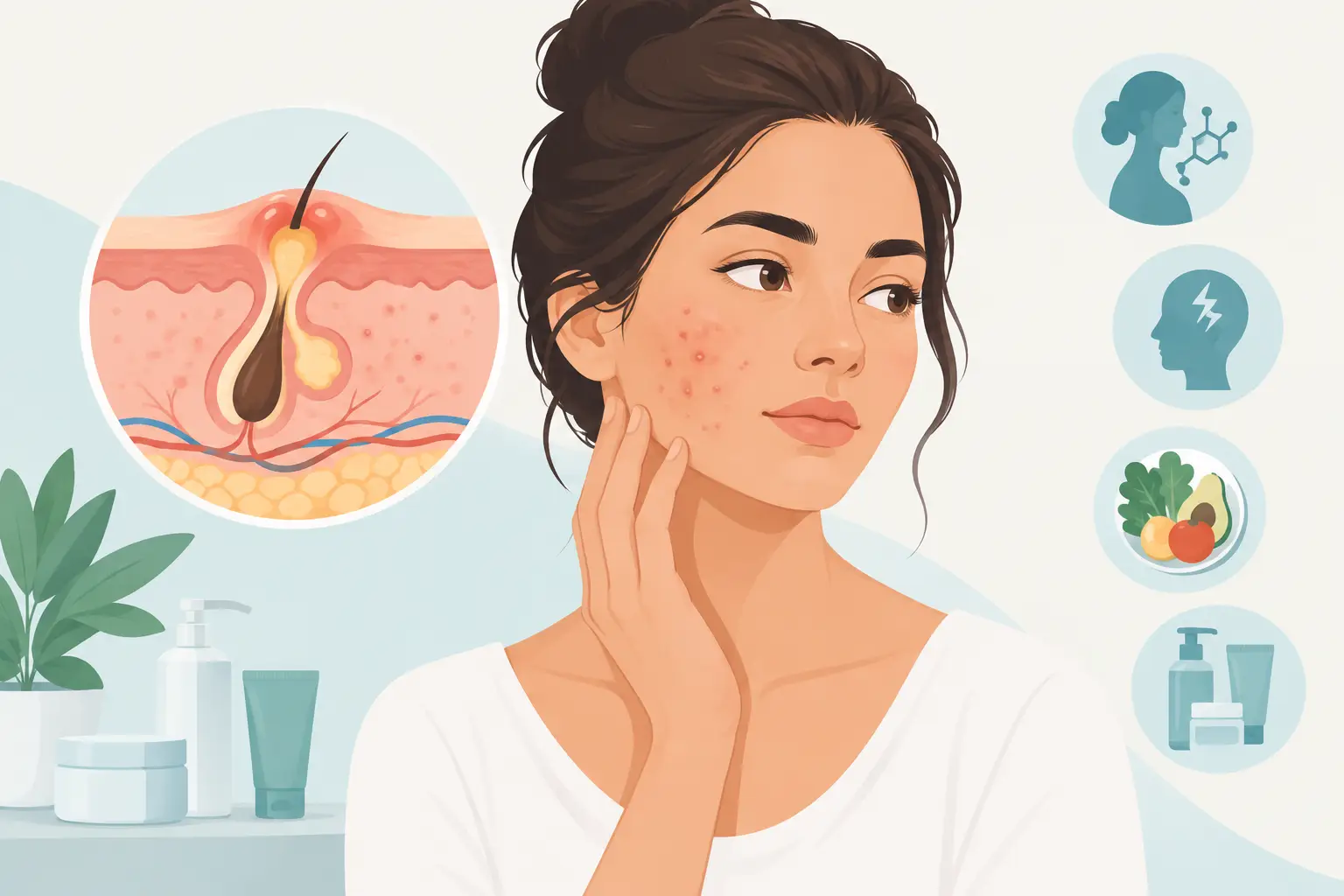
A breakout before an important meeting can feel just as frustrating at 35 as it did at 15. But adult acne is not simply teenage acne that arrived late. It often appears alongside a fuller schedule, changing hormones, stress, skincare experimentation, and skin that may also be dry, sensitive, or beginning to show signs of aging. That combination deserves a thoughtful plan, not a harsh attempt to dry everything out.
For many adults, the harder part is not finding advice. It is sorting through advice that conflicts. One product promises clearer pores, another focuses on barrier repair, and a third suggests that every breakout is caused by a single food or hormone. Skin is rarely that simple. A careful evaluation helps identify what is actually happening beneath the surface and which steps are worth taking first.
Why Adult Acne Can Be Different
Acne develops when pores become blocked with oil, dead skin cells, and inflammation. Bacteria can contribute to the process, but adult breakouts are not a sign that someone is unclean or failing at skincare. In fact, over-cleansing, frequent scrubbing, or layering too many active products can irritate the skin and make redness and breakouts harder to manage.
In adulthood, the pattern often offers useful clues. Breakouts concentrated along the jawline, chin, and lower cheeks may be influenced by hormonal shifts. Flares around the menstrual cycle, after starting or stopping certain medications, or during periods of disrupted sleep can be especially telling. Other people experience clogged pores across the forehead and cheeks after switching makeup, hair products, sunscreen, or workout routines.
There is also a practical difference between adolescent and adult skin. Adult skin may produce excess oil in some areas while feeling tight or reactive in others. Fine lines, uneven tone, post-acne marks, and sensitivity can all coexist with active lesions. A treatment plan that treats every concern as oily teenage skin may create unnecessary dryness and compromise comfort.
The First Step Is Understanding the Breakout Pattern
Before adding another serum or booking a procedure, it helps to look at the full picture. Are the bumps mostly clogged pores, inflamed red spots, deeper tender nodules, or a mixture? Do they leave dark marks, persistent redness, or indentations? Has the acne been gradual, or did it appear suddenly?
A detailed consultation should also consider current skincare, cosmetics, hair products, supplements, medications, shaving habits, stress, sleep, and menstrual or hormonal changes when relevant. These details do not always reveal one clear cause, but they help prevent treatment from becoming guesswork.
Some situations call for prompt medical attention. Sudden severe acne, painful deep lesions, rapid scarring, or breakouts accompanied by other hormonal symptoms should be evaluated carefully. Early treatment matters because acne scars can be more difficult to address than active breakouts. The goal is not only to calm the skin today, but also to reduce the risk of marks and texture changes that can linger.
Not Every Bump Is Acne
Facial redness, folliculitis, perioral dermatitis, and reactions to skincare products can resemble acne. Treatment can differ significantly depending on the cause. For example, a product routine designed to aggressively unclog pores may worsen a rash caused by irritation.
This is one reason a close examination is valuable, especially when breakouts are new, unusually itchy, concentrated around the mouth, or not responding to a routine that previously worked. Accurate diagnosis creates room for more precise, less excessive care.
A Measured Treatment Plan for Adult Acne
Successful acne care is usually built in layers. The right combination depends on acne type, skin sensitivity, lifestyle, pregnancy plans where applicable, and whether discoloration or scarring is also a concern. More treatment is not automatically better. Starting with too many changes at once can make it difficult to tell what is helping and what is causing irritation.
A clinician may recommend topical treatments that help keep pores clear, reduce inflammation, or support healthy cell turnover. Some people benefit from prescription medication, especially when acne is moderate to severe, widespread, painful, or likely to scar. Hormonal approaches may be considered for patients whose pattern and medical history suggest they are appropriate.
In-office care can complement a home routine when chosen carefully. Professional extractions, chemical peels, light-based treatments, or other acne-focused procedures may be useful for certain skin types and concerns. Their role is not to replace daily treatment or promise an instant cure. Instead, they can be part of a structured approach that aims to reduce congestion, calm inflammation, and support more even skin over time.
The best pace depends on the condition of the skin. If there is significant irritation, restoring the skin barrier may need to come before introducing stronger acne treatments. If painful inflammatory acne is active, controlling inflammation may take priority over treating leftover discoloration. Once breakouts are steadier, attention can shift toward acne marks, uneven tone, or scar management.
Daily Habits That Support Treatment
A simple routine is often easier to maintain and kinder to reactive skin. Cleanse gently rather than repeatedly, and use a moisturizer even if the skin is oily. Well-hydrated skin is often better able to tolerate acne treatments than skin that feels stripped or stings after washing.
Daily sun protection also deserves a place in an acne routine. Sun exposure can deepen post-acne discoloration, and some acne treatments can increase sensitivity. Choosing products labeled non-comedogenic may be helpful, though no label can guarantee that every formula will suit every person.
Try to introduce one new active product at a time. Give the skin a chance to adjust, and avoid assuming that tingling, burning, or peeling means a product is working. Those signs can indicate irritation, which may prolong redness and make consistent treatment harder.
Lifestyle factors can matter, but they should be handled without blame. Stress and poor sleep can affect inflammation and hormonal balance. Some people notice patterns related to particular foods or supplements, while others do not. Restrictive diets are rarely the first answer unless there is a clear, repeatable connection. A practical approach is to observe patterns, make measured changes, and discuss persistent concerns with a clinician.
Patience Is Part of the Treatment
Acne treatment asks for consistency because the visible breakout often started forming weeks earlier. It is common to need several weeks before judging whether a new plan is helping, and a clinician may adjust the approach as the skin responds. During that time, picking or squeezing lesions can increase inflammation and raise the chance of discoloration or scarring.
Progress is not always perfectly linear. A patient may see fewer painful breakouts but still have clogged pores, or experience clearer skin while post-acne marks remain visible. These are different concerns with different timelines. Separating them makes expectations more realistic and decisions more precise.
For adults balancing work, family, social plans, and sensitive skin, the most sustainable plan is often the one that fits real life. It should be effective enough to address the problem, gentle enough to continue, and flexible enough to evolve as the skin changes. Clearer skin is rarely the result of one dramatic step. It is more often built through careful observation, appropriate treatment, and the reassurance of knowing your skin is being treated with the attention it deserves.







A breakout before an important meeting can feel just as frustrating at 35 as it did at 15. But adult acne is not simply teenage acne that arrived late. It often appears alongside a fuller schedule, changing hormones, stress, skincare experimentation, and skin that may also be dry, sensitive, or beginning to show signs of aging. That combination deserves a thoughtful plan, not a harsh attempt to dry everything out.
For many adults, the harder part is not finding advice. It is sorting through advice that conflicts. One product promises clearer pores, another focuses on barrier repair, and a third suggests that every breakout is caused by a single food or hormone. Skin is rarely that simple. A careful evaluation helps identify what is actually happening beneath the surface and which steps are worth taking first.
Why Adult Acne Can Be Different
Acne develops when pores become blocked with oil, dead skin cells, and inflammation. Bacteria can contribute to the process, but adult breakouts are not a sign that someone is unclean or failing at skincare. In fact, over-cleansing, frequent scrubbing, or layering too many active products can irritate the skin and make redness and breakouts harder to manage.
In adulthood, the pattern often offers useful clues. Breakouts concentrated along the jawline, chin, and lower cheeks may be influenced by hormonal shifts. Flares around the menstrual cycle, after starting or stopping certain medications, or during periods of disrupted sleep can be especially telling. Other people experience clogged pores across the forehead and cheeks after switching makeup, hair products, sunscreen, or workout routines.
There is also a practical difference between adolescent and adult skin. Adult skin may produce excess oil in some areas while feeling tight or reactive in others. Fine lines, uneven tone, post-acne marks, and sensitivity can all coexist with active lesions. A treatment plan that treats every concern as oily teenage skin may create unnecessary dryness and compromise comfort.
The First Step Is Understanding the Breakout Pattern
Before adding another serum or booking a procedure, it helps to look at the full picture. Are the bumps mostly clogged pores, inflamed red spots, deeper tender nodules, or a mixture? Do they leave dark marks, persistent redness, or indentations? Has the acne been gradual, or did it appear suddenly?
A detailed consultation should also consider current skincare, cosmetics, hair products, supplements, medications, shaving habits, stress, sleep, and menstrual or hormonal changes when relevant. These details do not always reveal one clear cause, but they help prevent treatment from becoming guesswork.
Some situations call for prompt medical attention. Sudden severe acne, painful deep lesions, rapid scarring, or breakouts accompanied by other hormonal symptoms should be evaluated carefully. Early treatment matters because acne scars can be more difficult to address than active breakouts. The goal is not only to calm the skin today, but also to reduce the risk of marks and texture changes that can linger.
Not Every Bump Is Acne
Facial redness, folliculitis, perioral dermatitis, and reactions to skincare products can resemble acne. Treatment can differ significantly depending on the cause. For example, a product routine designed to aggressively unclog pores may worsen a rash caused by irritation.
This is one reason a close examination is valuable, especially when breakouts are new, unusually itchy, concentrated around the mouth, or not responding to a routine that previously worked. Accurate diagnosis creates room for more precise, less excessive care.
A Measured Treatment Plan for Adult Acne
Successful acne care is usually built in layers. The right combination depends on acne type, skin sensitivity, lifestyle, pregnancy plans where applicable, and whether discoloration or scarring is also a concern. More treatment is not automatically better. Starting with too many changes at once can make it difficult to tell what is helping and what is causing irritation.
A clinician may recommend topical treatments that help keep pores clear, reduce inflammation, or support healthy cell turnover. Some people benefit from prescription medication, especially when acne is moderate to severe, widespread, painful, or likely to scar. Hormonal approaches may be considered for patients whose pattern and medical history suggest they are appropriate.
In-office care can complement a home routine when chosen carefully. Professional extractions, chemical peels, light-based treatments, or other acne-focused procedures may be useful for certain skin types and concerns. Their role is not to replace daily treatment or promise an instant cure. Instead, they can be part of a structured approach that aims to reduce congestion, calm inflammation, and support more even skin over time.
The best pace depends on the condition of the skin. If there is significant irritation, restoring the skin barrier may need to come before introducing stronger acne treatments. If painful inflammatory acne is active, controlling inflammation may take priority over treating leftover discoloration. Once breakouts are steadier, attention can shift toward acne marks, uneven tone, or scar management.
Daily Habits That Support Treatment
A simple routine is often easier to maintain and kinder to reactive skin. Cleanse gently rather than repeatedly, and use a moisturizer even if the skin is oily. Well-hydrated skin is often better able to tolerate acne treatments than skin that feels stripped or stings after washing.
Daily sun protection also deserves a place in an acne routine. Sun exposure can deepen post-acne discoloration, and some acne treatments can increase sensitivity. Choosing products labeled non-comedogenic may be helpful, though no label can guarantee that every formula will suit every person.
Try to introduce one new active product at a time. Give the skin a chance to adjust, and avoid assuming that tingling, burning, or peeling means a product is working. Those signs can indicate irritation, which may prolong redness and make consistent treatment harder.
Lifestyle factors can matter, but they should be handled without blame. Stress and poor sleep can affect inflammation and hormonal balance. Some people notice patterns related to particular foods or supplements, while others do not. Restrictive diets are rarely the first answer unless there is a clear, repeatable connection. A practical approach is to observe patterns, make measured changes, and discuss persistent concerns with a clinician.
Patience Is Part of the Treatment
Acne treatment asks for consistency because the visible breakout often started forming weeks earlier. It is common to need several weeks before judging whether a new plan is helping, and a clinician may adjust the approach as the skin responds. During that time, picking or squeezing lesions can increase inflammation and raise the chance of discoloration or scarring.
Progress is not always perfectly linear. A patient may see fewer painful breakouts but still have clogged pores, or experience clearer skin while post-acne marks remain visible. These are different concerns with different timelines. Separating them makes expectations more realistic and decisions more precise.
For adults balancing work, family, social plans, and sensitive skin, the most sustainable plan is often the one that fits real life. It should be effective enough to address the problem, gentle enough to continue, and flexible enough to evolve as the skin changes. Clearer skin is rarely the result of one dramatic step. It is more often built through careful observation, appropriate treatment, and the reassurance of knowing your skin is being treated with the attention it deserves.