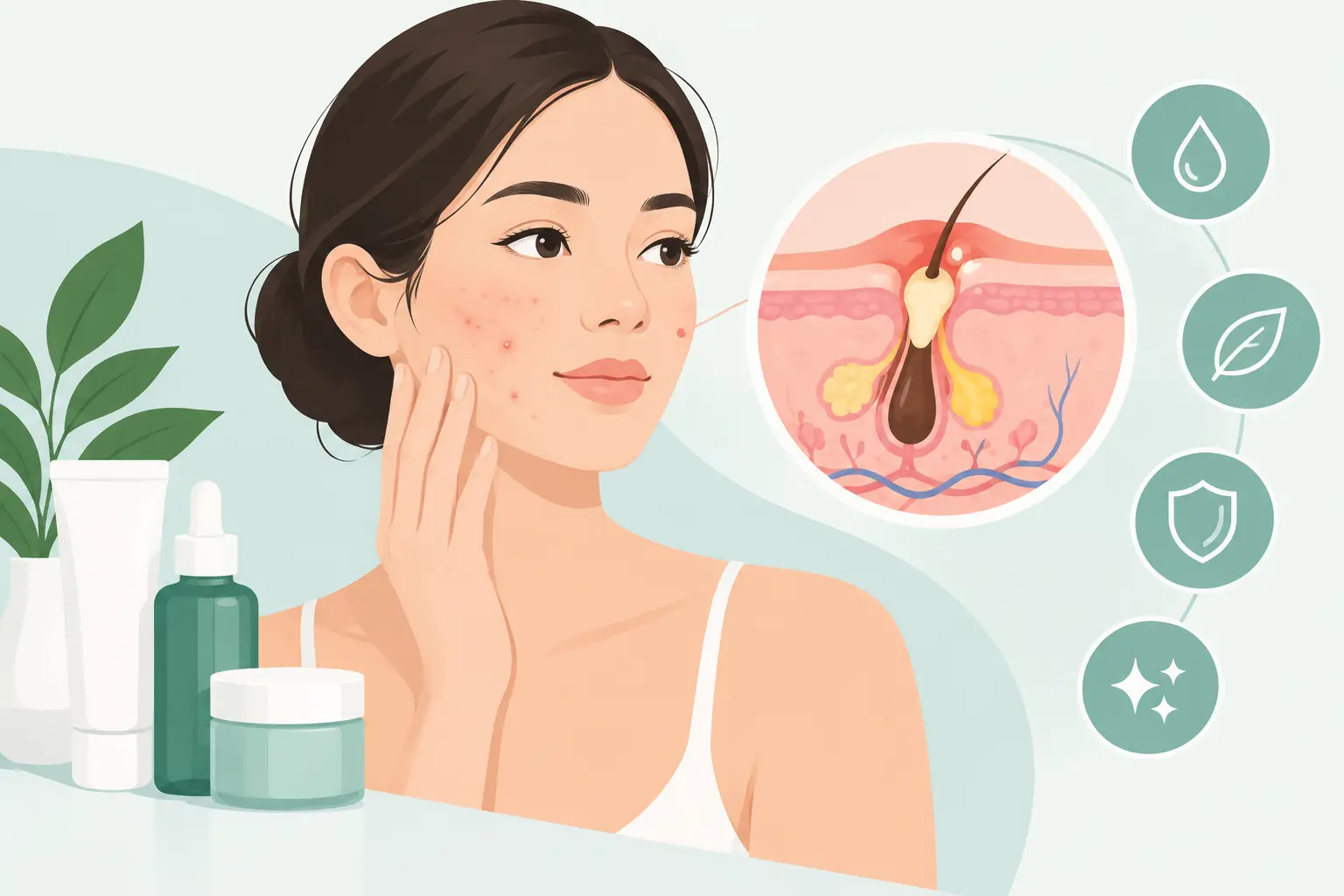
A useful acne treatment review should not begin with a promise to clear every blemish overnight. It should begin with the pattern of your skin: where breakouts appear, how long they last, whether they leave marks, how easily your skin becomes irritated, and what you have already tried. Acne can look similar on the surface while having very different triggers and treatment needs underneath.
For some people, the main concern is a small number of recurring pimples around the jawline. For others, it is inflamed acne across the cheeks and back, painful deep lesions, clogged pores, or lingering discoloration long after active breakouts settle. The right approach depends on this distinction. Thoughtful care is less about adding every popular product or procedure and more about choosing the few steps that fit your skin now.
What an Acne Treatment Review Should Assess
Before comparing treatments, it helps to separate acne into the concerns that matter most to you. Active inflammation, congestion, excess oil, post-acne redness, dark spots, and scarring do not always respond to the same plan. Treating one issue aggressively can sometimes worsen another, particularly when the skin barrier is already dry or sensitive.
A careful assessment considers the type of lesions present. Blackheads and whiteheads often point to clogged pores. Red bumps and pustules indicate more inflammation. Deep, tender nodules may require timely medical evaluation because they carry a higher risk of scarring. The location is also meaningful. Hairline breakouts may be related to styling products, while chin and jawline flares can follow a hormonal pattern. These clues do not replace a medical diagnosis, but they help shape a more precise conversation.
Your routine matters as much as the acne itself. A strong cleanser used twice a day, frequent exfoliation, heavy makeup, inconsistent sunscreen use, or switching products every week can make treatment results difficult to interpret. A good review looks at the whole picture rather than blaming one product or offering a generic package.
Comparing Common Acne Treatment Options
Most acne plans combine home care with professional treatment when appropriate. Each option has a role, a timeline, and limits. The best choice is rarely the most intense one.
Topical skin care
Topical ingredients are often the foundation of acne care. Retinoids can help normalize cell turnover and reduce clogged pores over time. Benzoyl peroxide may help with acne-causing bacteria and inflammation. Salicylic acid can be useful for congestion, while azelaic acid is often considered when breakouts occur alongside redness or uneven tone.
The trade-off is irritation. Using several active ingredients at once may cause peeling, burning, or increased sensitivity, especially during the first few weeks. More is not automatically better. A measured routine, introduced gradually and supported by a gentle cleanser, moisturizer, and daily sunscreen, is usually easier to sustain.
Prescription topicals may be appropriate for persistent or moderate acne. They should be selected with attention to skin sensitivity, pregnancy considerations, other medications, and the areas being treated. Results are generally gradual. Skin needs time to complete several renewal cycles, so judging a new routine after only a few days often leads to unnecessary changes.
Oral medication
When acne is widespread, painful, or likely to scar, oral medication may be part of medical treatment. Depending on the acne pattern and personal health history, a clinician may discuss oral antibiotics, hormonal options, or isotretinoin. These are not casual additions to a routine. They require an individualized discussion of benefits, side effects, monitoring, and whether the treatment matches your goals.
Oral antibiotics, for example, are generally used for a limited period rather than as a permanent solution. Hormonal approaches can be helpful for some adults with cyclical breakouts, but they are not suitable for everyone. Isotretinoin can be highly effective for certain severe or treatment-resistant cases, yet it requires close medical supervision. An honest review includes these considerations instead of presenting a medication as a universal answer.
Professional procedures
Professional acne care may include comedone extraction, carefully selected chemical peels, light-based treatment, injections for individual painful lesions, or treatments designed to support skin recovery. These can be valuable when performed at the right time and intensity. They are not interchangeable, and they should not be chosen solely because they are trending.
For congested skin, gentle extraction may provide a cleaner starting point, but it does not prevent future breakouts without a maintenance plan. A peel may improve texture and surface congestion, but overly frequent or overly strong treatment can compromise the skin barrier and prolong redness. Light-based approaches may support certain inflammatory concerns, though outcomes vary with acne severity, skin tone, treatment settings, and consistency.
The most reassuring question is not, “What is the strongest treatment available?” It is, “What can improve this concern without creating a new one?” A precise plan may include procedures, but it should leave room to adjust based on how your skin responds.
Active Acne, Marks, and Scars Need Different Timing
One of the most common sources of frustration is treating acne marks as if they were still active acne. Red or brown marks can remain for months after a blemish heals. They often fade slowly, and irritation from overly aggressive products can make the contrast more noticeable. Consistent sunscreen and a calm, pigment-conscious plan are especially important during this stage.
Indented scars are different from marks. They result from changes in the skin’s structure and may need treatments that stimulate remodeling or address tethered scar tissue. These procedures are usually planned after active acne is reasonably controlled. Treating scars while new inflamed lesions continue to form can feel like trying to repair a surface that is still changing.
Patience is part of the treatment. That does not mean accepting no progress. It means setting appropriate checkpoints: fewer inflamed lesions, faster healing, less frequent flares, reduced oiliness, or gradual improvement in marks. Clearer skin is often built through these smaller, measurable changes.
How to Tell Whether a Plan Is Working
A treatment plan deserves enough time to show a real pattern, often six to twelve weeks for topical care unless significant irritation occurs. Take photos in similar lighting once a month rather than examining your skin under different bathroom lights every morning. Count active inflamed breakouts, notice how long they persist, and track whether painful lesions are becoming less frequent.
Some early dryness or mild adjustment can occur with certain treatments. Persistent burning, swelling, cracking, severe peeling, or a rapid worsening of acne is different. Those signs call for prompt guidance, not simply pushing through. Skin that is inflamed from treatment may be harder to treat, not easier.
It is also worth looking beyond the face. Pillowcases, masks, workout habits, hair products, shaving practices, and body care can affect acne on the forehead, jawline, chest, shoulders, or back. These details are not about assigning blame. They help identify practical changes that can support medical treatment.
Questions Worth Asking During an Acne Consultation
A productive consultation should leave you with clarity, not pressure. Ask what type of acne is being treated, what the first goal is, how long improvement may take, and what side effects should prompt a call. If a procedure is recommended, ask what it is intended to improve and whether active acne should be controlled first.
You can also ask what happens if the first plan does not work. Acne care is often iterative. A clinician may begin with a conservative regimen, then adjust the strength, frequency, or combination after seeing how your skin responds. This is not a sign that the first visit was incomplete. It is the practical reality of personalizing care for a condition that changes with stress, hormones, climate, and routine.
At Somsei Clinic, acne care is approached as a personalized program rather than a fixed set of procedures. The focus is on careful evaluation, precise treatment, and recommending only what your skin needs at that stage.
The most helpful next step is to choose a plan you can follow consistently and review it with a qualified clinician when breakouts are painful, scarring, persistent, or affecting your confidence. Your skin does not need a dramatic overhaul. It needs thoughtful attention, enough time, and care that respects its individual pace.







A useful acne treatment review should not begin with a promise to clear every blemish overnight. It should begin with the pattern of your skin: where breakouts appear, how long they last, whether they leave marks, how easily your skin becomes irritated, and what you have already tried. Acne can look similar on the surface while having very different triggers and treatment needs underneath.
For some people, the main concern is a small number of recurring pimples around the jawline. For others, it is inflamed acne across the cheeks and back, painful deep lesions, clogged pores, or lingering discoloration long after active breakouts settle. The right approach depends on this distinction. Thoughtful care is less about adding every popular product or procedure and more about choosing the few steps that fit your skin now.
What an Acne Treatment Review Should Assess
Before comparing treatments, it helps to separate acne into the concerns that matter most to you. Active inflammation, congestion, excess oil, post-acne redness, dark spots, and scarring do not always respond to the same plan. Treating one issue aggressively can sometimes worsen another, particularly when the skin barrier is already dry or sensitive.
A careful assessment considers the type of lesions present. Blackheads and whiteheads often point to clogged pores. Red bumps and pustules indicate more inflammation. Deep, tender nodules may require timely medical evaluation because they carry a higher risk of scarring. The location is also meaningful. Hairline breakouts may be related to styling products, while chin and jawline flares can follow a hormonal pattern. These clues do not replace a medical diagnosis, but they help shape a more precise conversation.
Your routine matters as much as the acne itself. A strong cleanser used twice a day, frequent exfoliation, heavy makeup, inconsistent sunscreen use, or switching products every week can make treatment results difficult to interpret. A good review looks at the whole picture rather than blaming one product or offering a generic package.
Comparing Common Acne Treatment Options
Most acne plans combine home care with professional treatment when appropriate. Each option has a role, a timeline, and limits. The best choice is rarely the most intense one.
Topical skin care
Topical ingredients are often the foundation of acne care. Retinoids can help normalize cell turnover and reduce clogged pores over time. Benzoyl peroxide may help with acne-causing bacteria and inflammation. Salicylic acid can be useful for congestion, while azelaic acid is often considered when breakouts occur alongside redness or uneven tone.
The trade-off is irritation. Using several active ingredients at once may cause peeling, burning, or increased sensitivity, especially during the first few weeks. More is not automatically better. A measured routine, introduced gradually and supported by a gentle cleanser, moisturizer, and daily sunscreen, is usually easier to sustain.
Prescription topicals may be appropriate for persistent or moderate acne. They should be selected with attention to skin sensitivity, pregnancy considerations, other medications, and the areas being treated. Results are generally gradual. Skin needs time to complete several renewal cycles, so judging a new routine after only a few days often leads to unnecessary changes.
Oral medication
When acne is widespread, painful, or likely to scar, oral medication may be part of medical treatment. Depending on the acne pattern and personal health history, a clinician may discuss oral antibiotics, hormonal options, or isotretinoin. These are not casual additions to a routine. They require an individualized discussion of benefits, side effects, monitoring, and whether the treatment matches your goals.
Oral antibiotics, for example, are generally used for a limited period rather than as a permanent solution. Hormonal approaches can be helpful for some adults with cyclical breakouts, but they are not suitable for everyone. Isotretinoin can be highly effective for certain severe or treatment-resistant cases, yet it requires close medical supervision. An honest review includes these considerations instead of presenting a medication as a universal answer.
Professional procedures
Professional acne care may include comedone extraction, carefully selected chemical peels, light-based treatment, injections for individual painful lesions, or treatments designed to support skin recovery. These can be valuable when performed at the right time and intensity. They are not interchangeable, and they should not be chosen solely because they are trending.
For congested skin, gentle extraction may provide a cleaner starting point, but it does not prevent future breakouts without a maintenance plan. A peel may improve texture and surface congestion, but overly frequent or overly strong treatment can compromise the skin barrier and prolong redness. Light-based approaches may support certain inflammatory concerns, though outcomes vary with acne severity, skin tone, treatment settings, and consistency.
The most reassuring question is not, “What is the strongest treatment available?” It is, “What can improve this concern without creating a new one?” A precise plan may include procedures, but it should leave room to adjust based on how your skin responds.
Active Acne, Marks, and Scars Need Different Timing
One of the most common sources of frustration is treating acne marks as if they were still active acne. Red or brown marks can remain for months after a blemish heals. They often fade slowly, and irritation from overly aggressive products can make the contrast more noticeable. Consistent sunscreen and a calm, pigment-conscious plan are especially important during this stage.
Indented scars are different from marks. They result from changes in the skin’s structure and may need treatments that stimulate remodeling or address tethered scar tissue. These procedures are usually planned after active acne is reasonably controlled. Treating scars while new inflamed lesions continue to form can feel like trying to repair a surface that is still changing.
Patience is part of the treatment. That does not mean accepting no progress. It means setting appropriate checkpoints: fewer inflamed lesions, faster healing, less frequent flares, reduced oiliness, or gradual improvement in marks. Clearer skin is often built through these smaller, measurable changes.
How to Tell Whether a Plan Is Working
A treatment plan deserves enough time to show a real pattern, often six to twelve weeks for topical care unless significant irritation occurs. Take photos in similar lighting once a month rather than examining your skin under different bathroom lights every morning. Count active inflamed breakouts, notice how long they persist, and track whether painful lesions are becoming less frequent.
Some early dryness or mild adjustment can occur with certain treatments. Persistent burning, swelling, cracking, severe peeling, or a rapid worsening of acne is different. Those signs call for prompt guidance, not simply pushing through. Skin that is inflamed from treatment may be harder to treat, not easier.
It is also worth looking beyond the face. Pillowcases, masks, workout habits, hair products, shaving practices, and body care can affect acne on the forehead, jawline, chest, shoulders, or back. These details are not about assigning blame. They help identify practical changes that can support medical treatment.
Questions Worth Asking During an Acne Consultation
A productive consultation should leave you with clarity, not pressure. Ask what type of acne is being treated, what the first goal is, how long improvement may take, and what side effects should prompt a call. If a procedure is recommended, ask what it is intended to improve and whether active acne should be controlled first.
You can also ask what happens if the first plan does not work. Acne care is often iterative. A clinician may begin with a conservative regimen, then adjust the strength, frequency, or combination after seeing how your skin responds. This is not a sign that the first visit was incomplete. It is the practical reality of personalizing care for a condition that changes with stress, hormones, climate, and routine.
At Somsei Clinic, acne care is approached as a personalized program rather than a fixed set of procedures. The focus is on careful evaluation, precise treatment, and recommending only what your skin needs at that stage.
The most helpful next step is to choose a plan you can follow consistently and review it with a qualified clinician when breakouts are painful, scarring, persistent, or affecting your confidence. Your skin does not need a dramatic overhaul. It needs thoughtful attention, enough time, and care that respects its individual pace.